Header Image

Showing posts with label Split Batch. Show all posts

Tuesday, September 18, 2012

Split Batch Sour Red

These starters are making me thirsty
As you may know a while back I got my hands on four vials of  East Coast Yeast (ECY01 BugFarm, ECY02 Flemish Ale, ECY04 Brett Blend #1 and ECY07 Scottish Heavy).  For my first forte in I used the ECY07 Scottish Heavy for my Project S.C.O.T.T. Strong Scotch Ale.  I have to say that so far I'm pretty happy with the results I'm seeing (In Progress Tasting).

I knew that I needed to the remaining vials soon than later so I put together a quick schedule for the next several brews.  The best way to work through them fast was to a couple of split batches, but which to use first?  

Initially I planned on doing a 10 gallon version of My Funky Brother Brett, using WLP645 Brettanomyces Claussenii in half and ECY04 Brett Blend #1 in the other.  I decided that it would be more purdent to come up with a recipe that would allow me to use more of what I had on hand.  I therefore decided to do a 10 gallon split batch of a red ale to make a Flemish Red and a red sour (BugFarm).

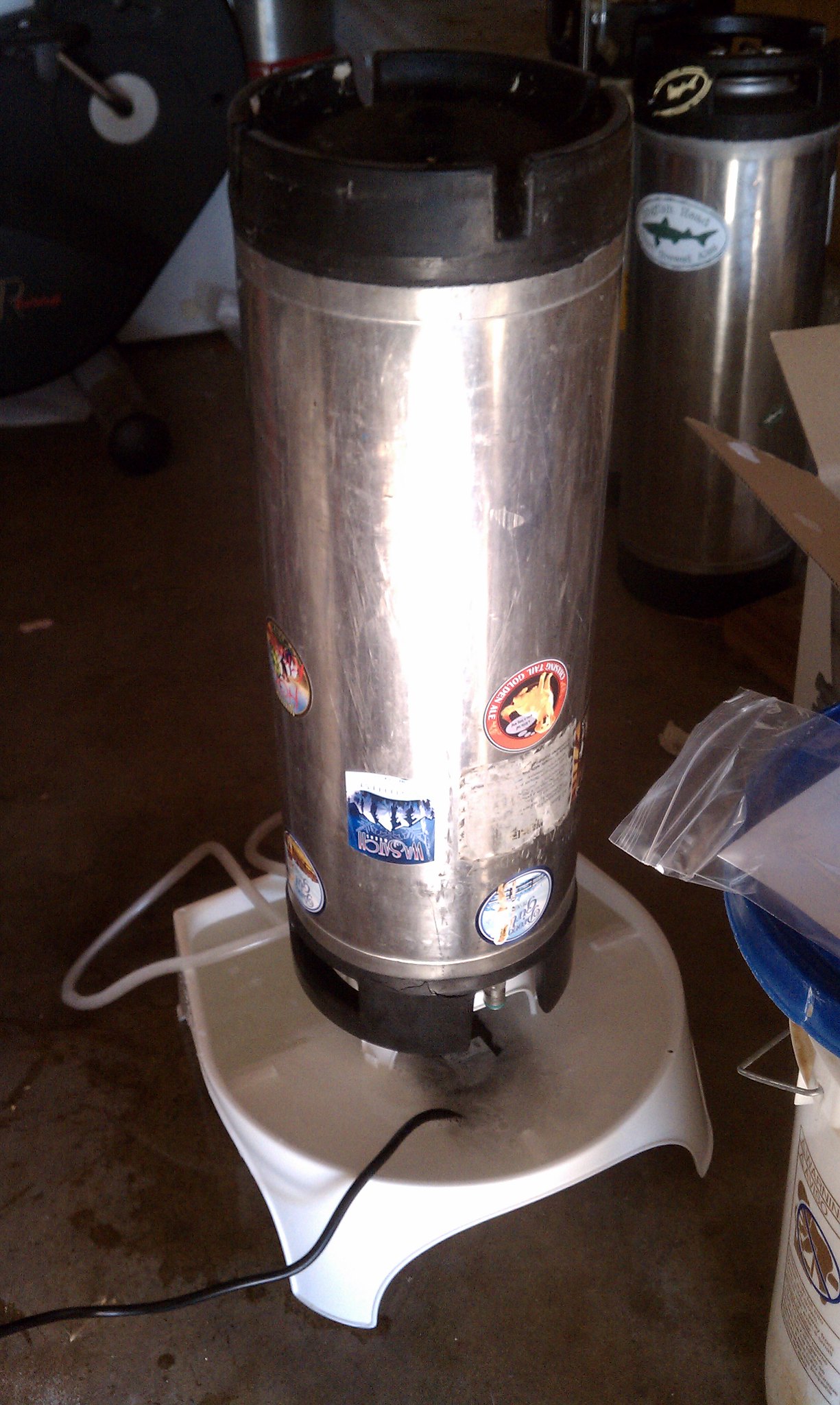
My other piece of new equipment
a  Mark II Keg Washer
At the beginning I was leaning toward doing all 10 gallons clean, like I did for Halvtreds, adding the bugs to secondary.  I had also planned on using my standard red ale grist modified for a lower gravity.  In the end I decided to do a more standard Rodenbach grist with a few SNB modifications. I also decided after researching Flemish Reds to add the ECY02 Flemish Ale for primary. Most of the recipes had called the sour yeast (mostly Wyeast's 3763 Roeselare Blend) in primary so I figured why not.

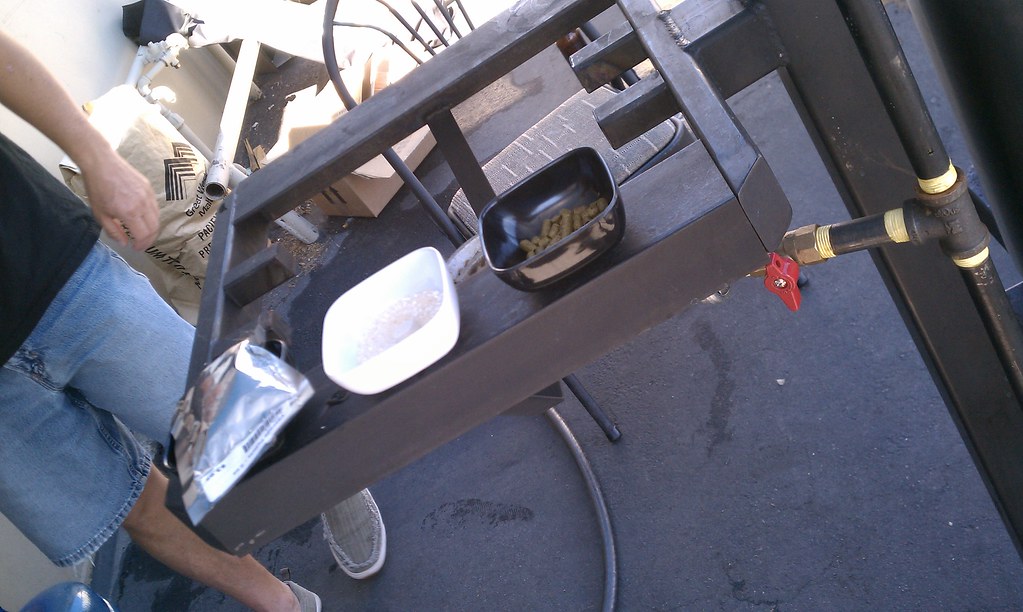
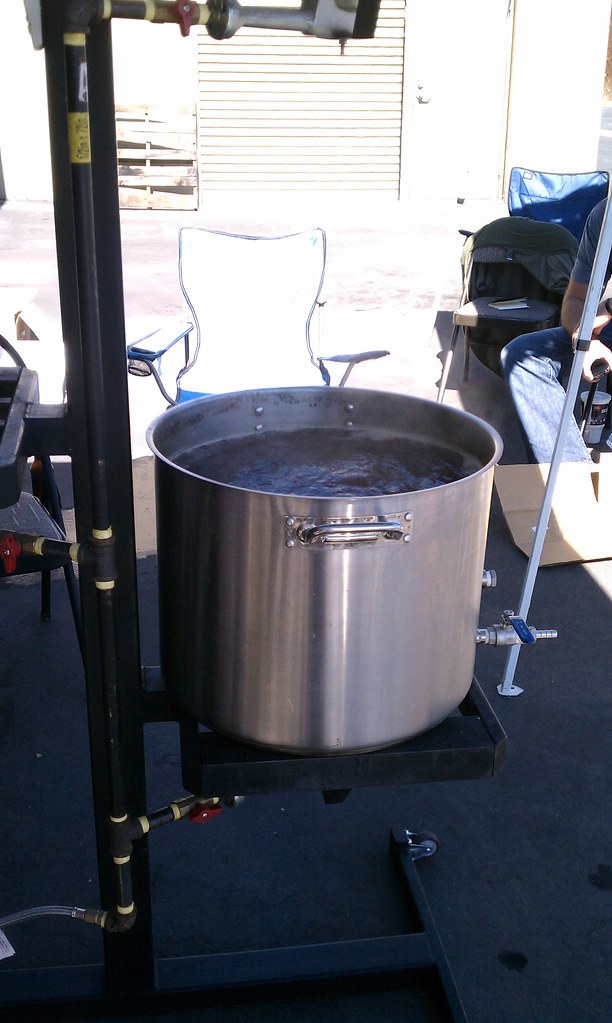
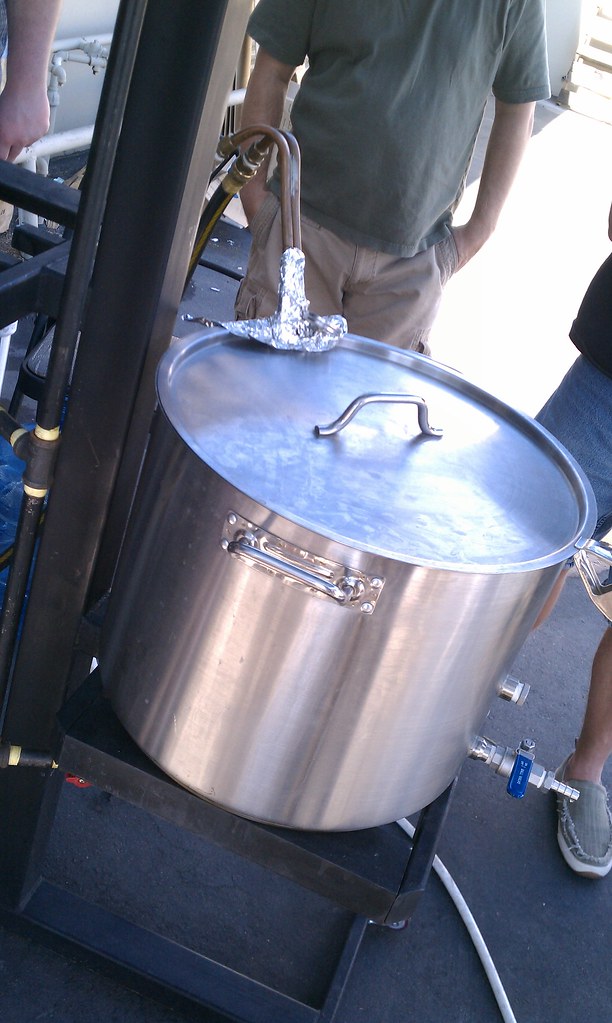
Brewday also gave me a chance to break in some new equipment I'd recently procured for myself, primarily in the forms of pumps.  I'd found a pump on Craigslist a while back and picked it up.  Not knowing the full history of what it was used for I decided that it would only touch cooling water.  The other was a Chugger Pump I'd convinced Eric to carry at The Shop that I planned to use initially just for recirculating but ended up using to fill the kettle as well.

So far I'm really digging the flavor I'm getting from the ECY02 Flemish Ale.  At first I was concerned given the not existent activity I'd seen.  Apparently it was in fact hard at work reducing the gravity into the 20s during it's first week.  I'd watched a Wyeast video about berliner wiesses where they found they got more sour results starting with the sour strain for the first week then adding a second clean strain to fermenting beer.  I decided to do something similar to the red by adding the remaining pack of US-05 I'd used to prime the single "barrel" bottles of Barrel Aged 33. 

Cheers

-SNB

Thursday, June 7, 2012

Costa del Sol v2: Split Batch

10 gallons of pale beer a brewing
Finally after another 6 week forced brewing hiatus I was able to get back in the lab and make some beer. I have a schedule semi-mapped out for the next couple of brews including the next batch of BIG IPL with WLP940 Mexican Lager Yeast, a Funky Brother Brett rebrew and a string of sours.  I also need to pick up the Beast from Shawn and build the barrel stand.  To do this I plan on taking down a old pass through garage door to expand the brewery.  Many I have a lot of brewing related projects/posts on the horizon. 

For my return to brewing I did a beer my lovey wife Bonnie has been asking for for almost a year now, a return to Costa del Sol.  I posted up the history of this beer awhile ago in which I crafted a Mexican Style Light Lager for my wife's birthday.  It came out very well and ended up winning second at the 2011 OC Fair in the 601 Light Lagers category.  At the time the driving yeast, WLP940, was a once a year platinum series yeast.  Well it returned to being a mainstay at the beginning of the year.  If I had more time I'd work to make the beer year round as well.

For the second batch/revisit I decided to transition the beer to all grain (minus the rice dme).  Last year I used Falconer's Flight (shortly after I said I would never use it), so this year I decided to another new hop blend Zythos. 
A proprietary blend of hops from HopUnion, designed for complex flavor in IPAs and similar hoppy American styles. Zythos is strongly aromatic, with tangerine, lemon, grapefruit, and pine notes. Try it in place of Amarillo, Sorachi Ace, or Simcoe.
That sounds like a hop blend I'd like to try.  I also decided that given it's aroma potential I'd make a 100% Zythos beer subbing out the original Cascade and Summit dry hops.  Unfortunately the shop was out of Plisner malt so I subbed in some UK Pale malt from my original plan.

I decided that given how small the beer was I'd step it up to a 10 gallon batch.  With the large brewing hiatuses I'd been having and blowing through 3 kegs of beer at the SCHF I'm getting pretty low at home.  Therefore I decided to speed up half of the batch by throwing some WLP007 at 5 gallons to make a quick pale ale - a style I'd yet to brew, we'll call this half Coast of the Sun.  Given how much hops I'm using (8oz total for 10) it should be a nicely hoppy aromatic beer.

This brew also pointed out the limits of my system in cranking out 10 gallon batches.  In the past I've always had an extra piece of borrowed equipment (usually a 7-15 gallon pot) to assist in the heating of sparge water. Without it I was forced to change my sparge schedule with some forced breaks while getting the water to temperature.  It's clearly time to build my second kettle.

Capturing the chilling water
to water my lawn
I also blew away my previous efficiency ratings by miles.  I've double checked my measurements via a refractometer and a hydrometer with both coming in at an OG of 1.048 - 0.010 over my targeted 1.038.  This unfortunately means that this version will not be a session beer at a potential abv of 5.1.  I'm glad I up my hops slightly during the brew.  I really have no idea how this happened.  I'm very interested in how this one turns out.

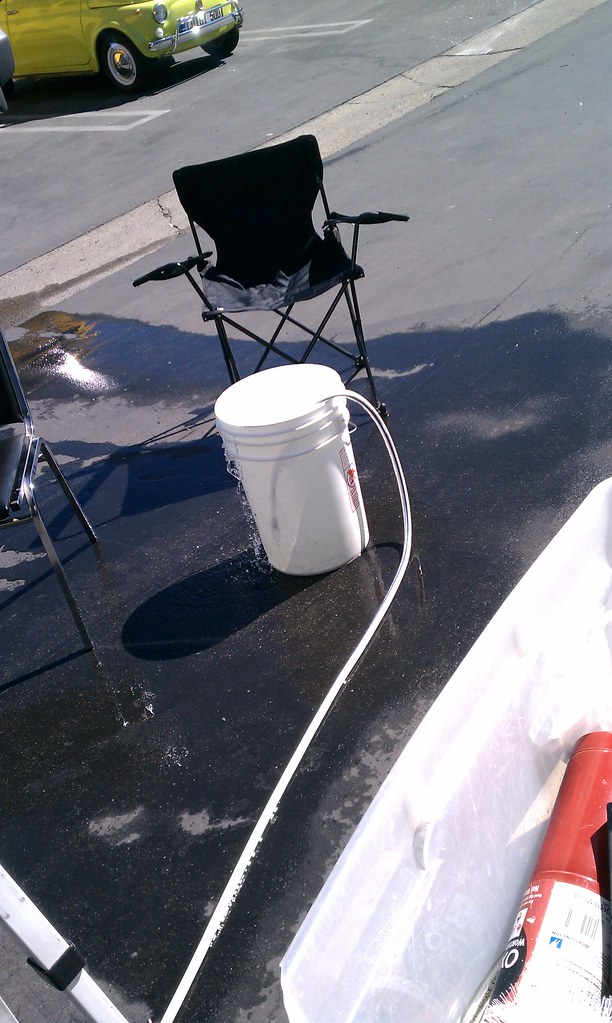
The other cool thing I did during this brewday is make some modifications to my cooling system to capture the water.  My friend Angelo had challenged me to come up with a solution to brew that wasn't so wasteful with water.  For awhile I was carrying buckets of runoff water to my back yard to water it.  I came up with a better solution and put it into action.  After cutting my big hose in half and adding some fittings I was able to connect a hose from the front of the chiller and then to a hose running into the backyard hooked up to a sprinkler.  I can now water my yard during cooling capturing 99% of my cooling water!

Cheers

-SNB

Thursday, May 3, 2012

BaseCamp Dessert aka Bourbon-Vanilla

Breakfast on the Left
Dessert on the Right
Clear shift in color
Over the weekend I kegged up my two beers that started their lives as a split batch of porter.  They started this journey back in March as a 10 gallon batch of porter brewed specifically for SCHF.  Right out of the gate the Breakfast version of the beers I've been calling my BaseCamp series got over a pound of maple syrup but it wasn't until secondary that the other beer, name Dessert, started its story.

As I mentioned last time the base grain bill was inspired by Denny Conn's Bourbon Vanilla Imperial Porter, Dessert represents a slight variation on that original beer.  The beer started this process when I added 4 vanilla beans (the processing of which I botched) to secondary and set it aside to age and meld flavors.

After several weeks in secondary it was time to keg it up and finish the process.  During transfer I tasted some of the vanilla porter that it had become along the way, frankly I was blown away by how much I enjoyed it.  The vanilla was up front and a part of the beer but not in an overpowering way.  When I do this beer again I need to be careful on how I handle the bean remembering that the bulk of the vanilla guts went down the drain in the first attempt. 

Needed to get it transferred quick
so I transferred the at the same
time using two sets of equipment
When I came to add the bourbon I reviewed some notes of Denny's and found he used around 10 ml of bourbon per pint of beer.  For five gallons this came out to be was 400 ml or 13.52 oz which I rounded to 14oz.  For the bourbon I sent my wife to the store to pick some up for me, she came home with some Makers Mark.  This differs from the Jim Beam Black Bourbon that Denny uses but I've used it before and it's Eric from AHP's favorite brand.

I've been tasting the final blend over the last few days as I've been carbonating it and I've been digging the flavor balance.  I recently read an article by Denny "Recipe Formulation: A Road Map to Good Beer" in the latest issue of Zymurgy.  In it he details the process on how he created the recipe for this beer.  It started as his attempt to replicate the flavors he was getting from barrel aged beers without it touching a barrel.  I can see this when I taste the beer but would shy away from saying it's completely successful.  Then again this is my version not his so it could be an unfair judgement. Never-less it's a pretty damn tasty beer.

Now the update I know you've been waiting for - BaseCamp Breakfast aka Maple-Bacon-Coffee!  When we left this beer I had jammed a pound of oven cooked bacon into the secondary fermenter to dry bacon my beer.  3 weeks later the beer had taken on a slight bacon-ness in both flavor and aroma. At the time I'd been worried about getting the bacon out of the fermenter, fortunately the beer had broken down the bacon and it slid right out.  To finish the beer off I added coffee and a very slight amount of liquid smoke.  For the coffee I had to change to a different method as I lacked the time to to a cold extraction.  For a quick coffee boost I asked Bonnie to pick me up some espresso from Starbucks that I tossed straight in the keg.  Taste wise it is ok but long term I will still lean towards cold extracted coffee for beers that will be around longer then a weekend.

If you're hitting up Southern California Homebrew Fest this weekend try to stop on by both the Brewcommune and AHP Brewclub booths to sample both versions of BaseCamp Series 1.

Cheers

- SNB

Wednesday, April 25, 2012

BaseCamp Breakfast aka Maple-Bacon-Coffee

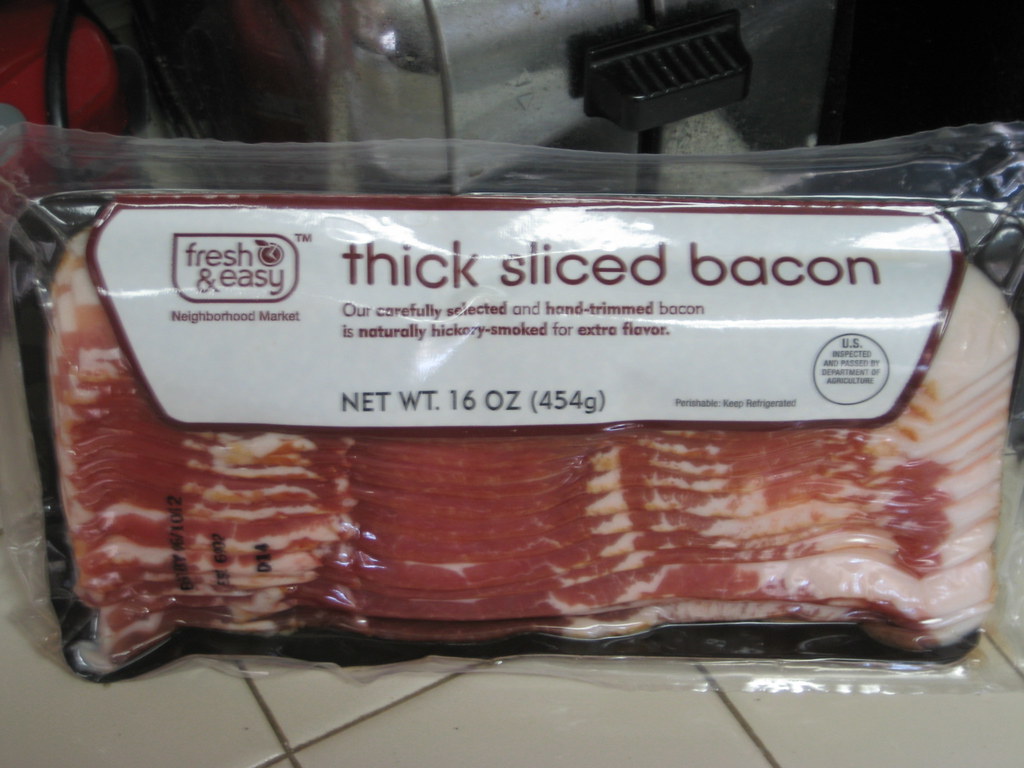
The bacon
I'll be kegging my SCHF Split Batch Porter this weekend so I thought I would present some updates.  If you recall from my original post I set out to brew 10 gallons of beer to split and create two different beers.  The next two posts will cover moving the beer to secondary and kegging them up.   In each post I will talk about what was done to both beers and will provide the recipe if you only wanted to make one version of it.  The first recipe I will provide is for BaseCamp Breakfast aka Maple-Bacon-Coffee.

Bacon and beer, two traditional male stereotypes but could they work together?  It is a question several breweries have set out to answers.  I first read about bacon in beer in Brew Your Own when I was first getting into brewing.  They highlighted San Juan Brewing Co in Washington as an early pioneer of the concept which I have not had the chance to try.  I have gotten a chance to try two bacon beers on opposite sides of good, Rogue's disaster in a bottle Voodoo Bacon Maple Ale and Funky Buddha's wonderful Maple Bacon Coffee Porter. 

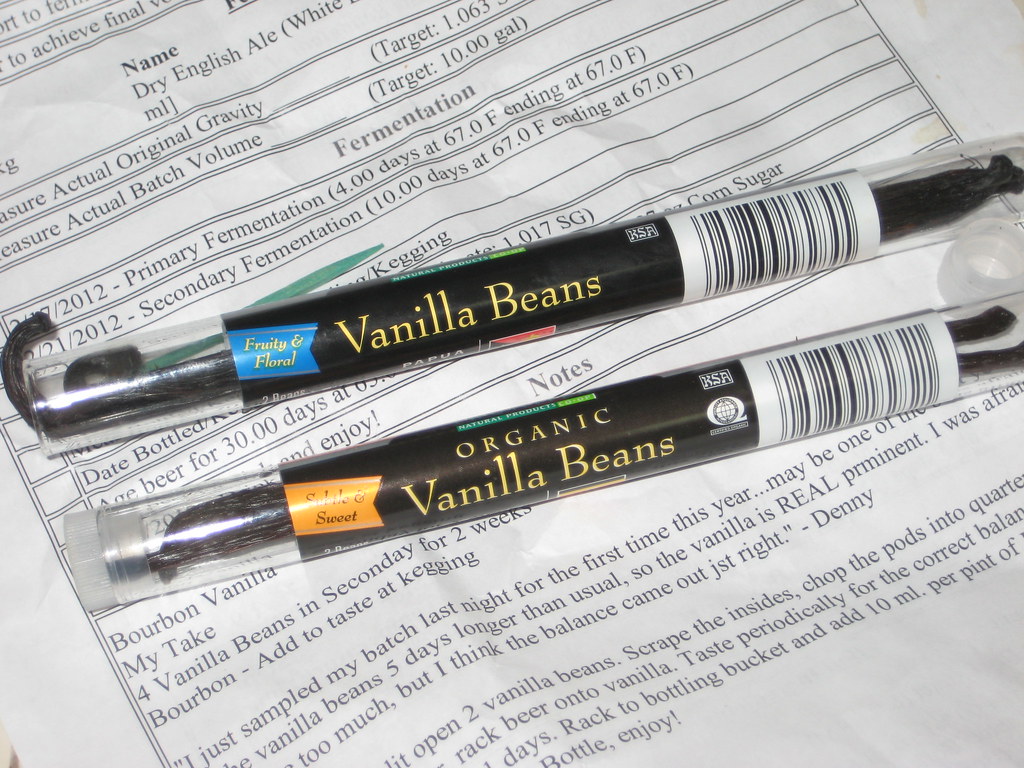
The beans
The premise behind adding bacon to beer is to add cooked bacon to secondary like you would hops. You want to cook off as much of the fat as possible so that you don't kill the head retention on the beer, something that fat does.  The technique that I used was to take a pound of thick cut bacon and cook it in my oven at 350 for an hour.   I used cooling racks over a broil pan so that the fat could drip down.  Once is was cooked I took paper towels and dabbed the surface to remove any additional fat.  I wrapped in a towel and set it aside.   If I did it again I'm going to cook it the same day I transfer and not before.

On transfer day I stuffed the bacon in a sanitized bag and submerged it in sanitizer.  I then jammed the sack into the secondary fermenter and racked the beer over it.  I have a bad feeling that it is going to be a pain to get out after kegging. The only thing that remains to be done is to brew up a batch of cold brewed coffee extract to add at kegging and toss in another 8oz of maple syrup.

Resting until kegging
The other beer half of the porter is on its way to becoming BaseCamp Dessert aka Bourbon-Vanilla.  BaseCamp Dessert as well as the base grain bill was inspired by Denny Conn's Bourbon Vanilla Imperial Porter. I put the recipe together by scrolling through about 89 pages of posts on Northern Brewer's forum to make sure I collected the best version. Let that be an insight to how I come up with recipes, I read - a lot.  I look for ingredients I'm familiar with, interesting ideas and most importantly feedback on how the recipe turned out.  This is also one of the reasons I like to post links back to where I'm looking at recipes, so that you can get a feel for what's out there,

The first step in creating this was to source and prep vanilla beans. I picked up four vanilla beans from Whole Foods, two from Uganda and two from Papua New Guinea. To prepare them I took them and sliced them into sections and scraped out the filling. This is where I screwed up pretty big as I've never worked with them before.  When the directions called to scrape of the fillings I thought it meant to remove it, so I sent most of the good stuff down the drain.  I realized this toward the end so hopefully I'll get some flavor out of what I left behind.  I then tossed the beans into two clean and sanitized yeast vials with some tequila to extract the flavor. When it was time to transfer to secondary I dumped the entire contents of both vials into the transferred beer.  

The only thing left to do on this treatment is add some quality bourbon upon kegging by just pouring it in. No spirit soaked chips on this one my friends.  I'll cover all that next week.  One last thing, on the original post I mentioned plans for harvesting and washing the yeast for a house strain of WLP007.  I didn't do this because I didn't really like how the fermentation went starting with the starter.

Cheers

-SNB
Wednesday, March 21, 2012

SCHF Split Batch Porter

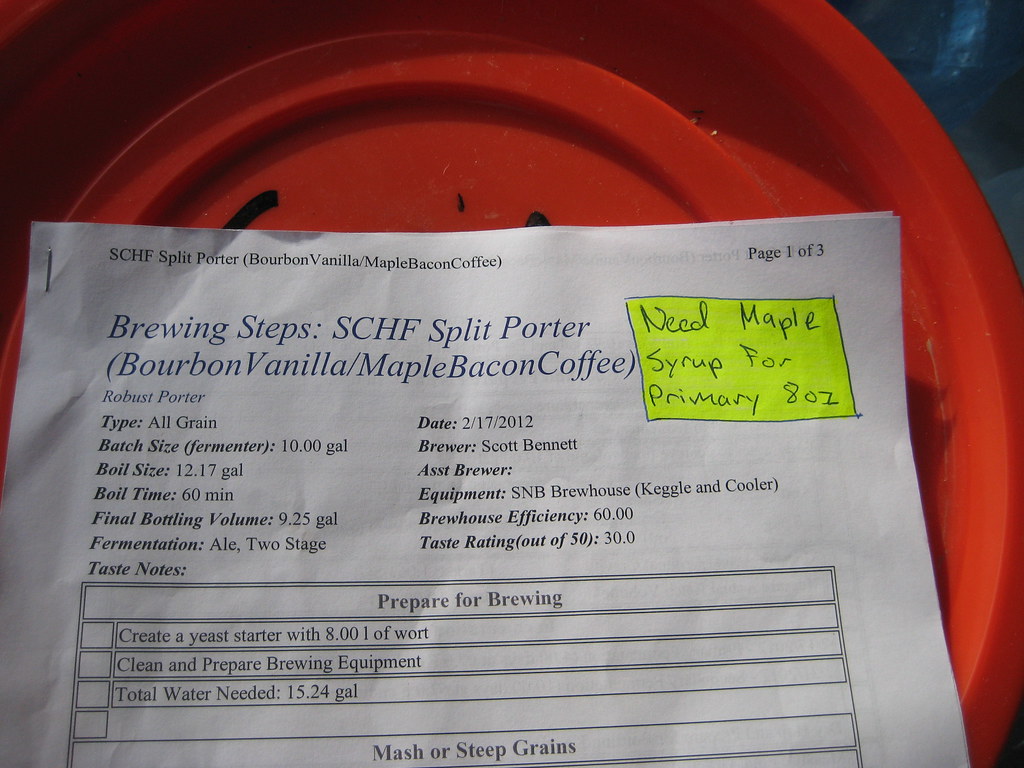
The brewsheet
In anticipation of this year's Southern California Homebrew Festival, taking place at Lake Casitas the first weekend in May, I set aside a Sunday to push my system to produce 10 gallons of beer with the plan on donating half to AHP Brewclub and the other to Brewcommune. When it came time to decide what to brew I had several ideas, would it be an IPL, a mild or bitter to be severed on cask or something completely new?

Last year took up 2 beers; an English-Belgian-American Double IPA that I called Scottland's Yard and a porter with 5 different kinds of peppers called Campsite Smoked Jalapeño Porter. Both beers were a hit and I got a lot of good feedback particularly on the Campsite Smoked Jalapeño Porter. It also happened to be the first keg to kick which I took as a good sign. I realized that I actually hadn't brewed a porter since then so I figured why not brew up a double batch of porter for this year as well


Assistant Brewer in training

If I was going to do it again I wanted to develop a base porter that I could use to create 2 different beers in secondary. To one half I plan on adding 4 vanilla beans in secondary and straight bourbon when I keg it, I am calling that batch BaseCamp Dessert and the other will become a porter with maple syrup, bacon and coffee called BaseCamp Breakfast. For BaseCamp Breakfast I have already added the first of 2 maple syrup additions by adding 18oz of maple syrup that I pasteurized while the main batch was cooling. The second addition will be used to prime keg. I will talk about what I will be doing to each batch more once I move them to secondary.

When it came time to brew the beer I started by making a starter of WLP007 that I could use one vial for all 10 gallons of beer.  My plan really was to make the primary of both beers pretty identical and really create two different beers in secondary so using the same yeast was a no-brainer.  I'm also hoping to be able to use the yeast from the Dessert portion to get a house culture of WLP007 going for this years Imperial Rhino Stout whose brewday is right around the corner. At around 7% the Dessert version is right at the upper limit for reusing yeast.

Overflowing with mash
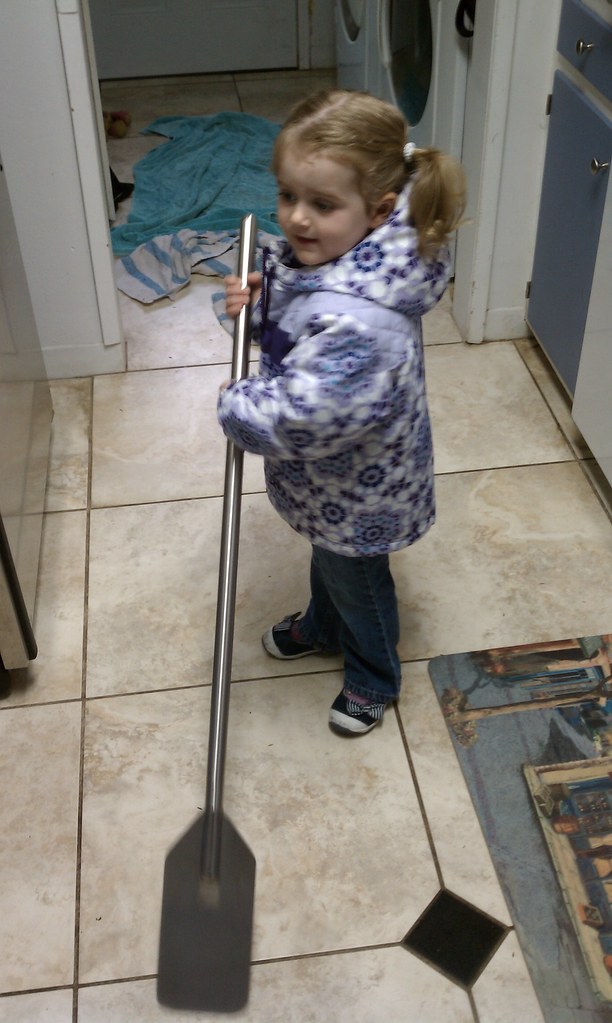
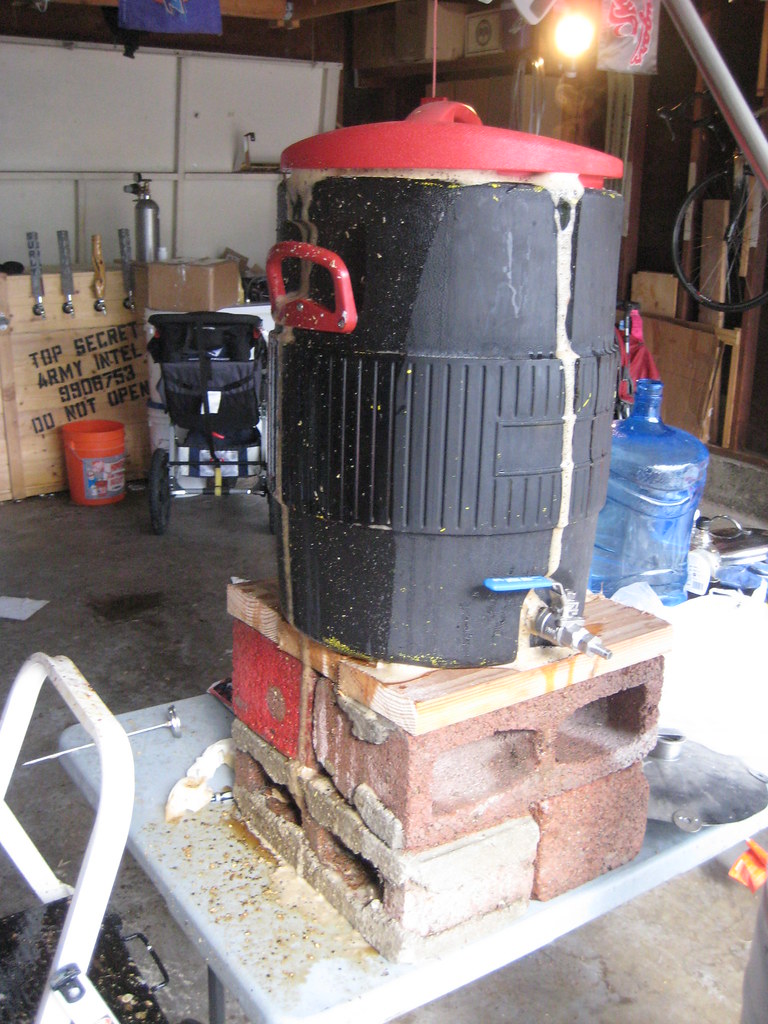
Brewing 10 gallons of the beer required the most amount of grain yet, even with the addition of 3 lbs of light DME I used so much grain that when I put the top on the mash tun the volume it displaced poured over the side.  Still after 60 minutes I held a steady 154 temp, which was about 2 degrees under my target, and got full starch conversion. There was no way my stainless spoon was going to be able to handle the job so I few days before I brewed I used an Amazon gift card my brother gave me for my birthday to buy a 48" stainless paddle.  I had planned on buying a $10 wood paddle buy they had none in stock.  I love my new paddle, though I had to close the garage while stirring as I kept hitting it.

You might recall my frustration with the efficiency I'd been getting and more so to the point that even as I'd been lowering my efficiency I was still missing my target OG. I mentioned last time I brewed back in January that I had an idea where my problem was, my equipment settings.  Between then and now I spent some time looking at what variables others with similar equipment were using.  It turns out the default evaporation setting for a keggle (boil kettle made out of an old keg) was way off.  If I recall correctly it was set at almost 20% and when I looked online most people where getting 10%.  Adjusting this setting made all the difference in the world and I ended up with a 10 pt efficiency gain, pushing me into the 70s.  I also got to test out the refractometer that Shawn gave me when I bought his old grain mill. The flap is broken off but it still works great you just have to hold it in place.  I calibrated it against my hydrometer and ended the value in to the calibrate refractometer section of the brewing app I use.

Tuesday, October 11, 2011

Brewdemo and Scott's Session Series 4: DG's Mild

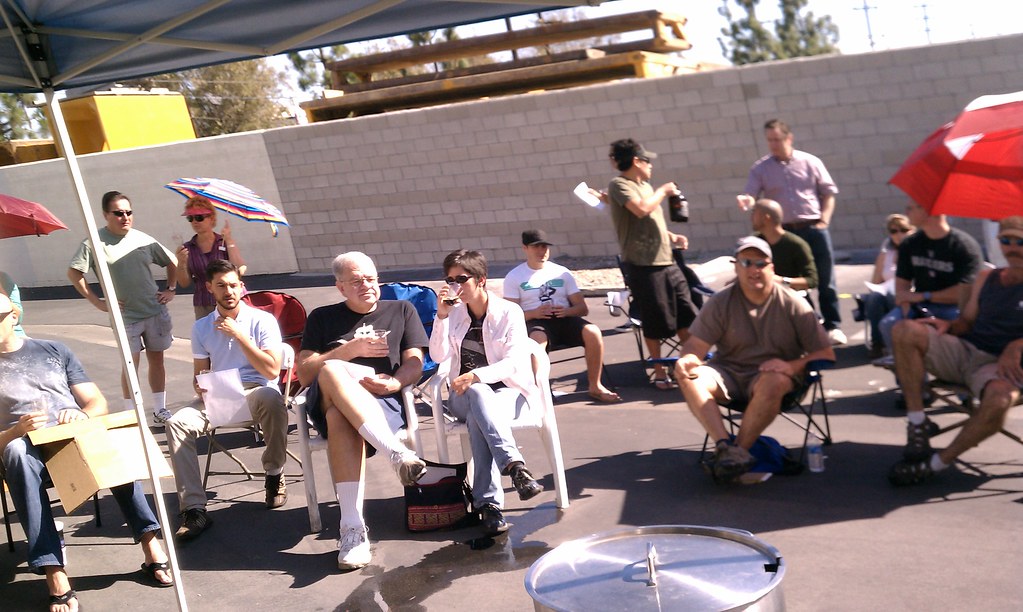
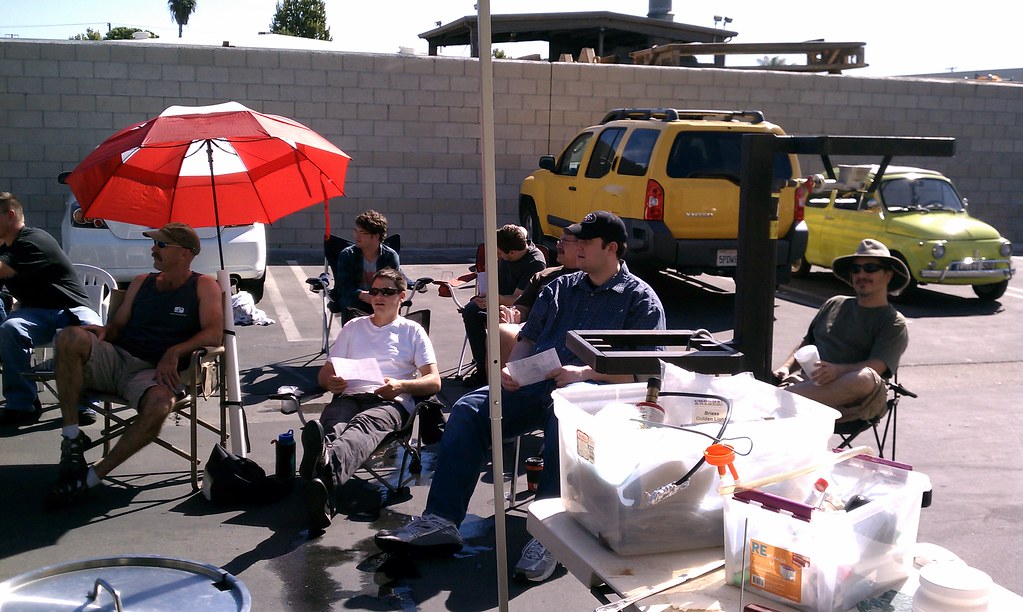
On Sunday I did a extracting brewing demo at Addison Homebrew Provisions.  I planned it with Eric several months before but it took me a long time to figure out what I wanted to brew.

I toyed around with a bunch of ideas and tried to get some feedback on them. They included:
A Flemish red
A sour session over peaches
A viking porter
A session wheat (maybe open fermented)
A California Common over fruit (probably peaches)
An Old Man Winter

The biggest theme ended up being my desire to have some more session ales on the Crate.  

While flipping through the Stone book The Craft of Stone Brewing Co.: Liquid Lore, Epic Recipes, and Unabashed Arrogance that I got off of Amazon I came across the recipe for Lee's Mild and decided to give it a go.

Besides converting the recipe to extract the only change I made was to sub the Northern Brewer bittering hops with Columbus (which is a Northern Brewer Sub) and add some Cascade hops for flavor and aroma.  I still keep the IBUs very low.

Here is the recipe I ended up with

Scott's Session Series 4: DG's Mild
Mild
Type: Extract Date: 10/9/2011
Batch Size (fermenter): 5.00 gal
Brewer: Scott Bennett
Boil Size: 7.37 gal Asst Brewer: 
Boil Time: 60 min
End of Boil Volume 6.24 gal
Final Bottling Volume: 5.00 gal

Beer Profile
Est Original Gravity: 1.038 SG
Est Final Gravity: 1.009 SG
Estimated Alcohol by Vol: 3.8 %
Bitterness: 29.2 IBUs
Est Color: 18.1 SRM

Ingredients

Extract and Steeping Grains
4 lbs 4.0 oz Light Dry Extract (8.0 SRM)
9.8 oz Brown Malt (65.0 SRM)
9.0 oz Caramel/Crystal Malt -150L (150.0 SRM)
3.2 oz Chocolate Malt (350.0 SRM)

Hops
0.50 oz Columbus (Tomahawk) [14.00 %] - Boil 60.0 min
0.25 oz Cascade [5.50 %] - Boil 20.0 min
1.00 oz Cascade [5.50 %] - Boil 0.0 min

Other
1.00 Items Whirlfloc Tablet (Boil 15.0 mins)
1.00 tsp Yeast Nutrient (Boil 15.0 mins)

Yeast
1.0 pkg Dry English Ale (White Labs #WLP007)

Steep grains in 1 gallon per pound of grain at 160 for 30 minutes


While finalizing some equipment I wanted to borrow from Eric he mentioned that his brew kettle was 15 gallons.  A light went off in my head and I decided to scale the recipe to 10 gallons to split batch. I love the concept behind split batch recipes and I wanted to do one on my own for a while. I choose to do 5 gallons to the recipe and for the other I would do a starter of my WLP670 strain and pour the fresh wort over some frozen peaches from whole foods that I would pasteurized and cool during the demo.

I overshot the temp on the steeping water which wasn't a problem as I showed the crowd hot to remove a gallon of the 180 water and replace with additional filtered tap water.

After the 30 minute steep we filled the kettle with 10 gallons of water and added the 8.5 lbs of DME which I had a volunteer stir until dissolved while I turned on the heat to start bringing the temp up.

At the start of the boil it looked like we were easily around 14 gallons wort ready to go.

I then put 3 lbs of frozen peaches in a separate pot to pasteurize.  I needed the small burner for this so I simulated running out of propane mid brew and carefully with more audience participation moved the main pot onto Eric's brew stand.

In total we boiled a little over 60 minutes

The measured original gravity corrected for temperature ended up at 1.042 SG

Here's the pics I took.

Crowd Shots
Two grain bags steeping in 2.5 gallons of water
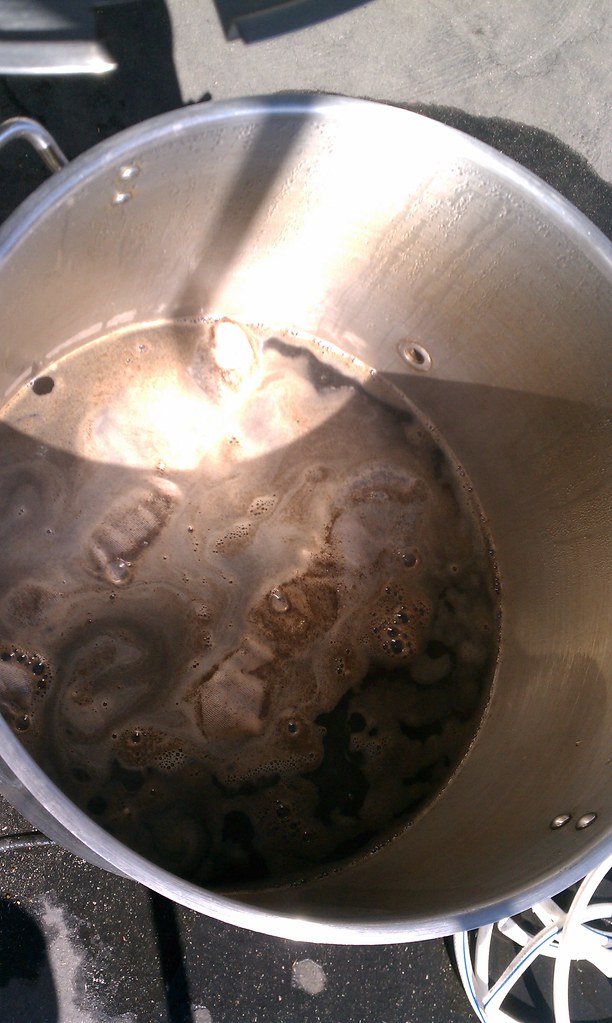
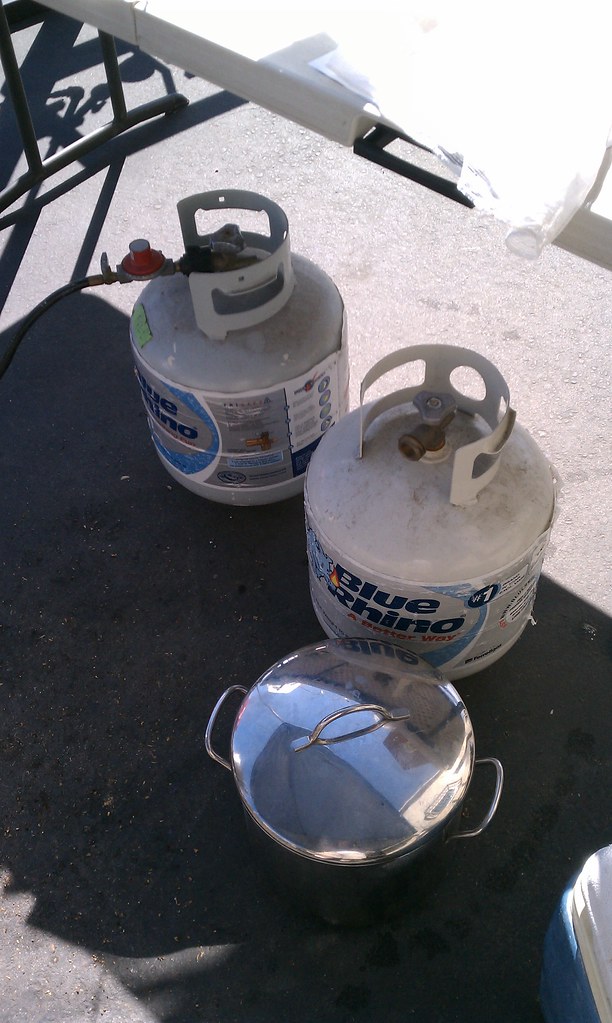
Propane and my DME/Peach pot
Getting ready to boil, now that's a lot of wort
Hops
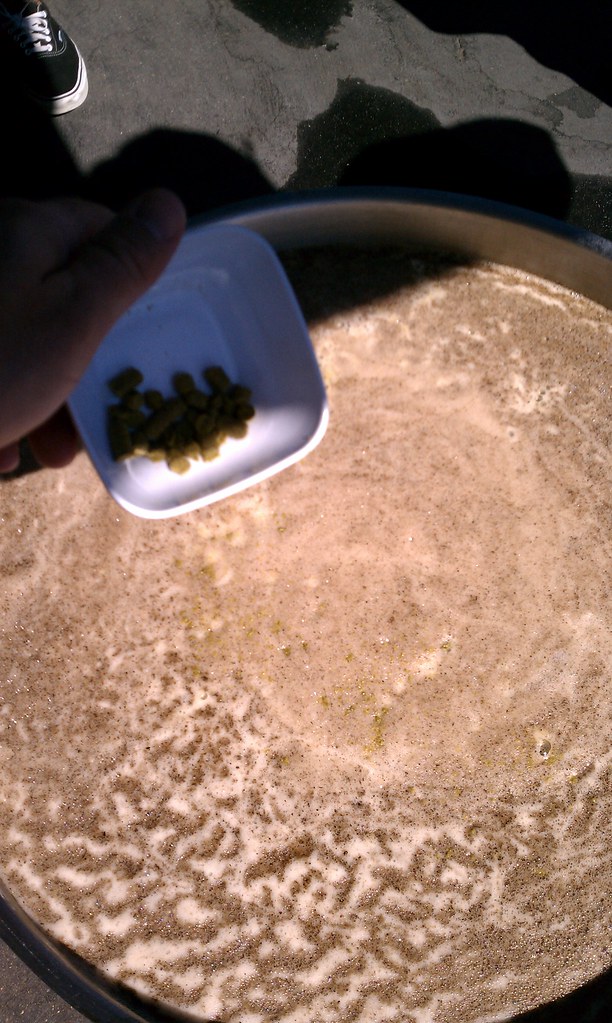
60 minute addition
Hops moved to the brew stand
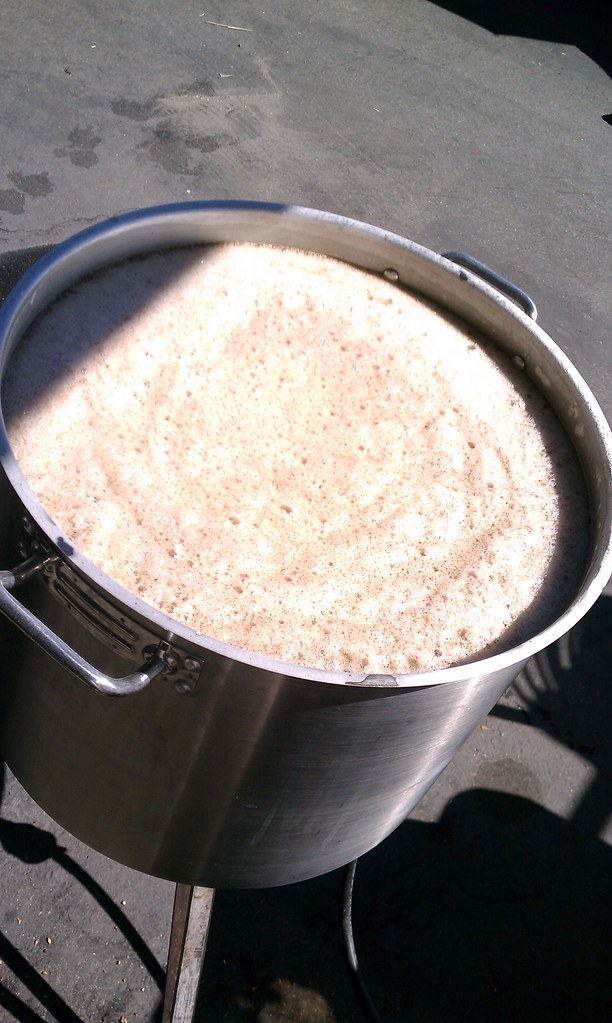
Boiling away
Cooling down
Collecting some of the hot run off to clean up with later
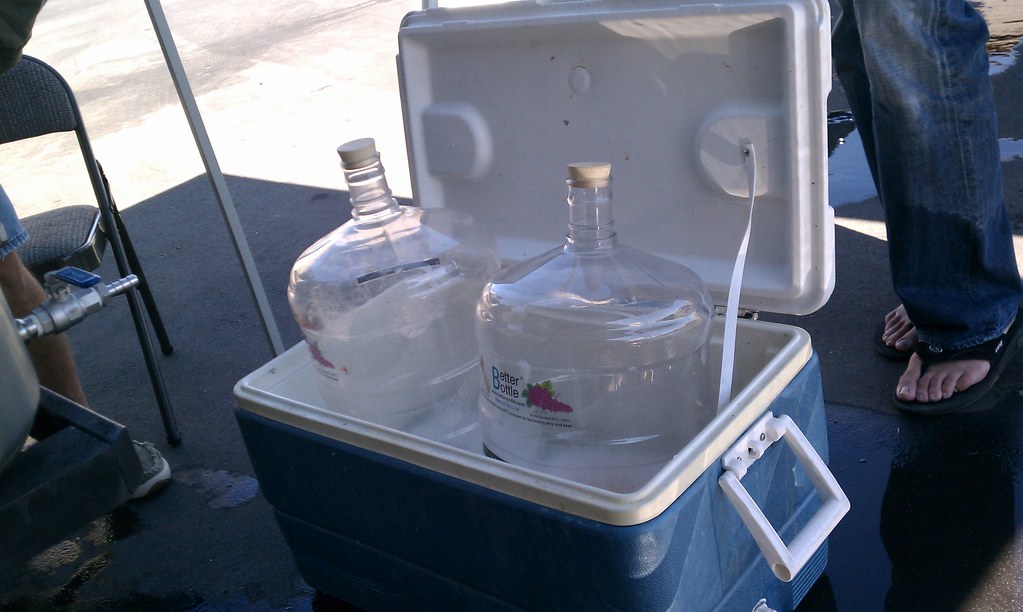
I used a cooler filled with Ice water to help get the beer cooled down the rest of the way
Trub Island after the whirlpool
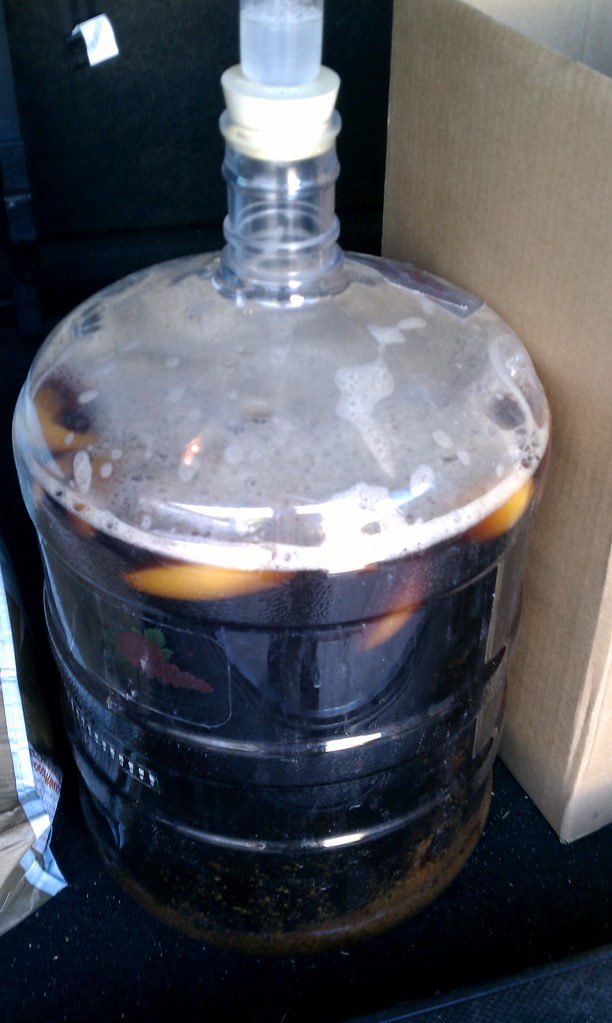
The peach version with WLP670
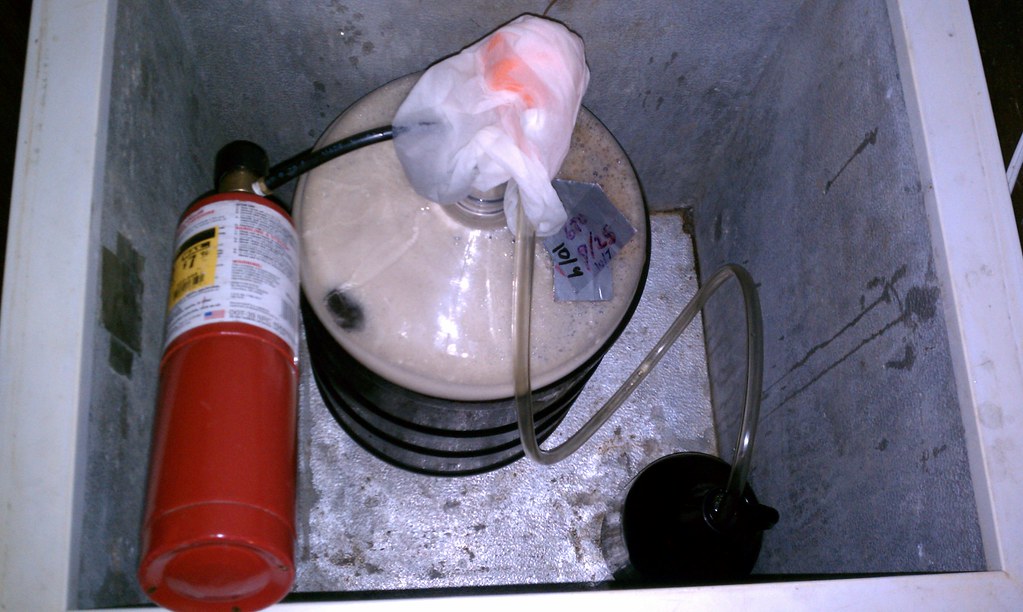
Inside the fermenting cube with a blow off
4 hours later another shot of O2
The next morning - that's why I use blow offs
Related Posts Plugin for WordPress, Blogger...