Header Image

Showing posts with label East Coast Yeast. Show all posts

Monday, August 5, 2013

Sour Citra Saison - Same Grain Same Style Different Brewers No.1

The OG beer signal 
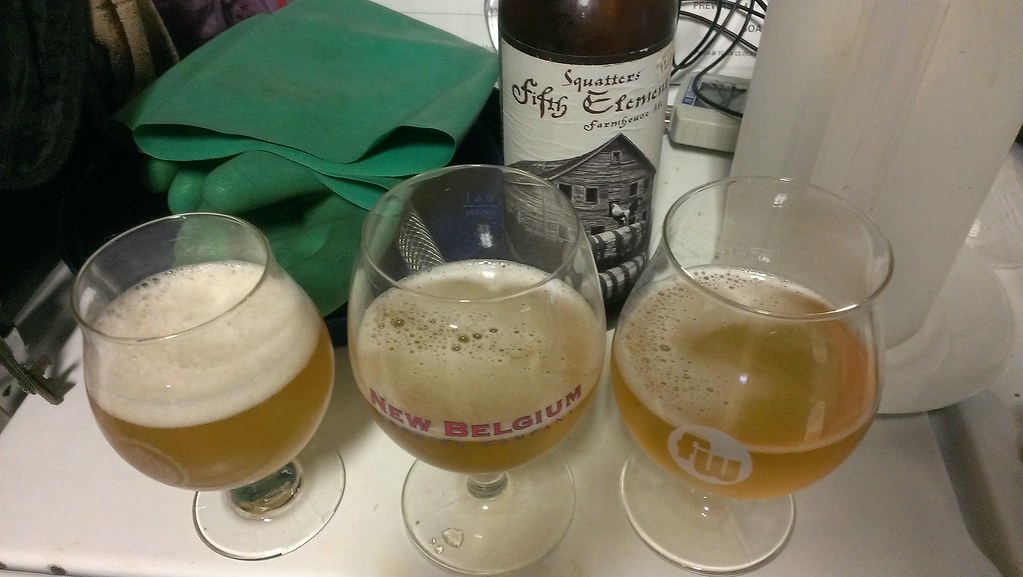
A few months back Steve J and Daniel F came up with the idea for "a different kind of 'collaboration'". One that involved brewing the same style of beer and the same grist percentages.  After that, every other aspect (gravity, hops, yeast/bugs, spices etc) was up each brewer. The style for what I am assuming/hoping will be the first of many rounds was determined to saisons. The grist percentages were set at 86% Belgian Pilsner, 11% Spelt and 3% Rye As I've mentioned before saisons aren't my favorite style as they tend to have a wide range of flavor and aroma profiles considered to be "in style" however certain saisons, such as Fifth Element from Squatters, are among my favorite all time beers.

I knew right away that I wanted to team up with Shawn O on this one.  My idea for how I wanted to collaborate with Shawn was pretty simple, 1 mash and 2 kettles.  Basically do the mash for around 11 gallons of wort production and split it into two kettles.  This would allow each of us total control on hops, spices etc.   Initially I figured that he would brew a clean to version while I would sour it in some way.  It quickly became apparent that he also wanted to play around with some bugs, which I was in no way surprised by.  

After a couple of weeks of swapping ideas between each other over various conversations, calls, texts and emails we settled on plan of attack.  Each of us would do our own sour starter which we would combine and add to the mash when we got together.  I would take 6 gallons of wort and add 1.5 gallons of RO with a 60 minute boil targeting a 1.048 SG. Shawn would take the balance adding slightly more RO and do a 90 minute boil looking have 1.037/8 SG.
If you are going to brew a sour saison...
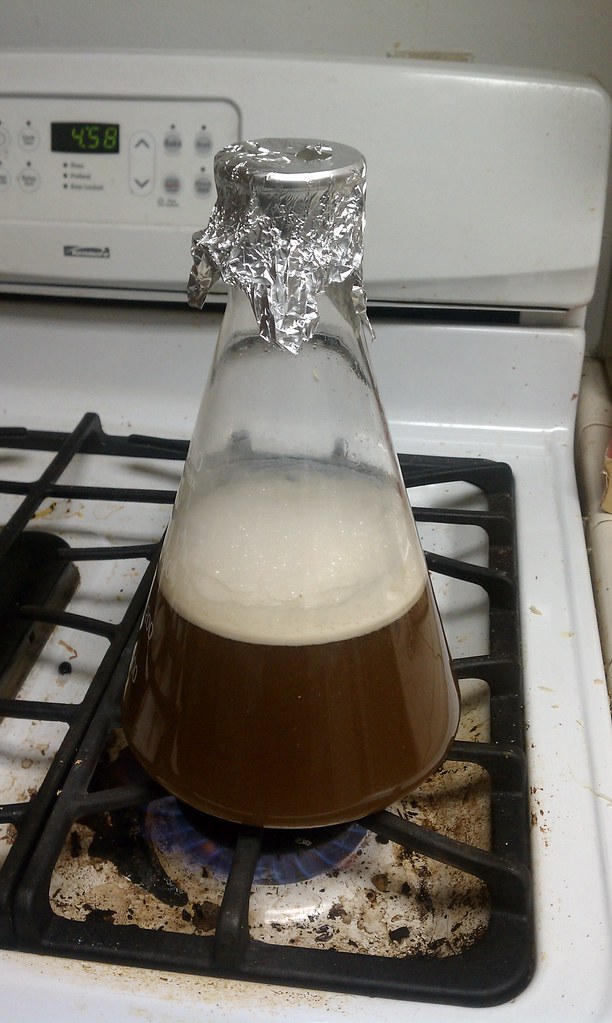
To prep for brewday I made a gallon starter with pilsner DME which I split between two vessels.  The first vessel was a quart mason jar with a half a cup of raw unmilled grain. This became my sour starter as lactobacillus is naturally present on the hulls of grain.  I tried my best to keep it at 120°F using an old Polystat Constant Temperature Circular I had rescued from the trash at work.  Unfortunately the reason it was tossed was that it couldn't cool, which at the time I wasn't concerned about, however as I learned this meant that it would continue to drift up over time.  I was able to remedy this by setting an upper limit which shut it off if it was above, this was accompanied however with a nice alarm. The remaining gallon became the start for an old pitch of ECY04 Brett Blend #1
ECY04 Brett Blend #1 - Three individual Brettanomyces isolates from lambic producers combined to give an aggressive brett presence in any beer. Vigorous, funky, and acid-tolerant, the blend can be added at any stage of fermentation and is excellent for priming or re-yeasting. Contains B. anomala, B. clausenii and B. anomulus
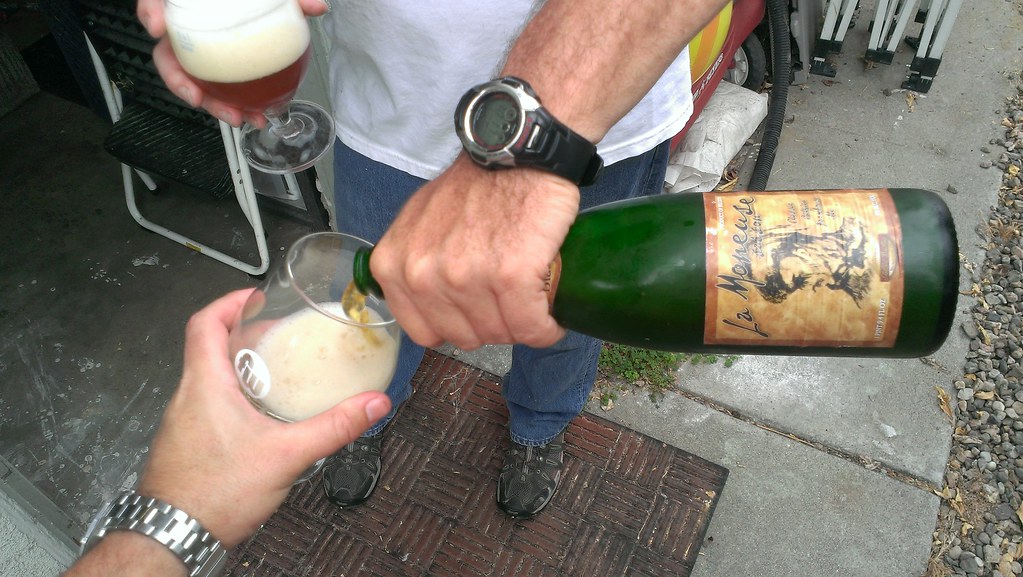
A new saison that I approve of
For the hops I decided I wanted a BIG Citra presence so I planned to hop burst with a good amount of at 20 and 0 while keeping the IBUs contrained (more pale ale level than IPA).  For the bittering hop I decided to go with some Cascade given it's dual use potential.

Brewday itself was a blast.  I headed over very early to find the mash water almost at temp and Shawn waiting for me to mill.  After getting everything set to go we tasted and tested our sour starters.  Both had a pleasant sour bite and combined for a 3.63 pH so we tossed the liquid into the mash.  My brother Ryan (who recently moved to Cali from MN) soon arrived to hangout and help me brew.

In the end we both beat our target gravity with me coming in at 1.051.  It was great to brew with Shawn again as every time I do I learn so much.  The beer is currently fermenting in a poor-man fridge and smells absolutely incredible, I can't wait!

Santé 

-SNB

Tuesday, September 18, 2012

Split Batch Sour Red

These starters are making me thirsty
As you may know a while back I got my hands on four vials of  East Coast Yeast (ECY01 BugFarm, ECY02 Flemish Ale, ECY04 Brett Blend #1 and ECY07 Scottish Heavy).  For my first forte in I used the ECY07 Scottish Heavy for my Project S.C.O.T.T. Strong Scotch Ale.  I have to say that so far I'm pretty happy with the results I'm seeing (In Progress Tasting).

I knew that I needed to the remaining vials soon than later so I put together a quick schedule for the next several brews.  The best way to work through them fast was to a couple of split batches, but which to use first?  

Initially I planned on doing a 10 gallon version of My Funky Brother Brett, using WLP645 Brettanomyces Claussenii in half and ECY04 Brett Blend #1 in the other.  I decided that it would be more purdent to come up with a recipe that would allow me to use more of what I had on hand.  I therefore decided to do a 10 gallon split batch of a red ale to make a Flemish Red and a red sour (BugFarm).

My other piece of new equipment
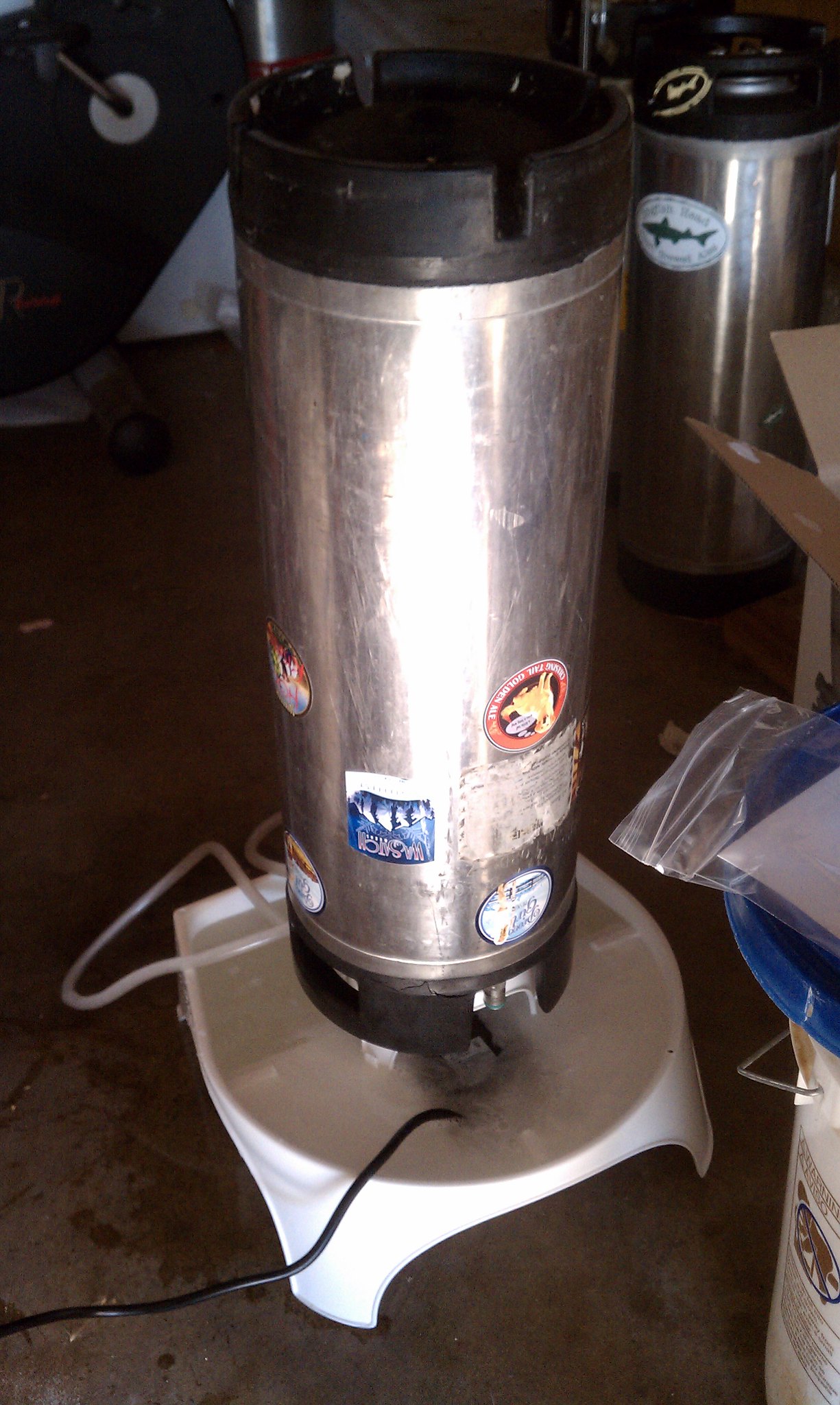
Mark II Keg Washer
At the beginning I was leaning toward doing all 10 gallons clean, like I did for Halvtreds, adding the bugs to secondary.  I had also planned on using my standard red ale grist modified for a lower gravity.  In the end I decided to do a more standard Rodenbach grist with a few SNB modifications. I also decided after researching Flemish Reds to add the ECY02 Flemish Ale for primary. Most of the recipes had called the sour yeast (mostly Wyeast's 3763 Roeselare Blend) in primary so I figured why not.

Brewday also gave me a chance to break in some new equipment I'd recently procured for myself, primarily in the forms of pumps.  I'd found a pump on Craigslist a while back and picked it up.  Not knowing the full history of what it was used for I decided that it would only touch cooling water.  The other was a Chugger Pump I'd convinced Eric to carry at The Shop that I planned to use initially just for recirculating but ended up using to fill the kettle as well.

So far I'm really digging the flavor I'm getting from the ECY02 Flemish Ale.  At first I was concerned given the not existent activity I'd seen.  Apparently it was in fact hard at work reducing the gravity into the 20s during it's first week.  I'd watched a Wyeast video about berliner wiesses where they found they got more sour results starting with the sour strain for the first week then adding a second clean strain to fermenting beer.  I decided to do something similar to the red by adding the remaining pack of US-05 I'd used to prime the single "barrel" bottles of Barrel Aged 33

Cheers

-SNB

Monday, August 6, 2012

Scott's Scottish on Scotch (AKA Project S.C.O.T.T.)

Could use an acronym
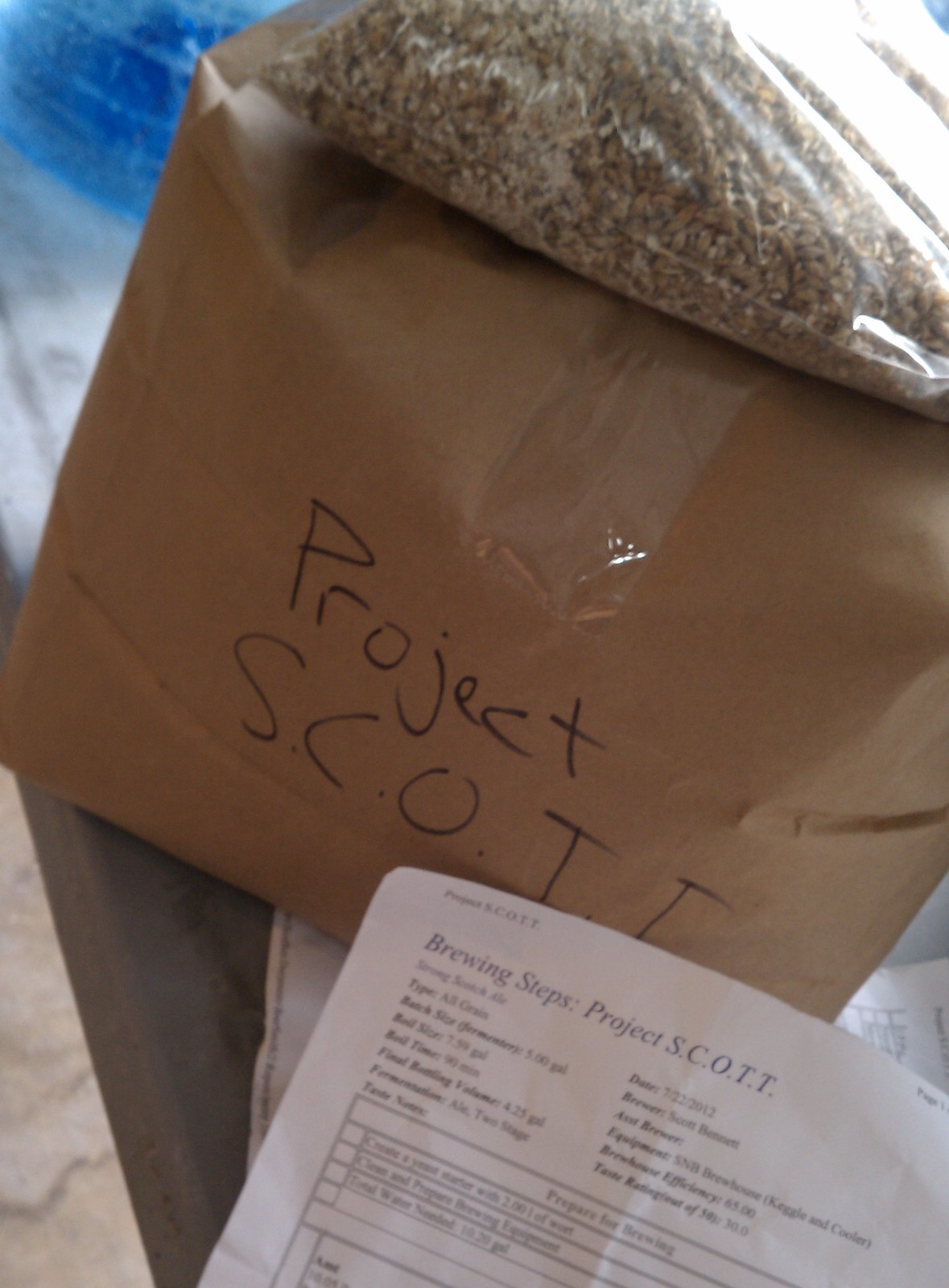
A while back I got this crazy idea about getting together with a bunch of other guys named Scott and brewing up 10+ gallons of a massive Scottish Wee Heavy which we would then age on Scotch soaked oak cubes.  I named this idea Project S.C.O.T.T. - ending up calling it Scott's Scottish on Scotch

It floated around in my head for a while but never really congealed into a solid plan. It appeared to see some progress in June when I was finally able to get my hands on some East Coast Yeast.  In addition to ECY01 BugFarm, ECY02 Flemish Ale and ECY04 Brett Blend #1 (yes you'll be seeing a lot of East Coast Yeast posts in the near future) I decided to pick up a vial of ECY07 Scottish Heavy.
ECY07 Scottish Heavy - Leaves a fruity profile with woody, oak esters reminiscent of malt whiskey. Well suited for 90/shilling or heavier ales including old ales and barleywines due to level of attenuation (77-80%) - recommend a dextrinous wort. Suggested fermentation temp: 60-68°F.
I figured picking up the vial would be the push I needed to get a Scott team together.  It wasn't and after over a month of sitting on it I decided to a least run a test batch through.  I therefore set out to run Project S.C.O.T.T. solo, Han style that is.

That's a lot of yeast
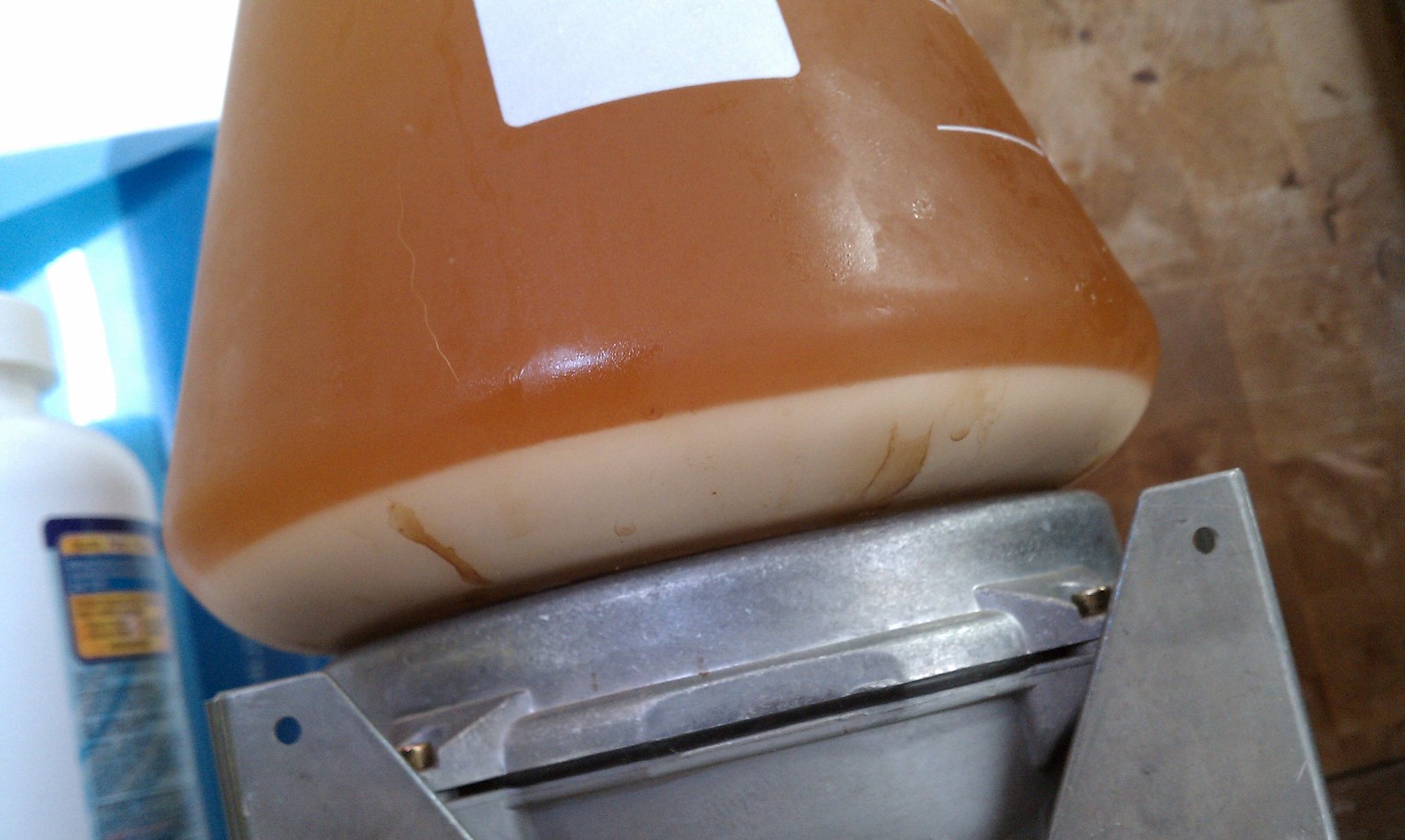
This also afforded me a great opportunity to test out my recently completed stir plate.  It took me a little bit to figure out how to seat the stir bar so that it would correctly spin. Pro Tip: It's best to align it prior to powering up.  Other than that it worked like a champ.  I fired it up on Friday night for a Sunday brewday and with an overnight cold crash I had an impressive layer of yeast in the morning.

For the recipe I did my usually online research.  I was looking for something in the high range 9-10%.  I looked for tasting notes and any comments that I would find favorable.  I also compared recipes to see if there was a common theme in the grain bill, this was how I decided on a generous base of British Golden Promise and Maris Otter.  For the hops I decided to see what I had left over in the fridge the morning of brewday.  I decided to keep the hops balance for more of an ageable beer then a hoppy beer but still include a slight amount of flavor and aroma hops.

Man, this thing has been
killing me lately
As will a lot of massive gravity beers my efficiency suffered slightly resulting in a slight dip from my target gravity of 1.095 ending up being 1.092 including a slight loss of volume. I roused the yeast everyday for the first week till the activity started to die down and every so often since.  My hope is to drive it into the low 20s to reduce the level of sweetness and round my abv in the 9-10% targeted range.

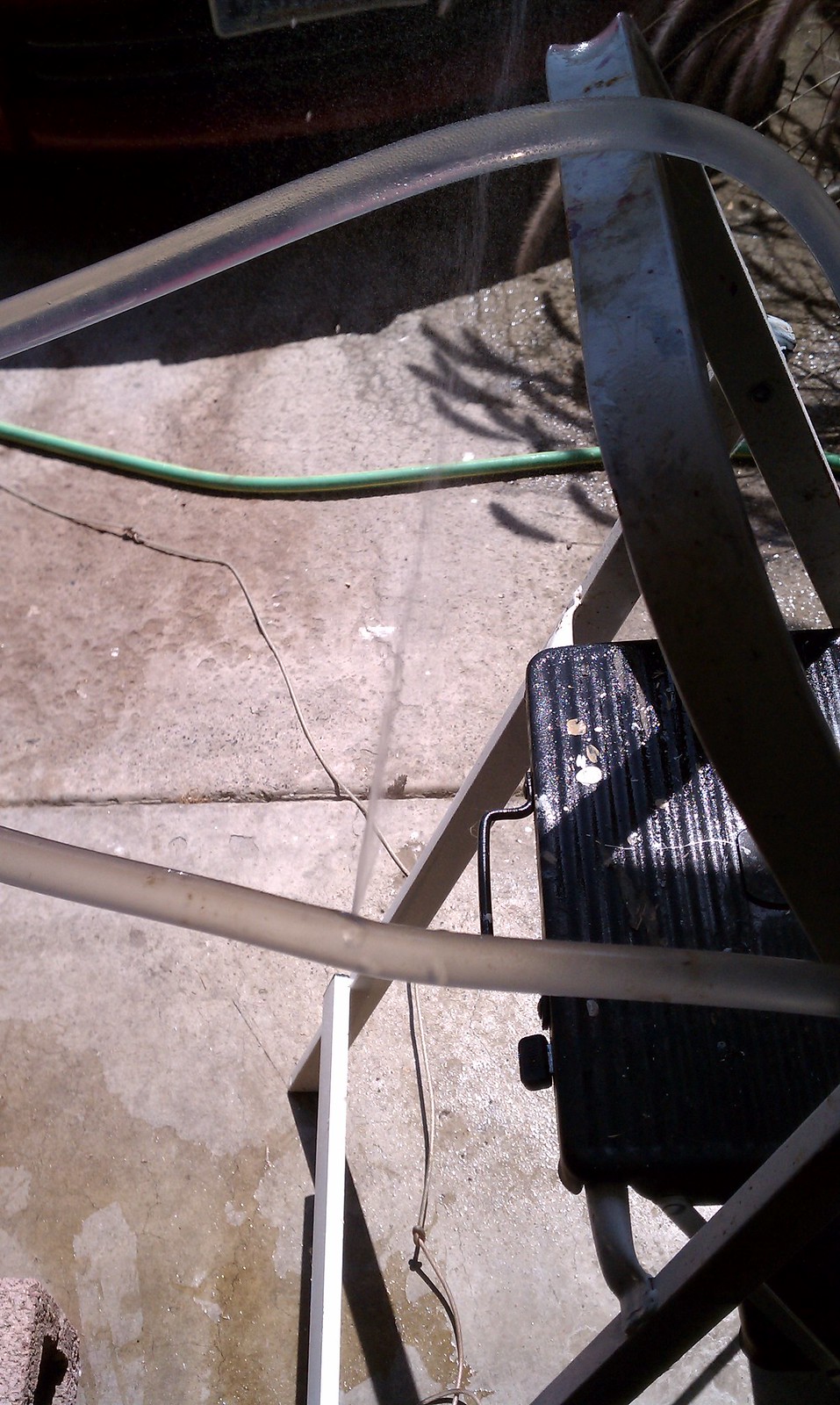
The only minor issue I ran into was a leak in tubing of my wort chiller.  It had had a slight burn in the outer layer and with the pressure a small hole burst.  It wasn't a major problem like the one I experienced with the GRANDE IPL (currently is progressing nicely) but enough to warrant a full tare-down of the existing tubes and a full redesign of my cooling procedure.  I've got a couple of pumps that I'll be rigging up to put into service for my next brew, one of which will be decided to moving ice water through the chiller similar to how Shawn does it. 

Cheers

-SNB

Tuesday, January 17, 2012

Souring Halvtreds

The Selected Line-up for the Experiment
Having missed another opportunity to get my hands on some East Coast Yeast, I decided it was time to go with plan 2 (really plan b but blogger will only let me do numbered lists) on souring Halvtreds.

Wait you mean to tell me you had backup plans? Hey, it's me.

So basically I went in knowing I had three options for souring the beer post primary/lager.
  1. A vial from East Coast Yeast.  I was eying (and still am) ECY01 BugFarm, ECY02 Flemish Ale, ECY04 BRETT Blend #1, ECY05 BRETT Blend #9 and especially ECY20 Bug Country.
  2. Harvest dregs from select sour beers into a starter wort. 
  3. Grab a vial of White Labs sour mix.
The Harvesting Station
The reason I went with the second option as my backup plan is that I wanted to create something a little bit more funky and in your face sour.  Everything I've read online suggested that to do this bottle dregs from similar level beers was your best option.

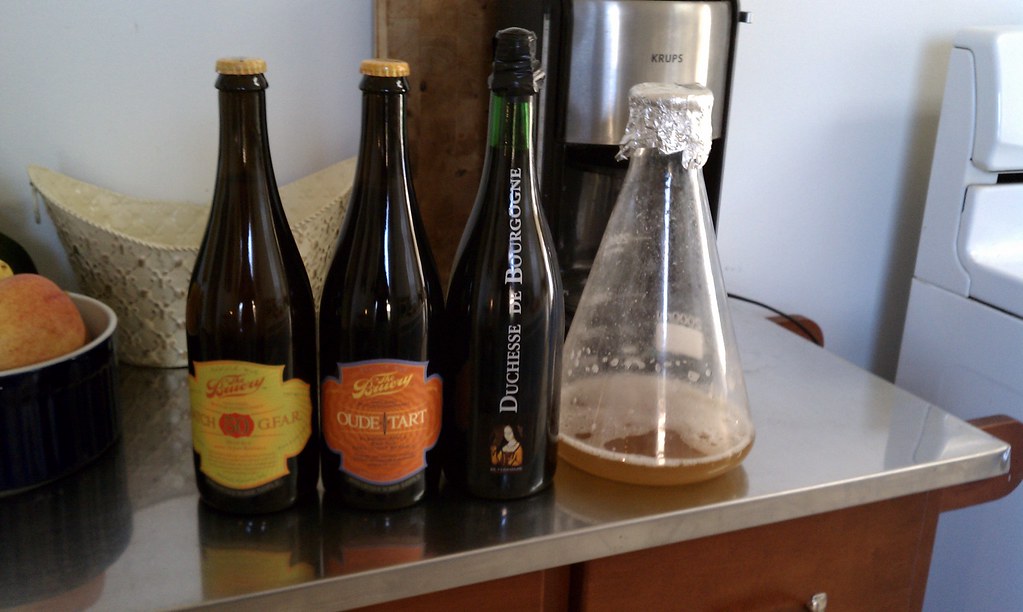
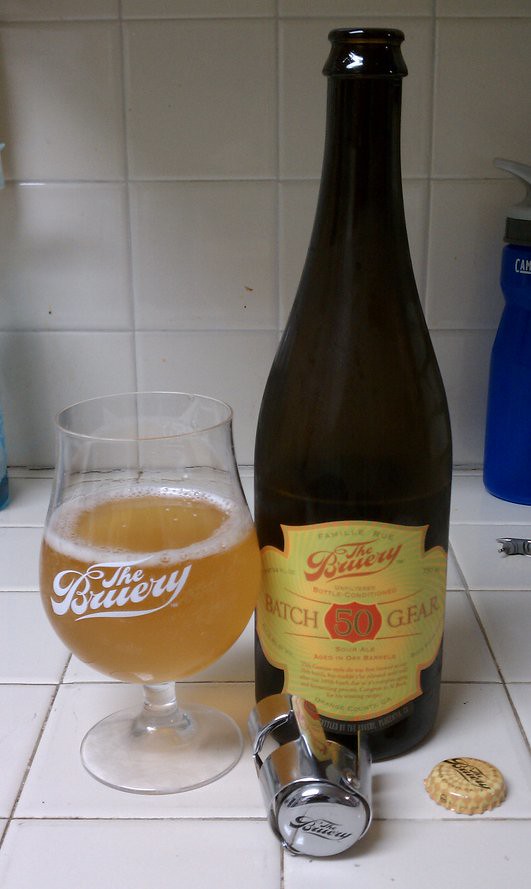
I selected three beers for my experiment in harvesting dregs: The first beer I selected was Batch 50 from the Bruery. It has a nice level of clean sourness to it and contains ECY04 BRETT Blend #1 as a bonus.  Next came Oude Tart, again from the Bruery, which is a Flanders Red Ale and one of the inspirations for Halvtreds. For the final beer I brought out her highness the Duchesse de Bourgogne.  The Duchesse as I call her is my favorite Flanders Red Ale and having it back to back with Oude Tart really showed off how young the Bruery is when it comes to it's sours.  Both are exceptional beers but the Duchesse has a level of sour complexity that is in another league when compared to Oude Tart.

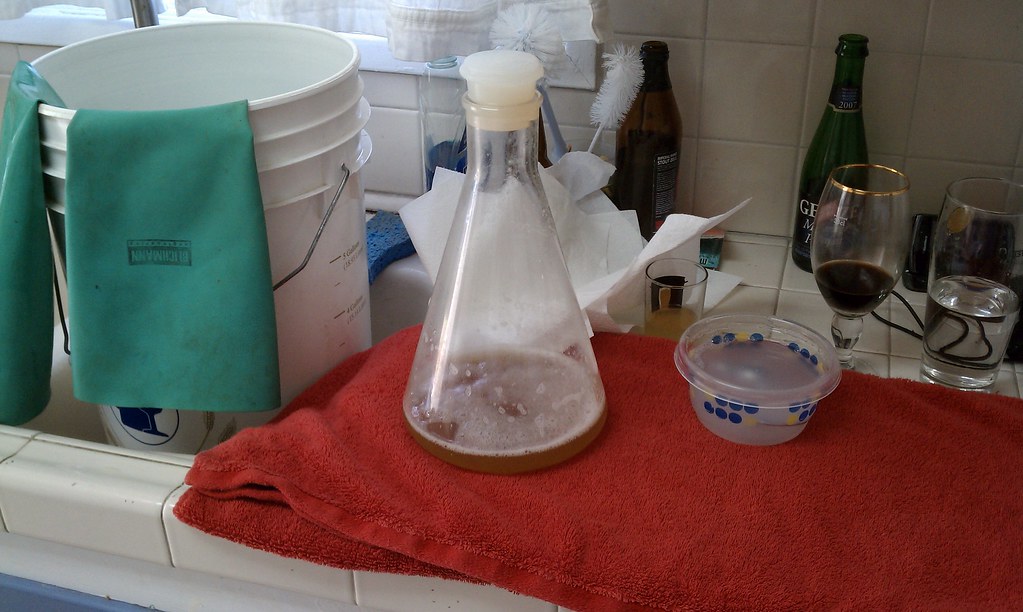
After all the Dregs were Pitched
With the three beers selected it was time to find someone to help be drink them.  Fortunitly my brewbrother Daniel was available to stop by for several hours to help me enjoy them, I know, tough work. 

Just prior to Daniel coming over I put together a quick pint starter using a 1/4 cup of wheat DME and 16 oz of water.

Given that I wanted to preserve the yeast and keep it uncontaminated I devised a system for opening, pouring and then harvesting the yeast in a santiary way.  To start I whipped up a fresh 5 gallons of StarSan.  This allowed me to fully submerge (carefully to not disturb the yeast) to sanitize the bottle prior to opening.  To open the bottle I used my metal mickey opener which I kept in a bowl of StarSan.  Once opened I pour most of the contents into three glasses, I then cover the top with a paper towel soaked in StarSan and swirled the bottle to free the yeast.  I then poured the liquid into the beaker of starter wort via a sanitized funnel.

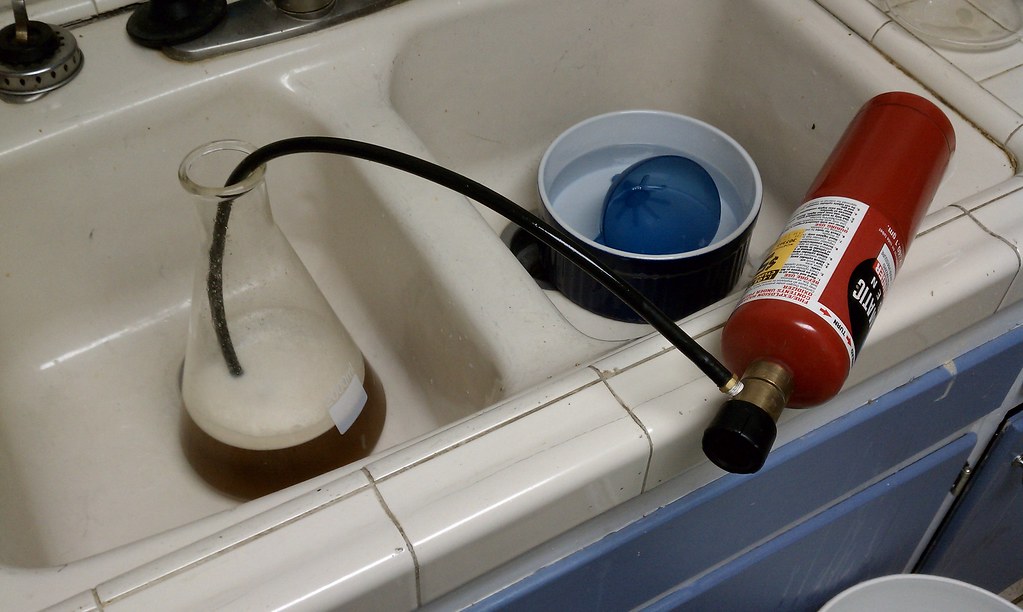
Aerating the Additional Wort
I ended up pouring a little bit more beer then I had planned on so I whipped up another pint starter to add to the flask.

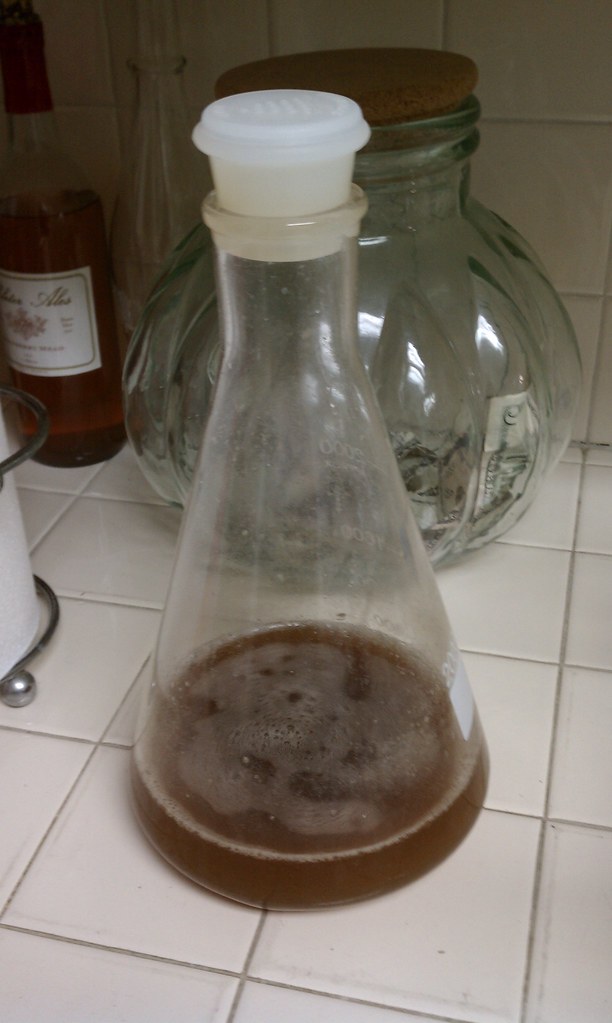
After several days of no activity, swirling the flask when I walked by, I was worried I'd have to go with option 3 but fortunately after 5 days I started to notice positive pressure and bubble formation.  After letting it continue to ferment the starter with additional swirling activity started to slow after a few days.  I'm heading to Canada for a few days this week and before I leave I will cold crash the starter.  One I return I'll decant it and pitch it into the beer and set it aside to age for a few months before I add fruit to it.

Cheers

-SNB

Thursday, December 22, 2011

Transferring Halvtreds to Secondary

Halvtreds at 3 weeks
I find that I mostly post about brewing but don't spend to much time discussing/update what happens after I pitch the yeast.  This will be a quick post about transferring to secondary complete with some tips I've picked up.

When we last left Halvtreds it was a few days in primary at 55 degrees.  I generally start all of my lagers at 55 degrees, I know some people throw it down straight to "lagering temps" in the 30s - 40s but I question where they learned this.  My lagering techniques come from two sources, Shawn and his years of brewing and Gregory J. Noonan's New Brewing Lager Beer which Shawn recommended I read.

My lagering schedule looks like this.  8-10 days primary fermentation at 55 degrees.  Once primary fermentation has slowed I perform my diacetyl rest by raise the temp to 68 degree for a couple of days.  This helps the yeast clean up any diacetyl in the beer, something that because of their low fermentation temperatures lager are more prone to.  After a few days I rack it into secondary and set it to 50 ramping it down to 45.  After another period of time I start to lager it by bringing the temp slowly from 45 to 40-30s.

Shot of my siphon screen
What is diacetyl and why don't I want it in my beer? Diacetyl is a byproduct of fermentation that can impart a buttery flavor in your beer. In ales the higher fermentation temperatures generally clean up unwanted diactyl. This is why the diacetyl rest is beneficial in lager brewing. 

Back to Halvtreds.  Primary had slowed after 10 days so I started my diacetyl rest at 66-68 for about 4 days.  After that I knew I didn't have time to transfer so I returned it to 55 degrees.  The following week I quickly took an hour and moved it to secondary.   

A couple of tricks I've picked up that I use in secondary (and tertiary) transfers are; I flush the secondary vessel with CO2 from my keezer prior to filling it and I tie a sanitized nylon bag to the end of my auto siphon.

Now that it's in secondary I wait to see if I can score some East Coast Yeast, if not then I'll select a White Labs version and start the souring phase.


Cheers

-SNB

Tuesday, November 29, 2011

Halvtreds - Soured Red Lager

Halvtreds aka Batch 50
The day after Thanksgiving I set up my system early in the morning (6:30) and set to working brewing my 50th beer.  It was coded named Batch 50 for so long that when it came time to write this post I knew it by nothing else so in a last ditch effort to not call it Batch 50 I translated fifty into Danish and got the name Halvtreds.  I think Halvtreds is a pretty suiting name for a red colored beer. 

When I set out to craft a recipe for my 50th batch of beer I had a few critria for myself: 
  1. It should have the ability to be aged
  2. It could be an ale or a lager but should be brewed with the house yeast (WLP007 for Ales and WLP840 for Lagers)
  3. The hops used should be northwest hops
  4. It should include ingredients that are indicative to me

I made a 3 pint starter with
some amber DME
I decided along the way that Halvtreds should be a mile stone in another way and decided to make it my first full on sour beer. I've been playing with funk in BeanyTink Farmstead Ale, SNB can be CynicAle and DG' Peach Farm but had yet to venture into anything over the top sour.

Venturing back to my list of criterion here's how Halvtreds fits the bill.
  1. A 6.8 sour will not only take over a year to develop but should last well beyond
  2. I decided to make it a lager and pitched a lager starter made with second pitch of WLP840
  3. Cascade for the bittering plus some Citra and Cascade for flavor with an ounce of  Columbus at knockout. 
  4. It's a partial mash that incorporated some of my favorite malts (Victory and Carared) and a lb of Rice extract a la Scott's BIG IPL.  The grain bill itself is almost identical by percentages to StarRaptor

A few things I learned while researching sours that I figure I would pass on;  1) IBUs are keep light for a reason, too much above 20 IBUs will hamper the bugs as hops are a preservative.  2) Some styles of sours are initially brewed clean then soured with bugs after primary while others are given an overnight souring mash at 120 degrees.  For Halvtreds I kept the IBUs minimal (20.5) and scheduled a clean lager fermentation.

Transferring to the fermentor
For the bugs I'm going to try to get my hands one of the sour strains from East Coast Yeast.  I missed the last round while out shopping over the weekend but with a month or more of clean fermentation I have time to try again.  Worst case I'll pitch a White Labs sour blend with some bottle dregs.

Brewday itself was pretty smooth, I had to go into work at 4:00 AM then hit up some Black Friday sales so I was able to get an early start.  

I mashed high at 156 because I wanted to give the bugs some extra food to chew on.  I initially missed my mash temperature so I drained some of the liquid and heated it up in a small pot allowing me to nail the 156 temp I was looking for.  I'd been trying to shorten my mash time to 20-30 minutes but for this round I set it initially at 40 so I could keg up Scott's BIG IPL w/ Citra.  It took me a little longer and by the time I heated my sparge water the mash ended up being around 55 minutes.  Oh well next time.

Cheers

-SNB

Thursday, November 17, 2011

The Bruery Batch 50 GFAR aka Grand Funk Ale Road

The Bruery Batch 50 GFAR aka Grand Funk Ale Road started 2 years ago as the winning homebrew recipe from the Bruery's batch 50 homebrew contest.  Not only did the winning homebrewer Al Buck fly out twice to help them brew it (It's a blend of 1 & 2 yr barrels), but as the founder of East Coast Yeast, he also supplied them with all the bugs.  For those interested he used his ECY04 BRETT blend #1.
ECY04 BRETT blend #1: Three individual Brettanomyces isolates from lambic producers combined to give an aggressive brett presence in any beer. Vigorous, funky and acid-tolerant, the blend can be added at any stage of fermentation and is excellent for priming or re-yeasting.
750 bottle poured into brewery tulip glass.

Appearance: Pours a beautiful golden yellow color. There is absoluly no head and a very low appearance of carbonation. It is very hazy and appears to be filled with small particles. Swirling the glass does nothing to rouse a head. 

Aroma: Smells of wet leather and cat piss.  It's somewhat horsey with lemons and acid. I get a lot of funk on this one. 

Mouthfeel: Very little carbonation detected. Definitely posses the sour slickness I've come to expect from the style. It's slightly prickly as I move it around my mouth.
Taste: Fantastic extraordinarily sour but not to the point of being overpowering.  Pairs really nicely with the aroma. Some citrus like quality to it probably the acid  very reminiscent of most gueuzes is that I've had 

Overall: A great beer make that a good beer as I feel the lack of carbonation is really holding this one back.   It needs that extra dimension as it's far too still.  I'll hold on to my remaining bottles and keep them warm hopefully that'll increase levels carbonation over time.  I also might try to harvest the yeast from the bottle dregs of this one.
Related Posts Plugin for WordPress, Blogger...