Header Image

Showing posts with label Westbennetteren 12. Show all posts

Friday, August 19, 2016

Westbennetteren 20: The Quest for 20 Percent

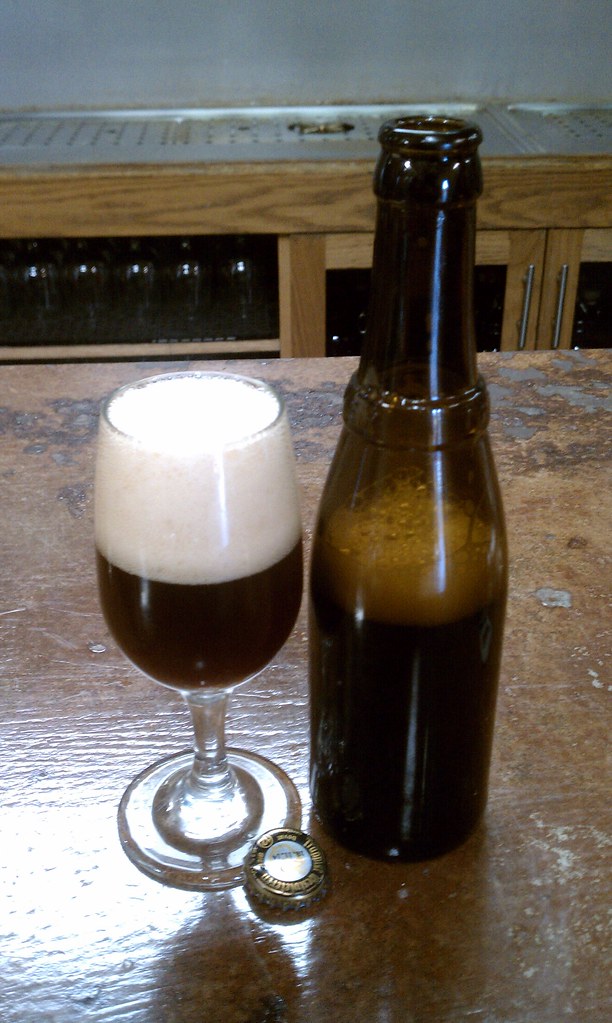
After a 3 month primary brawl, using almost 5lbs of sugar, I cracked 20% and created a beast of a beer!

After breaking such a massive barrier I'm briefly sneaking out of my blogging retirement to tell the story of how it came to be.

The Road There
The road to what became Westbennetteren 20 was a long and winding one.  It started in 2013 during an evening of beers and games.  I clearly remember at least two of the people at the table being Daniel Fernandez (of Beancurdturtle Brewing and BCT Brewing Project fame) and Miklos Somogyi.  During the evening the subject of quads came up and we had a discussion on the evolution of the trappist styles along with what the next logical step would be.  Logically the argument was for it to be called a Quintuple (or The Quint as Miklos would refer to it over the next few years) and be in the mid-teens abv wise.

Over the next few years I would think about brewing it, even occasionally putting it on deck. During this time I would toy with the recipe trying to think both of what I wanted it to be and how I would push it into the abv range.   One of my initial recipes had doubling the amount of candi syrup I use in the boil for Westbennetteren 12. During this time I firmed up in my mind that this beer would be more of a supped up quad than anything else.  

Eventually I moved away from just trying to overload it with candi syrup in the boil and instead moved towards step feeding it pure dextrose in primary.  This is the technique used in brewing Black Tuesday, 120 Minute IPA and several others.  I ended up adapting the methodology Scott over at Bertus Brewery used for his DogFish 120 IPA clone with the base recipe being my Westbennetteren 12.  Additional notes on brewing massive beers. 

With the recipe firmed up and after two back to back years of disappointing batches of Westbennetteren 12 (b3 stalled fermentation followed by a slight infection, b4 flat) I decided that the time to brew the quint had arrived.

The Journey Begins 
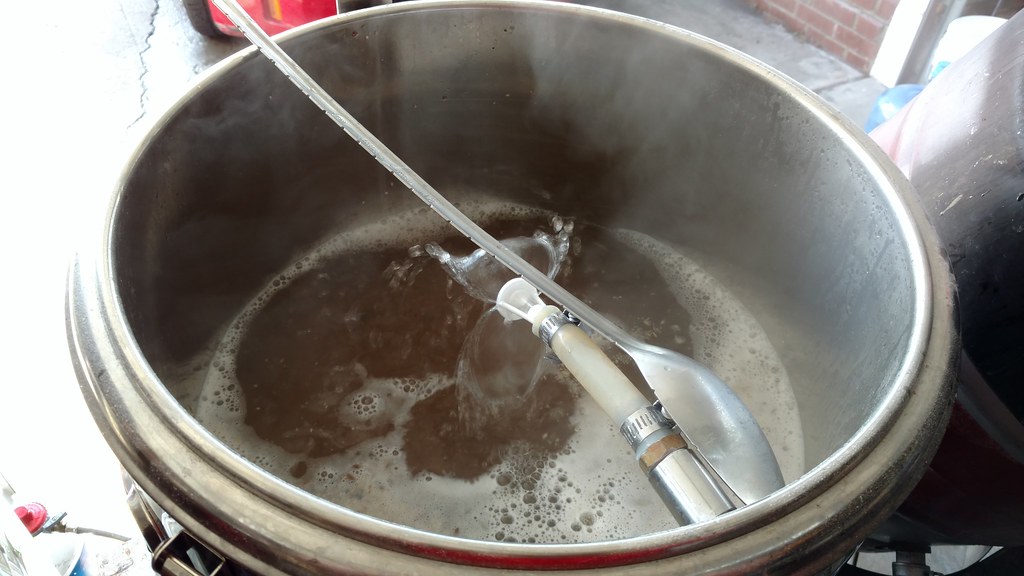
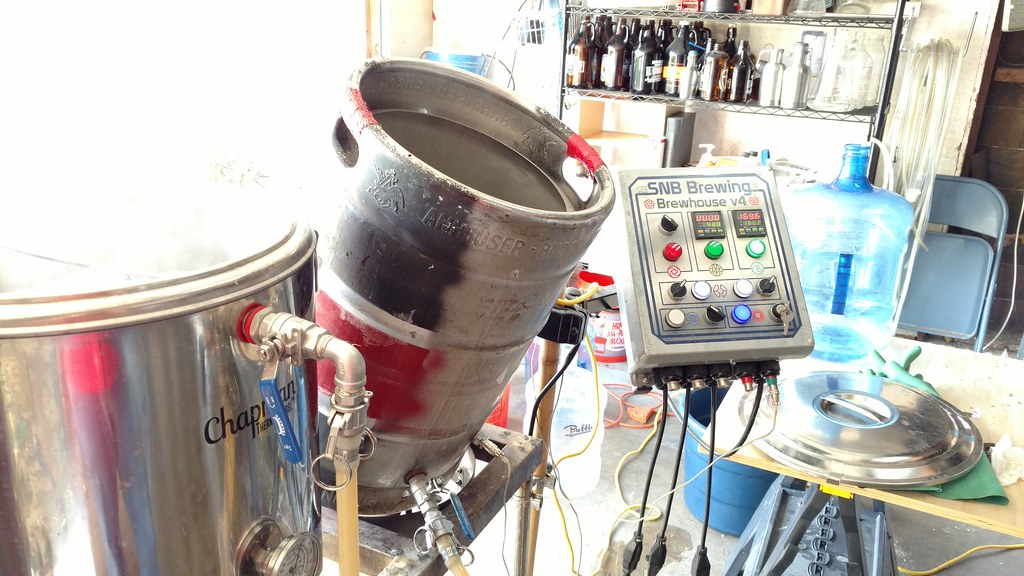
On Sunday, March 6, 2016 I set out early in the morning to brew essentially Westbennetteren 12 for the fifth time.  Overall it was a smooth brewday.

After some discussion on brewday and thinking about it in more depth I've decided that Westbennetteren 20 isn't a Quintuple after all, it's actually something more.

To start with let's take a look at the progression of "trappist" style beers.

Single 4-6% ABV pale in color
Dubbel 6-7.5% ABV dark in color
Tripel 7.5-9.5% ABV pale in color
Quad 9.5-13% ABV dark in color

The pattern that emerges is that odd numbered beers are pale while even numbers are dark with deep red, brown and garnet hues. There is also a pattern in the abv range with little overlap. Between the high range of a quad and the lowest abv I targeted for Westbennettern 20 (18% to 22%) there's 5 percentage points up for grabs. Based on that here is my proposed expansion of trappist styles 

Single 4-6% ABV pale in color
Dubbel 6-7.5% ABV dark in color
Tripel 7.5-9.5% ABV pale in color
Quad 9.5-13% ABV dark in color
Quintuple 13-18% ABV pale in color 
Westbennetteren 20 18-22% dark in color

As far as style names go there are actually 2 options sextuple or hexatruple
Given the fact I'm probably making many a monk roll over in their grave I'm going with Westbennetteren 20 - The Hex (hexatruple)

The Battle Rages
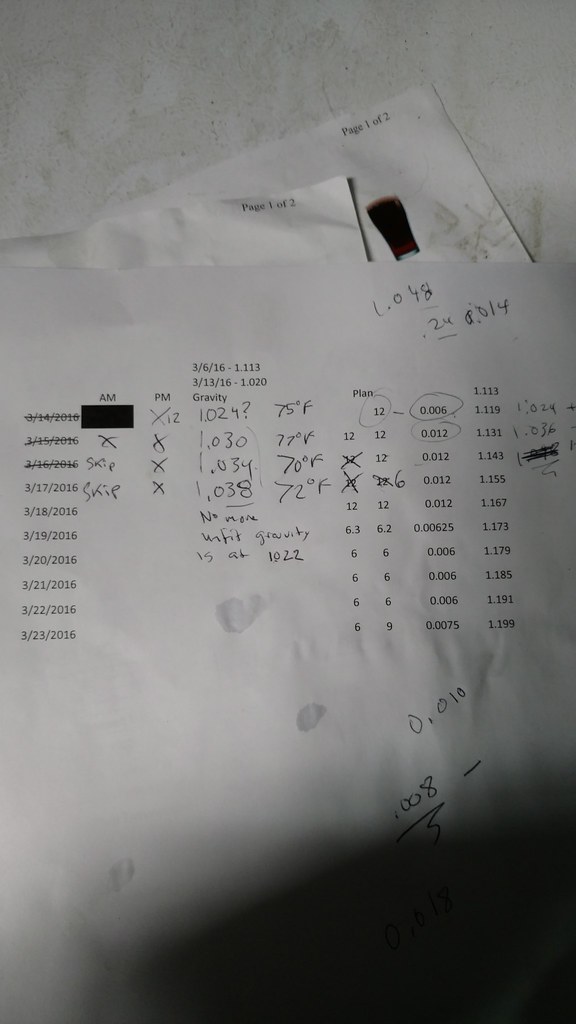
Fermentation started out fine and within a week it had gone from 1.113 to 1.024.  At this point (14 March 2016) I pitched the first starter of WLP099 (Super High Gravity Ale Yeast) along with 12oz of dextrose and some pure O2. My plan out of the Bertus methodology had been to pitch 12 oz of sugar morning and night till it slowed down then moving over to 6 oz additions till it reached the target range. The expectation is that the yeast consumes the sugar at a rate equal to what you are adding. I would check gravity nightly using cleaned and sanitized equipment so that I could add the samples back after measurement. 

It became clear pretty quickly that I was adding gravity points faster than the yeast was consuming them.  For the 5th addition I moved from 12oz to 6oz to see it that would help, it didn't.  During the first 5 days I'd added 54.2 oz of dextrose with the gravity increasing to 1.041. So while it was consuming the sugar, gravity would have been up to 1.051 if it hadn't been, it wasn't consuming it nearly fast enough.  At this point I stopped adding sugar and moved gravity checks to every couple of days.  My plan was to resume adding sugar once it reached 1.026.  

Alas it completely staled out at 1.030 for over 3 weeks.  At this point the accumulated OG was 1.140 and calculated alcohol only 17.1%.  Too low for me to stop yet not to mention at 1.030 was a little too sweet.

To kick it back into gear I ended up repitching twice - the first was another starter of WLP099 with an additional 12oz of sugar.  Unfortunately it didn't get very far and ended up stalling for another month at 1.035.

Not long after, during a meeting of The Fellowship of Tao Brewers at my place we sampled it and discussed my plight.  Afterwards I took in all the advice I was given and formulated a cure for my situation. 

The Cure

The cure consisted of pitching a liter starter made with 2 packages of Champagne yeast and several capsules of Servomyces. At pitching I also included another couple capsules and some fresh O2 for good measure. I took gravity a couple of days later and it had dropped to 1.026 ~ 18.7% abv.  With some solid fermentation progress I decided resume slowing feeding it another 12oz.  This took me to a accumulated OG of 1.152. 

Final Gravity
On June 11th, just a touch over 3 months since the brewday, it hit 1.020. After some back and forth texts with Shawn I set the fermentation chamber to 30°F to cold crash the yeast and stopped the fermentation! Using the advanced gravity formula 1.152 to 1.020 came out to be 20.7% abv. 

I lagered it for 2 months to help it clear before I forced carbbed it for bottling as I didn't have any confidence it would bottle condition.

The Conclusion 

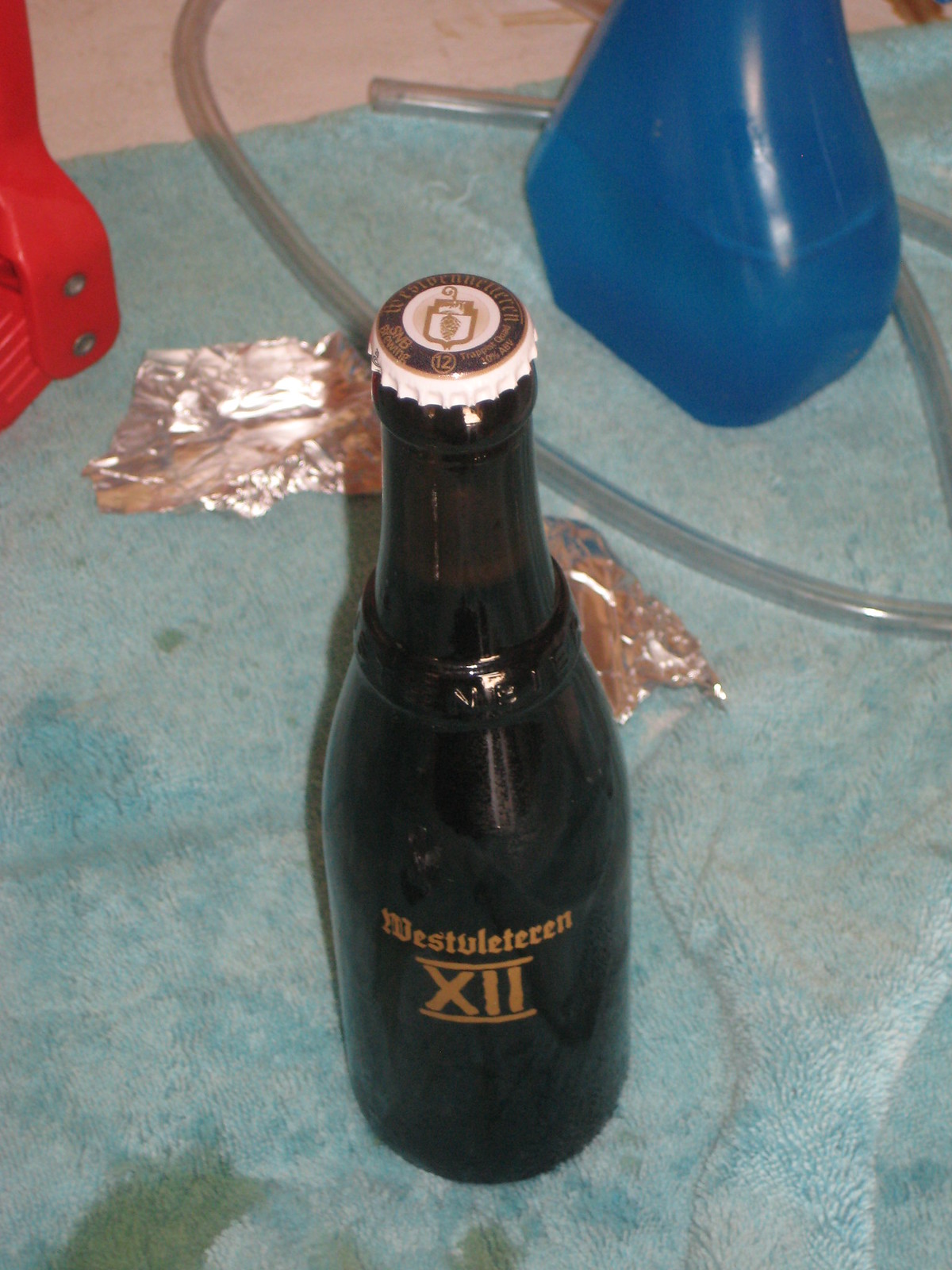
The last change I made from Westbennetteren 12 was to change the color of the cap.  With Westbennetteren 12 being directly inspired by Westvleteren 12 I'd always used gold caps from Bottle Mark. For Westbennetteren 20 I optied to go with SNB "house colors" of red and black, a combo that worked within the existing Green Blue Gold Westvleteren cap color scheme.

Lessons for next time.
- Start with 6oz of sugar per feeding and ensure it gets consumed before adding more
- Keep the upper temp below 82 (one of the reasons it could have stalled is I might have cooked the yeast in the upper 80s) 
- Use Servomyces at second pitch
- Drive the FG lower to the 1.014 range, it was still going when I cold crashed it and I find it a little sweet (something which might mellow with age) 
- More hops to help counteract the sweetness. 

Now that it's all wrapped up it gets a couple months to even out before I share them (1 or 2 might have already slipped out).  If we do a QuadFest 2016 I debut a couple bottles then, if not I'll have a private celebration to release them

Cheers

- SNB

Recipe and Instagram Pictures Below the Break


Wednesday, October 9, 2013

Westbennetteren 12 b(2)ottling

That time of year for Zombies
For the most part I don't bottle condition my beers and opt instead to carbonate the beer in the keg to a volume I am happy with then BeerGun it into a bottle when I need it in a bottle. I have really only one exception to this and that is for when bottle conditioning is a very integral part of the of finished beer, such is the case for my "fancy beer with a fancy name" Westbennetteren 12. Even in these exceptions I still like to utilize the BeerGun in loo of a bottling bucket as it allows for a nice sealed O2 free environment and it's so much easy to use the controls on the Beer Gun.

So when it came time to bottle up Westbennneteren 12 b2 I moved the beer from it's long secondary to a flushed keg. I then added 5.5 oz of Candi Syrup Inc Simplicity and a fresh vial of WLP500 (I couldn't get any fresh WLP530 in time). Finally I shook and rolled the keg to get everything to blend together.

For this round I wanted to use as many genuine Belgian bottles as I could (especially Westmalle / Westveleteren trappist bottles) so I asked my friend Michael, who owns the incredible Belgian GastroPub The Globe, if I could have at some of his empty bottles. He said yes allowing me to secure just about a case of Westmalle, Rochefort, Orval and Straffe Hendrik bottles. Added to the Belgian bottles I had on hand allowed me to bottle over a case of Westbennetteren 12 in Belgian bottles.

The final key to this years batch occurred just as I was ready to order this years caps from Bottlemark.  Just as I was about to place my order for the same cap I used last year, they came out with a new line of colored crowns including a gold oxygen-barrier cap which is the perfect cap for Westbennetteren 12. I have to tell you the new caps are incredible, not only do they look great but they are incredibly durable.

Now that the beer is bottled up it has about a month or room temperature conditioning ahead of it before it's debut at Quad-Fest 2013!

À votre santé

-SNB

Monday, February 25, 2013

Westbennetteren 12 b2

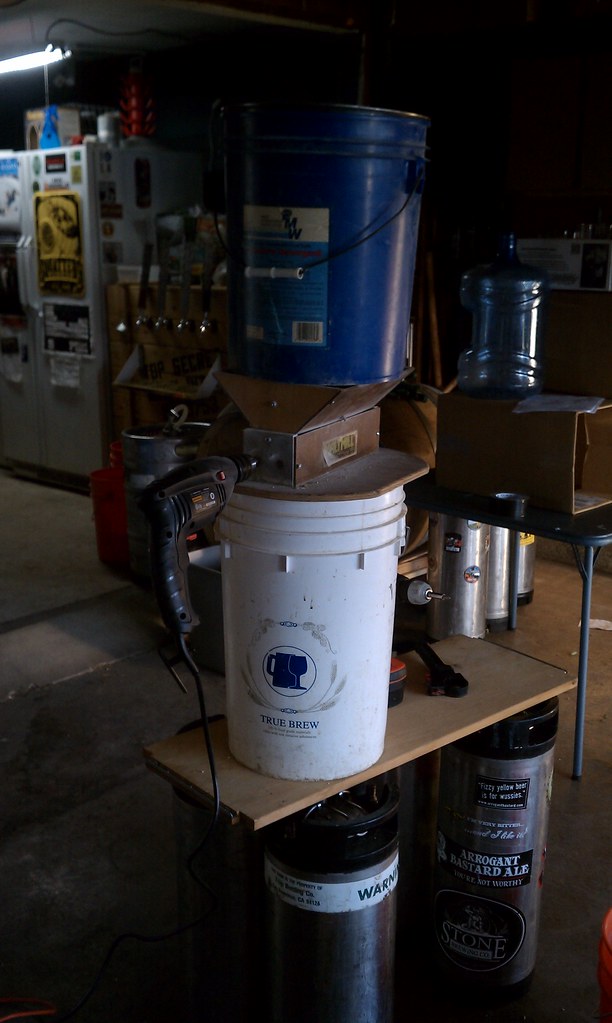
I got a corded drill to help me mill
Over a year ago I set out to brew my first Belgium Quadrupel aka quad which I tongue-in-cheek called Westbennetteren 12. Not only did it become one of best beers I've brewed (in my opinion) but helped to kick off QuadFest along with Shawn and Daniel.  If you recall from the post we had such a good time we already started planning the 2013 event. To make the date I needed to get brewing!

According to my notes from QuadFest 2012 
I'm very pleased with how it came out.  Lots of nice dark stone fruit flavor.  Great character from the yeast. Slightly high level of carbonation but not as bad as I had feared.  Similar to the Westvleteren but not as dead on as I was hoping for. It was definitely a little darker and the taste was close but not right there. I had another bottle of it the next day and took some notes for a tasting analysis. Next year I'll follow some of Daniel's advice and simplify the grain bill even more going straight up plisner.
I decided after reviewing Daniel's recipe (which was actually pretty similar to mine) to keep the split between pale and plisner the same. Last year I think I ended up using US grain (despite my notes saying Bel) because it's special order at the shop as I found out when I tried to get Pale Malt (2 Row) Bel so I ended up using some of the 2 row I had on hand (I do love buying grain by the sack). 

A rainbow of flavor
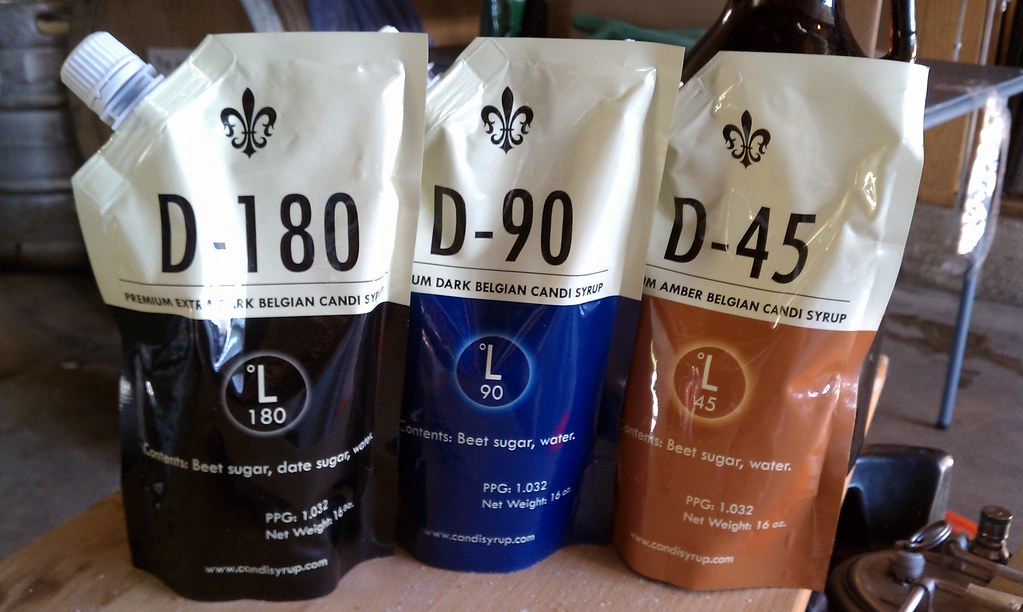
For the sugar portion I again sought out syrup from Candi Syrup Inc. In order to lighten in up and modify the flavor slighty to try and get it more in line with Westvleteren 12 I changed the amount of D-180 from 2 lb to 1 lb and made up for it by adding a pound of D-45.  So my order to Candi Syrup Inc was pretty much one of every syrup they offered (I use Simplicity to prime) with the exception of Golden.

If I recall the logic behind my hop schedule from last year I might have grabbed the Northdown thinking that they were a sub for Goldings which I couldn't find.  This year I was able to find some Goldings so I made that switch.

I briefly toyed with the idea of using East Coast Yeast Trappist Ale (ECY13) but between price, availability and time I decided to stick with good old WLP530 Abbey Ale from White Lab.  To build the projected 336.3 billion yeast cells needed I made a 6 pint starter and tossed it on my stir plate a few days in advance. For some reason BeerSmith 2 stops calculating yeast cell build after 4 pints (which ended up at 465.9 billion) so I know I was nicely north of the required amount.

As before when it came to temperature I took to the mid 80s for the initial fermentation.  I actually got there a little fast (oh no) due to some issues with the balancing act as ask my fermentation cube to do for warming beers. I got it under control and will start lowing it as soon as it enters the below 1.020 range.  After that it will be a nice 6 months of bulking conditioning at lager temps.

Cheers

-SNB

Tuesday, December 11, 2012

#QuadFest2012

Official Logo
Way back in January 2012 I brewed a tribute to Westvleteren 12 which I tongue-in-cheek called Westbennetteren 12.  I mentioned at the time that my two brewbrothers-in-arms Shawn and Daniel also ended up brewing quads that same month.  Over the course of the next several months, as our quads bulk aged, we started to talk about getting together sometime that winter once they were conditioned for a little tasting. 

By the time I bottled my quad in July plans to hold a Quad night sometime in November/December were in full swing. It's funny to read that I'd planned on opening my first bottle then as I ended up imbibing on nearly half the batch by the time we got together.  Over the summer Daniel obtained 6 Westvleteren 12s for us to enjoy side by side with our quads. I figured if we were going to enjoy some Westy 12 we should enjoy it out of the proper glass so I grabbed 3 off of eBay.

By August it had officially started to be called Quad fest and by the end of that month I had designed a logo and t-shirts for the event.  I've often said that the best thing about homebrewing is you can take it as seriously or as sillily as you want, and the idea of making fest related t-shirts with our logos and beer names was too much fun to pass up. 

The Westvleteren Set
In October we settled on both a date (December 7th) and location (The Globe - Dine • Bar) for the event.  The Globe was an easy choice for something like the QuadFest.   In addition to a global focused menu, owner Michael Pauwels has always been extremely accommodating to opening homebrews to share.  As a bonus they also have one of Orange County's best selection of Belgian and Trappist beers available, which was key for QuadFest.

After months of anticipation we meet up at Shawn's place, in our official shirts, for some pre-game tasting so some of Shawn's latest triumphs of brewing.  Shawn's wife Sonja had volunteered to be our DD and given the amount of 10%+ beer on the schedule to be consumed we felt it was a great idea to carpool. We also brought a bunch of bottles to give each other in addition to the ones we planned on opening that night.

When we got to The Globe we ordered some of the delicious noel beers that Michael had on tap.  I personally really enjoyed the St. Bernardus Christmas Ale and felt it was a perfect warm up beer for the night. 

Then it was time to start the main event.  We decided to open up a couple of bottles of Westvleteren 12 to calibrate our palates and allow us a decent pour. I've had this beer a bunch of times over the last year, some bottles better than others.  Fortunately these bottles were spot on what I remembered. I'll get around to doing a full review of it later.

Classic Daniel
Next up came my Westbennetteren 12. I'm very pleased with how it came out.  Lots of nice dark stone fruit flavor.  Great character from the yeast. Slightly high level of carbonation but not as bad as I had feared.  Similar to the Westvleteren but not as dead on as I was hoping for. It was definitely a little darker and the taste was close but not right there. I had another bottle of it the next day and took some notes for a tasting analysis. Next year I'll follow some of Daniel's advice and simplify the grain bill even more going straight up plisner.

Next came Shawn's quad - The Blessed One.  While it wasn't exactly how I remember it tasted it was still very well done. I really loved the added details he put into the packaging of it.  I'm glad I have another bottle of this to enjoy later.

Daniel was really concerned with the carbonation levels he'd been experiencing with the bottles of Westy Southwest that he'd been opening for people.  He suspects that it's probably a cap issue as there is evidence of sediment on the bottle of the bottles that suggest bottle conditioning had occurred.  Fortunately the bottle he opened for us was wonderfully carbonated.  Again, it was just a fantastic quad that hit all the right flavor notes.

Me, Daniel, Sonja and Shawn
After that we opened a few other beers that Shawn and Daniel had brought.  Shawn had another version of his quad that he had soured which I'm really looking forward to trying again soon.  Daniel brought a preview bottle of Black Lingerie batch 2.  The rebrew of a beer I've gone on the record as saying it was one of the most complex beers I'd ever had. The taste was strikingly reminiscent of the first batch just much younger.  I definitely want to grab a couple of bottles when he releases it next year.

To sum it up QuadFest 2012 was a pretty big success.  All of us had a lot of fun and want to do it again.  We've already starting thinking about expanding it to even more brewers.  The big thing is that make it in time all participants have to have beers fermenting in the next quarter. For me I'll probably brew my next batch of it in mid January.

#QuadFest2013!

Cheers

-SNB

Tuesday, July 10, 2012

Bottling Westbennetteren 12

The Unique bottle collection
Six long months after brewing up my tribute to Westvleteren 12 (Commonly known as Westy 12), which I called Westbennetteren 12, I finally got around to bottling it up.

The process started a few weeks back when I transferred the Westbennetteren 12 out of its long secondary and into a keg to make room in my fermenting cube for Coast of the Sun.  I flushed the keg CO2 and just kept a blanket on top to keep it Oxygen free.  I did nip on it a little while it was on tap and shared it with some friends.  I also did a small side by side with a Westvleteren 12 when I popped Eric Addison's Westy 12 cherry (something I've been known to do more than once).

As you may know when I brew a beer with the intent to bottle I always design a label, this time however a label would not have been appropriate for the tribute I was doing.  Currently Westvleteren does not label their beer. The only differentiation that separates the three beers they produce is a colored bottle cap.  So to do this right I needed to create a bottle cap for it.  Fortunately for me, these days there is a solution for that.

Tribute cap to a Tribute beer
A while back I read an article about a company called BottleMark.  BottleMark is this cool company in Houston that was started by a homebrewer who had too many different batches in the fridge at once. He realize that if he could do a low run bottle cap he could tell them apart so he came up with a way to print artwork on a white bottle cap. A bunch of my friends had given them a try and were very pleased with the results.  With a low 11¢ per cap price (now 12¢) I figured this would be the prefect opportunity to try them out. So while the Westbennetteren 12 was chillin in secondary I designed some artwork for a run of bottle caps. The shipping was extremely fast and I was very pleased with results.  I also created a couple of other caps using this order as the prefect test opportunity for other bottle cap ideas I had.

Homebrewed Quad in a Westy 12 Bottle
Gotta love it
I picked up a couple of new cases of 12 oz tall bottles (the Sierra Nevada short stubbies won't have worked) and found 6 special unique bottles for friends. The prefect bottle to have found would have been a couple of cases of New Belgium 12s.  My preferred method for prepping bottles for beer is to sterilize them (several notches above sanitizing imo) via dry heat.  Following Palmer's chapter on the subject I rinsed them and loaded my oven. As Palmer states I loaded the bottles with the oven cold and brought it up to 350, I held that for 60 minutes then killed the oven and let the bottles cool overnight.  I topped all the bottles with foil to keep them sterilized indefinitely until needed.

When it came to bottling day I primed the beer with Simplicity as recommended by the recipe (not recommend was added 3 more oz then I needed) and a fresh vial of WLP530.  I stirred with a sanitized spoon as well as shook and rocked the keg to make sure it was properly combined.  I filled the bottles using my BeerGun at very low pressure.  There was no need to chill the bottles as the beer as still. I then capped them with a sanitized bottle cap.

From here is another five to six months of bottle conditioning.  The first bottle will be cracked when Shawn, Daniel and I do our Quad night sometime in November/December.

Cheers

-SNB

Wednesday, June 20, 2012

Scott's GRANDE IPL

Ready for another round
As the title of my post indicates, for the latest addition of my BIG IPL series I decided to mix it up a little and add some Mexican flair in the form of one of my favorite lager yeasts WLP940 Mexican Lager.  That's about the extent of the Mexican flair, no other ingredients just a new yeast which I harvested straight from the latest batch of Costa del Sol. (For the technique I employed for this check out Billy Brew's  yeast washing video). The yeast was not the only change I decided to make; others included the amount of length of the boil, amount of knockout hops, the total bitterness and rice vs rice extract.

I decided to up the length of the boil from 75 minutes to a targeted 90.  The reason I did this was a comment Robert Kennedy made at the AHP anniversary party about brewing with pilsner malt. He mentioned that if your grist has over 50% pilsner malt in it, then you should plan for a longer boil to combat the production of DMS.  He therefore always boils beers with high percentages of pilsner malt for a minimum of 90 minutes.   There seems to be a lot of conflict opinion online about the status of this belief/myth but I figured why not add a few more minutes to be on the safe side. 
Another change I made was to do a little hop bursting at the end of the boil.  Basically I kicked up the amount of knockout hops I planned on using from about 1 ounce total to 2. This should deepen the flavor and brighten the aroma at least that's the plan.  I decided to do this after I have locked in the latest version of the recipe so it somewhat works against the next section of changes.

Really trying to become more efficient during brewing
When doing extract brewing topping off with additional water changes the hop utilization factor.  When I was extract brewing I would routinely top off with about a gallon of water.  I was doing this when I first created the recipe for IPL however in all my recipe sheets I had always built them for a full boil.  When first I converted it to all grain I only worried about the grain not the hops keeping them around 100 IBU. I wasn't overly please with the final bitterness and flavor level with that first batch but assumed it had to do with the addition of the Citra, however when I brewed it again I still wasn't happy with it so I blended the extract and all grain versions together to round it out.   I then went back to my notes and inputted the recipe exactly how I brewed it completely with a four gallon final volume topped off to five. Doing this I saw a 20 IBU drop to around 80 IBU which jived with both earlier recipes and the lab test Karl Strauss did on it.   With this info in had I adjusted the recipe down to the 80s.  In the end, the extra time (a lot more then 90 - read below) and the hop bursting bumped me into the 90s.

A little Westbennetteren 12
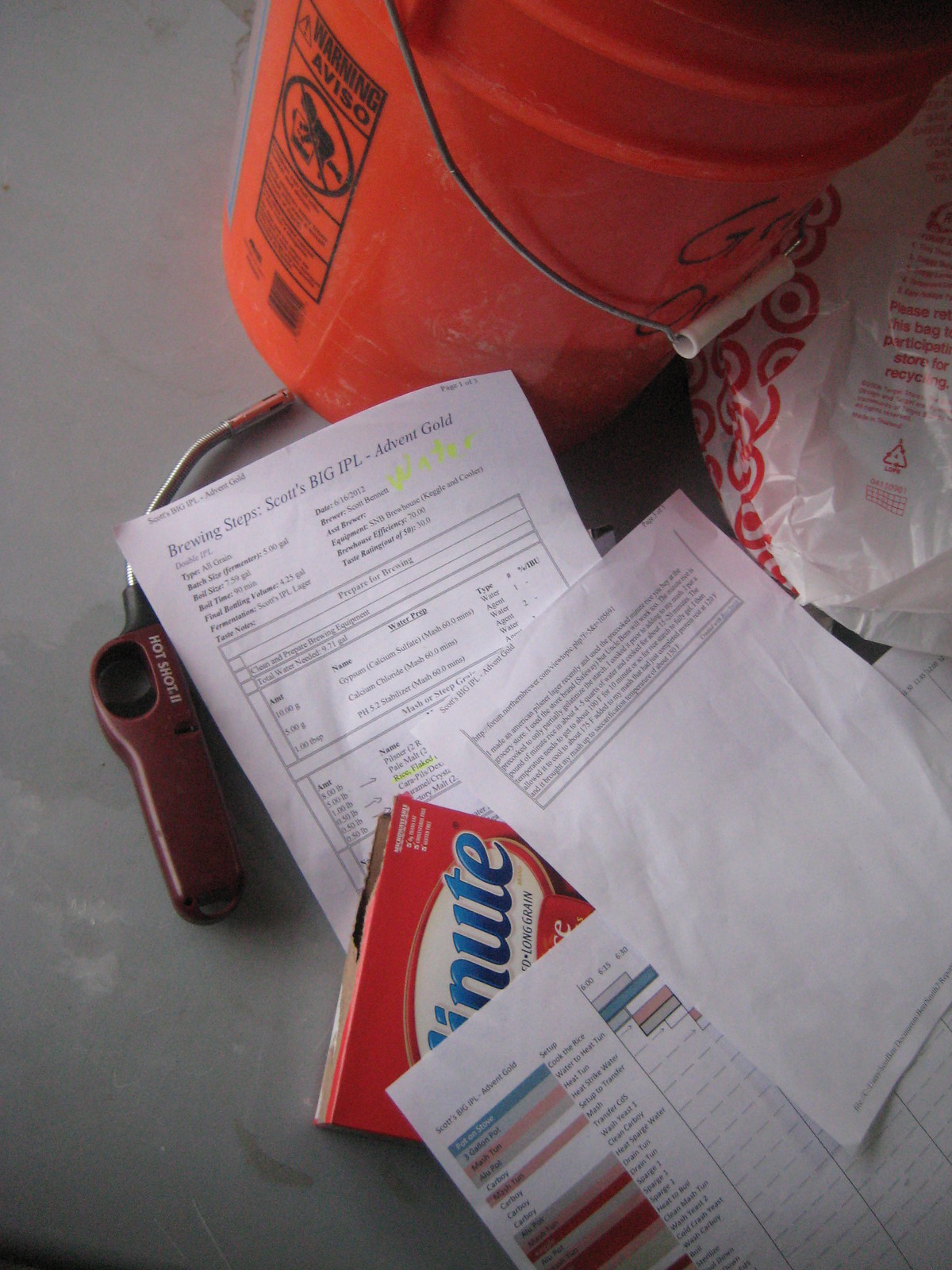
I decided that for this round I'd go all all-grain and ditch the rice extract.  After a lot of researching I decided to use minute rice as it is precooked partially gelatinize. I cooked it prior to adding to my mash. I put a pound of minute rice in about 4  quarts of water and cooked for about 15 -20 minutes. I held the temperature at 190 for 10 minutes for rice starch to fully gel. I let it start to cool and added straight to my mash.

Using the rice complicated the brew a little as I had no tool to calculate the effect of adding over a gallon of 180ish rice to my existing grist.  I also ran into the problem as my calculations had flaked rice in the main grist so all the water volumes had included that amount of matter in its water ratio section.  To make matter worst I over shoot my strike water by 10 degrees, lowered it by 20 and figures the rice would bump it back to 148.  Nope I ended up with a mash in temp of 142 so I pulled off a gallon of liquid, blasted it to a boil on the cooker and tossed it back in.  I was able to then NAIL my mash temp at 148 for an hour while I racked the Costa del Sol to secondary and washed the yeast for later that day.

My favorite hop chart
I failed to recognize until it was too late that I no longer had accurate water volumes and ended up over filling my preboil by over a gallon diluting my starting gravity by about 0.006 (1.051 vs 1.057). To try and catch back up I decided to further extend my boil to about 2 hours total.  I was unworried about the additional time would do to the bitterness levels as the effect boil has on bitterness in non-liner, flatting out around 50 minutes. This meant only a change of a few IBUs total nothing to stress over.

I got everything ready and turned brewing operations over to my wife so I could take our daughter to Little Gym. As we were headed home Bonnie told me that we had run out of gas.  I wasn't surprised as I had a feeling I'd run out (I should be tracking the consumption better).  I told I'd be home soon and asked her run to Home Depot and switch out tanks. By the time I got home Brian Evans of Brain Evans Photography and Thee Beer Book had arrived to take some pictures. Brian had asked several months ago if he could come over and include me in Thee Beer Book project that he was working to finish up.  I was quite honored as he's taken pictures of a lot of the guys I look up to in the OC brewing scene and I've known and followed his work for over a year now.  We'd first met when he came over to photograph my friend Don Barnum during a brewday I had hosted at my house.  It also happened to have been the day I brewed the Karl Strauss winning batch of Scott's BIG IPL, so it was fated that the day we were able to sync up schedules I'd happen to be brewing another batch. 

Taking a picture of Brian taking pictures
I took Brian around the brewery, covered some of the basics of what I was doing and showed him some of my favorite beers.  I showed him how to transfer a beer to secondary which he had not yet had an opportunity to see and sampling the Coast of the Sun as it came out of primary. I'd saved my last can of 5/11 Furious for him to sample.  We also sampled Westbennetteren 12, which I'd kegged temporarily until I get around to bottling, and thieved a sample of Halvtreds. Both are coming along wonderfully but I would like a little more sourness from the Halvtreds.  Once Bonnie returned I brought the beer back to boil continuing the clock and showing Brian around.

Coming into the home stretch everything was looking good, I was progressing nicely on clean up, the photo session/demo hadn't majorly affected the process and according to my refractometer I had caught back up from my wort dilution earlier.  Once the timer hit zero I killed the gas and started the chiller with all the new connections looking tight.  At around 110 I opened the lid, explaining to Brian the importance of sanitation once the wort drops below 160, only to find a leak coming from on of the connections.  Apparently the heat had soften the hose enough to allow a stream of water to escape.  Refractometer and hydrometer readings conformed my fears as all the ground I had made up with the longer boil had been completely eroded giving me a corrected gravity of 1.073... boo! 

Faithful dog companion
Now I had a few options here; I could bring the wort back to a boil and attempt to boil off more liquid (the con side was that it would majorly mess with the bitterness levels and probably destroy the beer), I could bring it to 160 and hold it there for 15-30 minutes (this probably was the best option with time being the only issue) or I could do nothing and take my chances with the water (hoping that any contaminates present in the hose or wouldn't infect the beer).  Going against my better judgement I opted with the third choice and fixed the leak and continued the cool down.  I figured I had a pretty healthy yeast cell count tailor made for the cold lager environment it would be exposed to.  Basically I was gambling that the nutrients, cell count and environment would make the yeast the dominate organism the beer not outside contaminates.  

Figures crossed

-SNB

Thursday, February 2, 2012

Farmrose IPA

The dueling brew kettles
Thanks again Marshall
The other thing that Daniel’s quad brewday inspired me to do was make a parti-gyle beer off of second runnings of Westbennetteren 12.   I’d been wanting to do one since the parti-gyle episode of Brewing TV, in fact if it wasn’t for the reality of being plan out of fermenter space I would have done a Damien inspired black ale off of the second runnings from 33.

After talking to Daniel and reviewing his parti-gyle small beer I was concerned that my second running gravity would be too small for what I wanted.  I therefore hatched a crazy plan to add about 5.5lbs of additional grain to the mash tun and re-mash at 155 for about 30 minutes to see if I could boost it up.  I decided that once the mash was done I would take a pre-boil gravity reading and supplement with some DME to raise the OG target to produce a beer in the 5-6% abv range.   In order to have any chance of doing this in a reasonable time frame I determined that I would need a second pot, burner and propane tank.  This is where having a close circle of fellow brewers is great.  I asked my buddy Marshall if I could borrow what I needed and he came through like a boss.

Going in I had already decided to use a second generation WLP670 American Farmhouse Blend strain that I had harvested from SNB can be CynicAle.  I really want to make an IPA with the second runnings and had been toying around with using WLP670 for an IPA since BeanyTink’s Farmstead Ale was first brewed.  All I needed to come up with was a nice IPA hop schedule, but to do that I need to know what my gravity would be.


The 5.5lbs of additional grains
My pre-boil gravity came in really low at 1.030 with an estimate OG or 1.041 and abv of 3.8%.  I decided to add a pound of Golden Light DME and a little over a pound and a half (1lb 10oz) of Pilsen DME to bump the pre-boil gravity to 1.046 and targeted OG to 1.063.  Once I was happy with my targeted gravity it was time to add the hops After having recently played around with a Melrose IPA recipe I’d found online, I decided that I would use that hop schedule and bitterness ratio (1.436 IBU/SG).  This was a simple trick of scaling down the recipe while adjusting the OG and hop schedule to keep everything in alignment. 

This is why I was frustrated when the post-boil gravity came in at 1.055 – 8 points under target.  I put a lot of thought into building this on the fly recipe based around the pre-boil gravity measurement.  I think there is an error somewhere in calculations that BeerSmith 2 is giving me.  I willing to bet that it has something to do with my equipment setting as I noticed it worsen when I changed from Brew Pot (15 Gal) and Igloo/Gott Cooler (10 Gal) to the SNB Brewhouse (Keggle and Cooler) setup.  I’ll have to play around with it more by returning to the old setting on my next brew.

Cheers

- SNB

Tuesday, January 31, 2012

Westbennetteren 12

The main inspiration Westvleteren 12
Thanks Kevin (kbm)
I've been toying around with the idea of brewing a Belgian nah Trappist-style quad since I first tried Shawn's. It was a pretty eye opening experience for me.  I was still under an anti-Belgian-style beer kick due largely to my own lack of understanding of what it meant to be a Belgian-style beer and the wide scope that one label was being applied.  Shawn's quad was fantastic and made me long to try the ultimate examples of the the style Westvleteren 12.

That day came during my late night beer session for My Funky Brother Brett (which is tasting awesome right now).  We'd had a really good night of brewing and beer so on a whim I decide to open a bottle I'd been saving for several months to share with Rick and Daniel.   Few beers have lived fully up to the hype that surrounds them, this one did.

Daniel then became inspired to brew his own version for his 2012 Anarchy Ale called Westy Southwest.  He even made his own candi syrup for it which is really cool. I think Daniel taking the quad plunge was the last bit of inspiration I needed to just go for it and hop on the Quadwagon, Shawn had also recently rebrewed his quad.

The ingredients
The inspiration for the recipe came straight from the supplier of the candi syrup I used Candi Syrup Inc. I'd come across them while reading a post on The Mad Fermentationist.  They're a US producer of candi syrups that got into manufacturing them in part to nail a Westvleteren 12 clone.  They have a lot of great looking recipes on their site including one for Westvleteren 12.  Reviewing the recipe against Daniel's and others I'd found online made the decision to go with it as the basis a no brainer.  The only changes I made was to drop a pound of the D-180 and replace it with a pound of the D-90.  I did this after reading the second page of the recipe where they talk about the process of creating the recipe and mention using D-90 and D-180 together.  The other change was a minor hop swap.

Again the main issue was finding a time to brew it.  I've been training for a half marathon and have been doing my long runs on Sundays.  On Saturday I take my daughter to Little Gym mid-morning which places a damper on my brew schedule.  To make it even more complicated my wife was also training for a half marathon and ran the Tinker Bell Half the weekend I brewed.

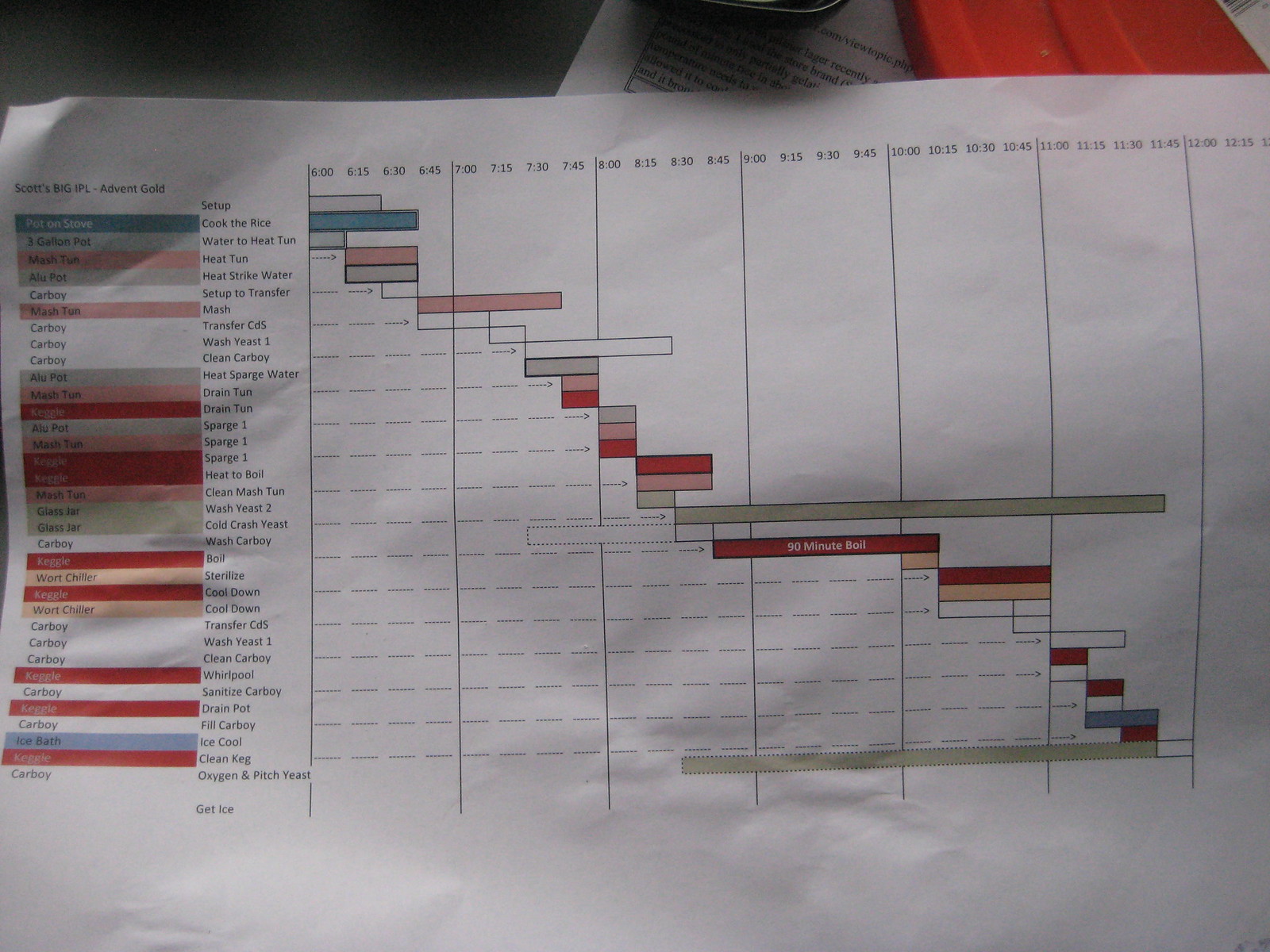
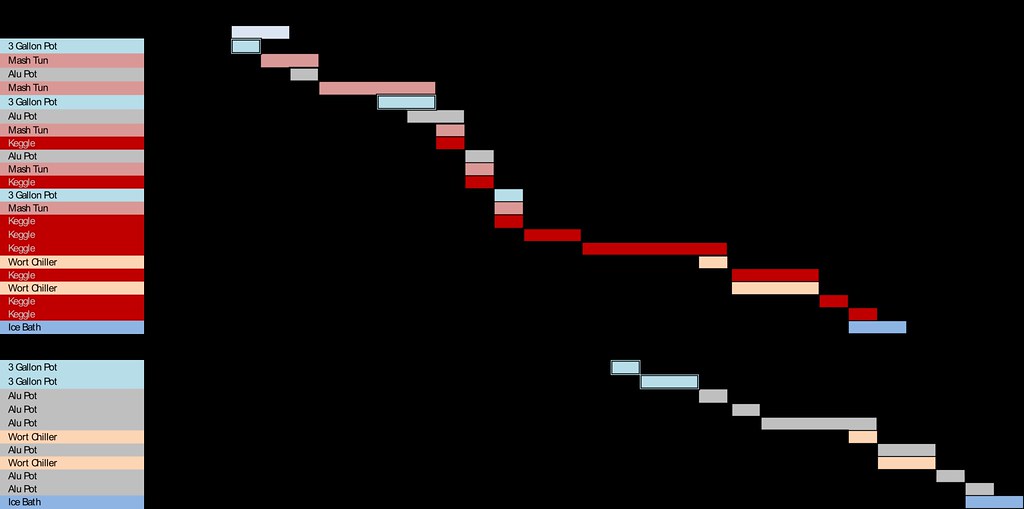
The solution I came up with was to use the mash time in my favor and brew on Saturday.  Having mapped out my brewday for the Double BIG IPL brewday back in December I knew when I would have to have the mashing going so I could take Syd to Little Gym.  From there it was a simple matter of working backwards.  

I borrowed some equipment from my buddy Marshall
to make brewing the second beer faster/easier
Par for my course as of late I was under OG despite taking a preboil gravity reading and using BeerSmith 2 to correct for temperature. I'm getting frustrated and might buy a temperature correcting refractometer. I'm following BeerSmith 2 instructions and have loaded my Keggle setup into for equipment. For the quad it wasn't the end of the world (-6 points) and nowhere near infuriating as the second running beer I'll talk about on Thursday.

I started the fermentation at 65 overnight and have been slowly ramping up towards the 80s.  I'll probably peak at 82 on Wednesday then start to lower back to 67F for 5 days before racking to secondary when the gravity hits 1.012.  Then it will be into the cellar at 50 for a couple of months.  Yes, I will be bottle conditioning this bad boy and plan on using Candi Syrup Inc's Simplicity to prime it with. I might even harvest some actual Westvleteren 12 bottle yeast for bottling.

Cheers

-SNB
Related Posts Plugin for WordPress, Blogger...