Header Image

Tuesday, October 9, 2012

Fifth Element

The Fifth Element can refer to a lot of different things; a crazy comedy-science fiction film, a mythical element, the material that fills the region of the universe above the terrestrial sphere, even a Finnish hip hop band. These days however, when I hear the name Fifth Element my mind first goes to a crazy-delicious beer from my hometown brewery, Squatters. I fell head over heels for this beer since I first vanquished it during a 3 hour layover in SLC.  I quickly knew I needed to obtain more and am currently the top drinker of this wonder on Untappd.

750ml bottle into Bruery tulip. Thanks Heather for the bottle!

According to the Brewery - 
Fifth Element is a delightfully complex and rustic "Old World" style Belgian farmhouse ale. Aged in American oak barrels for a year and bottle conditioned, this artisan Belgian ale is sure to refresh.
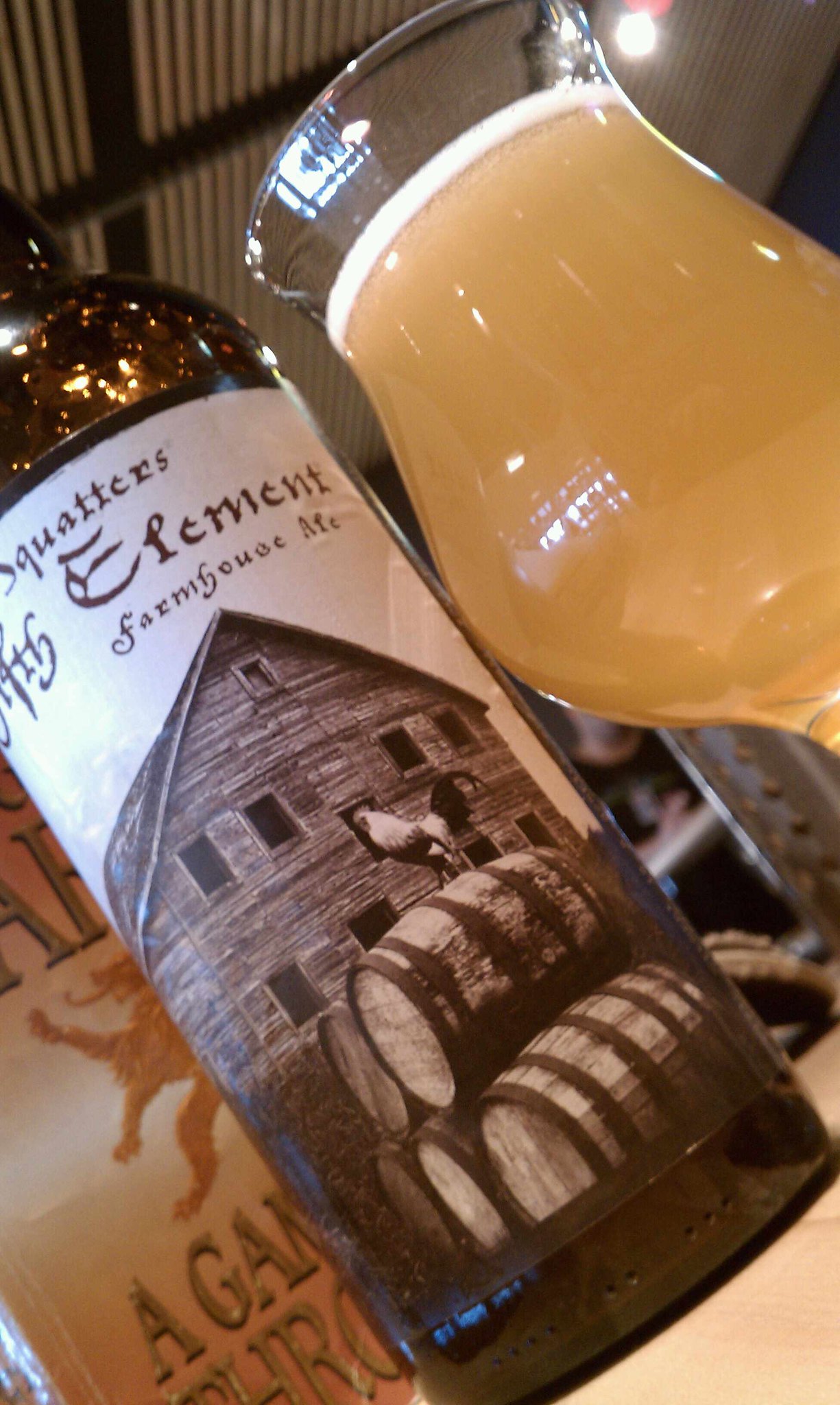
You never forget your first
Appearance: Pours a wonderful pale cloudy yellow orange color with a nice thin white head. Minimal head retention but that is something I've learned to expect in this style of beer.

Aroma: You've probably heard of love at first sight, well this beer had me a first smell. I knew as soon as I picked up the barnyard funk that this beer occupied the small 5% corner of saison / farmhouse Ales I truly love. Definitely more farmhouse than saison. Besides the wonderful layer of sour funk I get a ton of citrusy lemon with a light oak note

Mouthfeel: Slick bodied with a medium level of carbonation adding to its dry and puckering taste.

Taste: This is completely on the border of being more a sour than a farmhouse something I am completely fine with.  The citrus sour dominates the mouth but other flavors (oak, light spice, brett, tart tangerine) are very recognizable if you allow it to sit on your palate. This is a very palate refreshing beer, prefect to break up a barrel aged stout tasting.

Overall: Damn! How do I start stockpiling cases of this beer. I loved this beer so much when I first had it that I asked to keep the bottle, which I then treked home to Orange. Every time i have had it since it has continued to live up to that first moments, something few beers can do.  This is one of those beers that gives almost every other farmhouse a bad name as few can live up to the name farmhouse better than this one. For me it also exemplifies the need to continue to explore styles that you have been let down in the past because if I didn't I never would have found this beauty of a beer...

Cheers

-SNB

Tuesday, October 2, 2012

Souring Halvtreds Part 3

The continuing quest for a sour beer
The ongoing chronicles of Halvtreds (my sour red lager that I brewed as my fifty batch of beer) continues.  It's been about 8 months since my buddy Daniel came over to help me drink a series of sour beers whose dregs were collected, built up and added to Halvtreds which had been waiting in secondary since December 2011.  In that time it had taken on a pleasant sourish aroma but the taste seemed to be primarily brett driven.  It needed something else in the flavor realm that could pair nicely with the aroma and help to round off the overall beer.

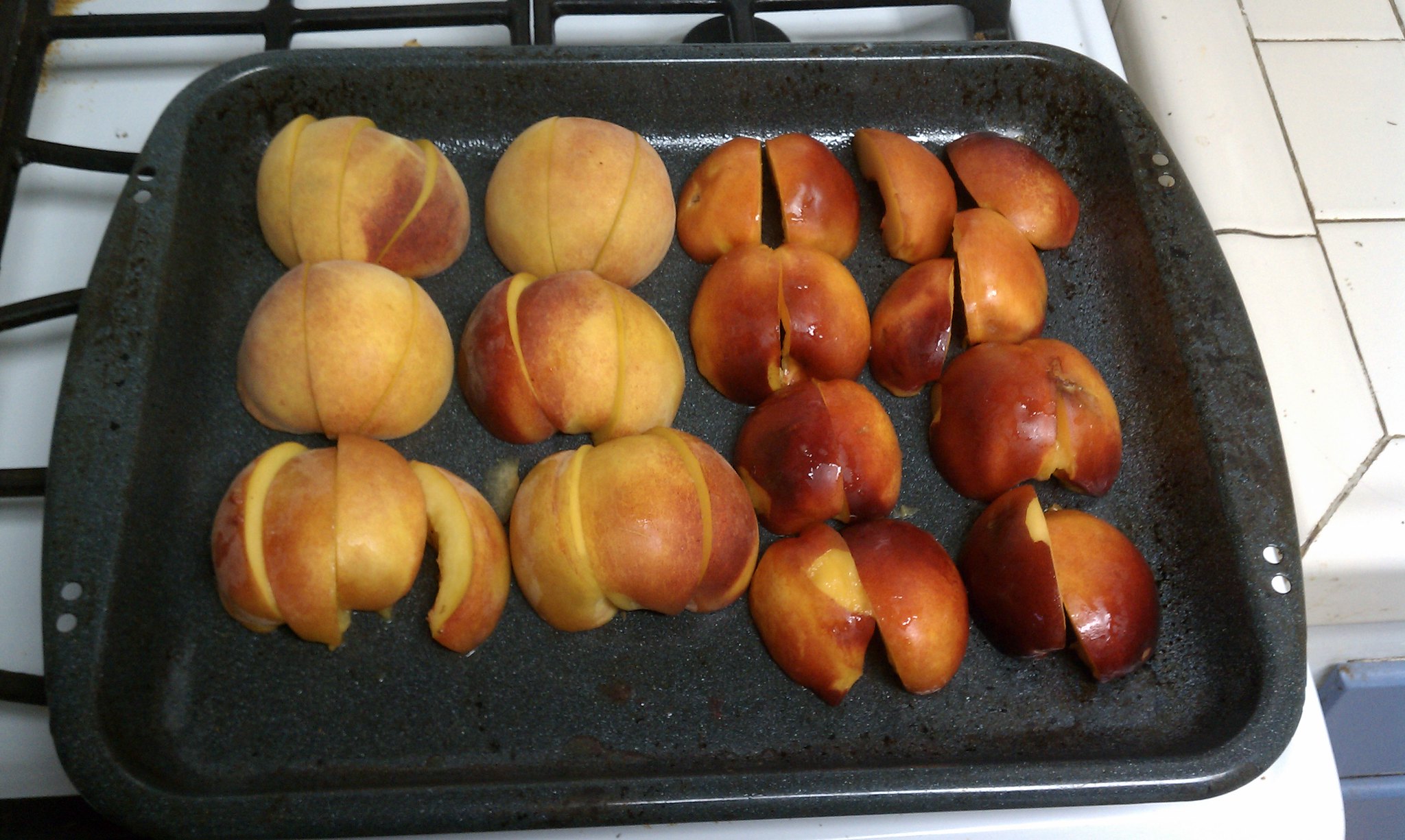
Getting ready to go into the oven
Back in the development phase of this beer I had planned on adding fresh huckleberries to it.  I figured it would be an interesting choice as I'd not seen a huckleberry sour and they happen to be one of my favorite fruits.  The problem I ran into with them really came down to price.  They're not really available locally, as they are more of a Northern wild berry, so to procure them I'd have to buy them online which is when cost became an issue.  I found a multitude of sites online that sell frozen huckleberries, even fresh berries during the season, but to buy enough to give the beer a good flavor was going to set me back $50-60. Unfortunately the flavors I was getting didn't justify that level of expense.

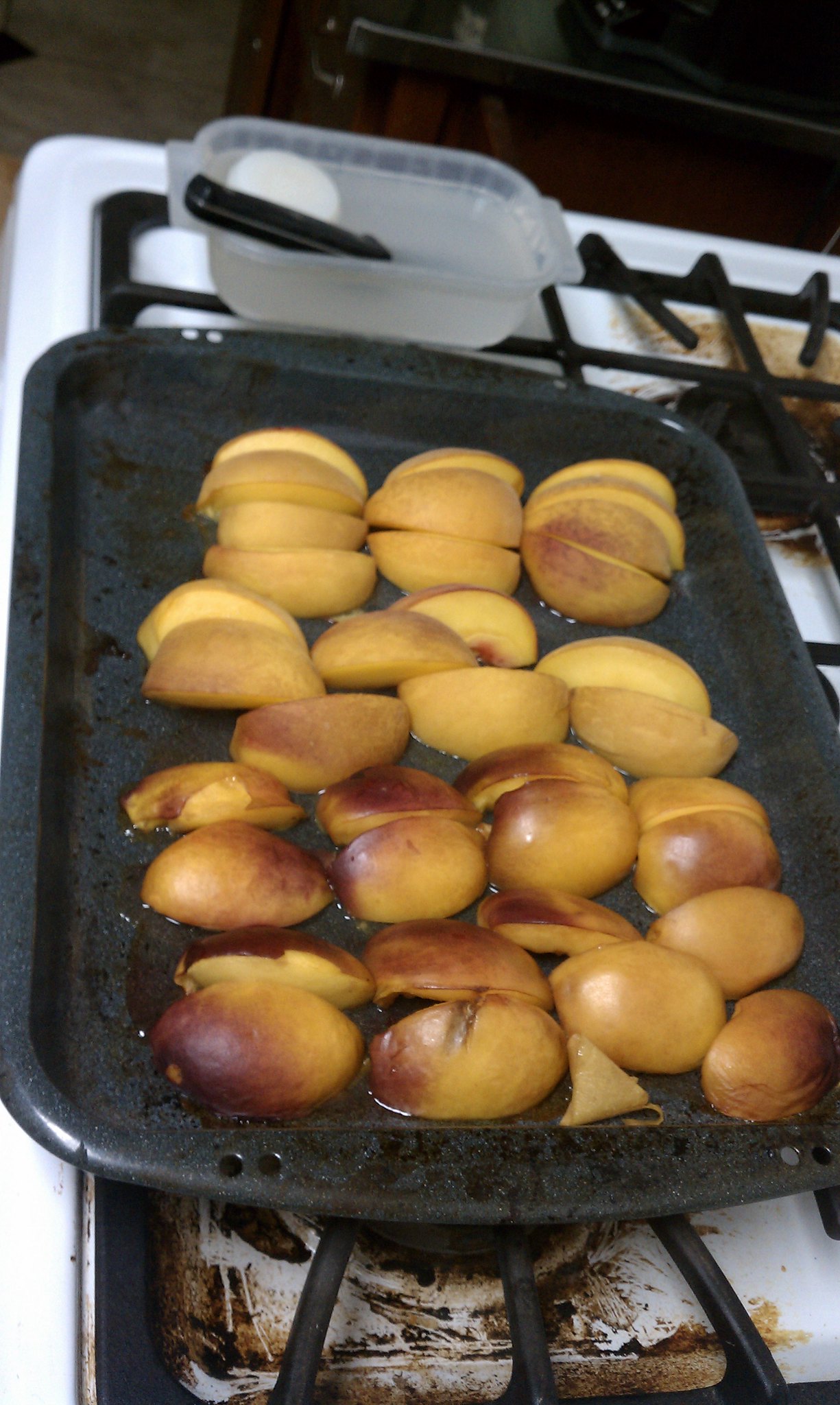
Coming out of the oven
I still wanted to do it so I needed to come up with a plan B for fruit.   To do this I took a hand bottle of the still (meaning flat vs not in a state of transition from liquid to solid/gas) liquid to a meet up of fellow brewers at The Globe Dine Bar in Garden Grove. 

The general consensus was that it needed more acid to give it a more sour bite.  To obtain this it was decided I needed to introduce additional souring agents with something for them to chomp on.  I decided that I wanted to go with some stone fruit given that they were in season.  Originally we formulated a plan calling for 6-8 peaches and 8-12 apricots which I would grill plus a sour starter.  I changed this up slightly to 3 large white peaches and 4 white nectarines (this mostly had to due with available head space in the beer).  

For the sour agents I opted for White Labs' WLP655 - Belgian Sour Mix 1 which is an unique blend that includes Brettanomyces, Saccharomyces, and the bacterial strains Lactobacillus and Pediococcus.

See you in 6 months
To process the fruit I decided to oven roast it at 400F degrees for 25 minutes.  Which the oven was preheating I cut the fruit into 6th and 8th so that they could easily fit into the neck of the carboy.  I left the skins on during the roasting removing them as soon as they came out of the oven (I love my temperature rated Blichmann gloves) and right before they went into the beer.  After the hot fruit was given a chance to cool in the beer I added the vial of WLP655 and gave the whole batch a good shake.

That's it for now but check back in another 6 months to see where we are at (damn sours sure do take time)

Cheers

-SNB

Tuesday, September 25, 2012

White Chocolate

For the most part I've been a little let down by the Bruery's recent sour beer offering.  While most are very enjoyable beers they haven't lived up to the level of past offering such as Oude Tart, Marrón Acidifié, the Wanderer or Batch 50, which are some of my all time favorite sours (these days it's a pretty big list). Their spirit (mostly bourbon and whiskey) aging program on the other hand continues to knock it out of the park with their latest release, White Chocolate, being no exception. 

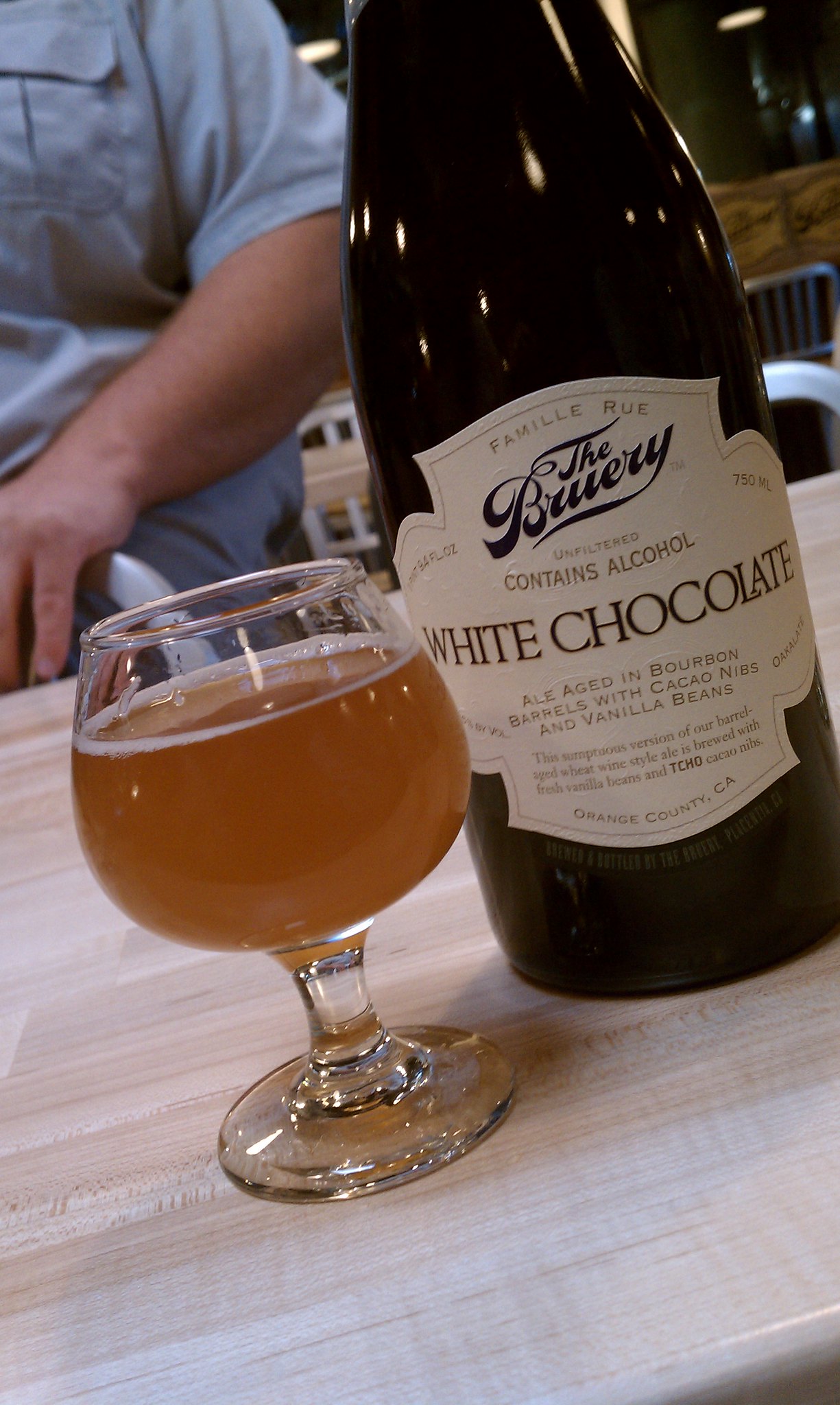
4oz pour from the bottle at the Bruery Tasting room from the Reserve Society Exclusive menu (about time)

Thanks Tim for letting me borrow your
bottle for this great shot!
Appearance: Pours a wondrous coppery orange color.  Not a lot of head, merely a thin white ring, but considering they poured it from an already open bottle not surprising.  I rearly discuss labels in a review but this is by far one of the best labels I've seen on the beer.  The paper is textures and the Logo and White Chocolate is raised.

Aroma: The nose on the beer is incredible.  Lots of vanilla, chocolate and bourbon - pretty much dessert in a glass.  I can see how people have said it reminds them of tiramisu.

Mouthfeel: Pretty much what I've come to expect from a Bruery barrel aged beer, nicely thick and sticky.  The carbonation was nicely balanced and help to open up the beer.

Taste: Huge vanilla and bourbon notes right up front. As it warms you really start to get the chocolate, which is big and rich. This is a pretty sweet beer but the bourbon helps to keep it from being too cloying.

Overall: I thought this beer was fantastic and have referred to it as Black Tuesday Light/Clear because it tastes a lot like a blond Black Tuesday/Chocolate Rain. This is easily the best wheat wine I've ever had and only makes me want to try White Oak Sap (the base beer for White Chocolate and White Oak) even more. At this point they are really teasing us about Vanilla Black Tuesday as they proved with this beer the deliciousness that can come from a barrel aged Bruery beer made with french vanilla beans.

Tuesday, September 18, 2012

Split Batch Sour Red

These starters are making me thirsty
As you may know a while back I got my hands on four vials of  East Coast Yeast (ECY01 BugFarm, ECY02 Flemish Ale, ECY04 Brett Blend #1 and ECY07 Scottish Heavy).  For my first forte in I used the ECY07 Scottish Heavy for my Project S.C.O.T.T. Strong Scotch Ale.  I have to say that so far I'm pretty happy with the results I'm seeing (In Progress Tasting).

I knew that I needed to the remaining vials soon than later so I put together a quick schedule for the next several brews.  The best way to work through them fast was to a couple of split batches, but which to use first?  

Initially I planned on doing a 10 gallon version of My Funky Brother Brett, using WLP645 Brettanomyces Claussenii in half and ECY04 Brett Blend #1 in the other.  I decided that it would be more purdent to come up with a recipe that would allow me to use more of what I had on hand.  I therefore decided to do a 10 gallon split batch of a red ale to make a Flemish Red and a red sour (BugFarm).

My other piece of new equipment
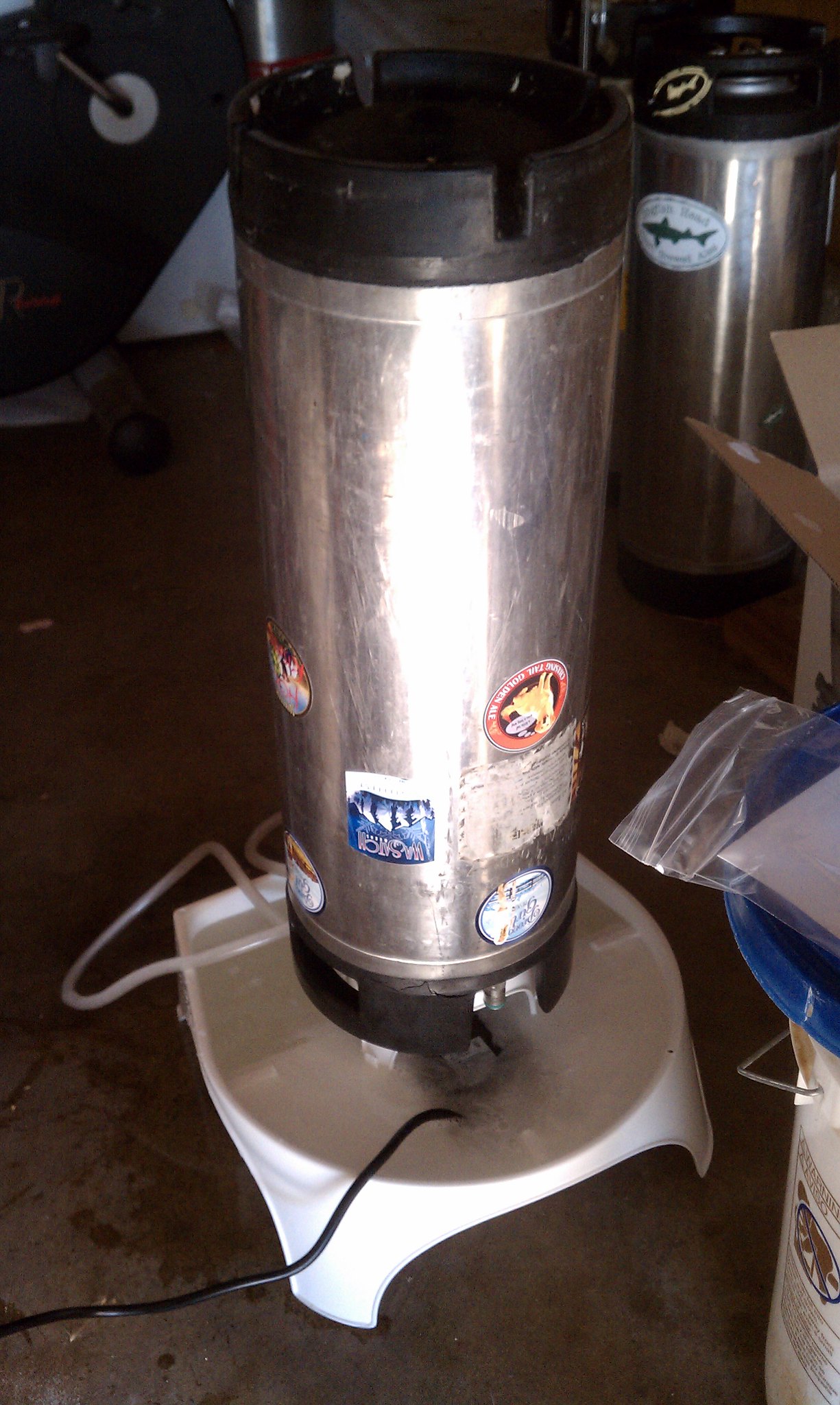
Mark II Keg Washer
At the beginning I was leaning toward doing all 10 gallons clean, like I did for Halvtreds, adding the bugs to secondary.  I had also planned on using my standard red ale grist modified for a lower gravity.  In the end I decided to do a more standard Rodenbach grist with a few SNB modifications. I also decided after researching Flemish Reds to add the ECY02 Flemish Ale for primary. Most of the recipes had called the sour yeast (mostly Wyeast's 3763 Roeselare Blend) in primary so I figured why not.

Brewday also gave me a chance to break in some new equipment I'd recently procured for myself, primarily in the forms of pumps.  I'd found a pump on Craigslist a while back and picked it up.  Not knowing the full history of what it was used for I decided that it would only touch cooling water.  The other was a Chugger Pump I'd convinced Eric to carry at The Shop that I planned to use initially just for recirculating but ended up using to fill the kettle as well.

So far I'm really digging the flavor I'm getting from the ECY02 Flemish Ale.  At first I was concerned given the not existent activity I'd seen.  Apparently it was in fact hard at work reducing the gravity into the 20s during it's first week.  I'd watched a Wyeast video about berliner wiesses where they found they got more sour results starting with the sour strain for the first week then adding a second clean strain to fermenting beer.  I decided to do something similar to the red by adding the remaining pack of US-05 I'd used to prime the single "barrel" bottles of Barrel Aged 33

Cheers

-SNB

Tuesday, September 11, 2012

"Barrel" Aged 33


The bottle cap design for
the main blend
Of all the art forms in brewing that have started to find their way into American Craft brewing one of the most exciting for me personally is blending. A lot of brewers today are doing barrel aged beers, be they sours or big thick stouts, tossing them into barrel and letting them sit for a few months. Few however are going the next step and precisely blending them together in a way that elevates the overall beer. Most often all of the barrels are simply dumped into a brite tank or other container for packaging. While there is nothing intrinsically wrong with this method better results can occur when they don't feel attached to use all the barrels.  You have to remember that the beer in each barrel matures at a different pace. Just because you put the same batch of beer in barrels from the same distillery at the same time does not mean they hit peak flavor in unison. In fact the range can be between 9-18 months for a barrel to develop the flavor the brewer is after. Some of the best blended beers out there tend to be blends of multiple years of beers, the upcoming 10th Anniversary of Utopias for example contains a batch of Triple Bock from 1993.

Let's take a deeper look at the blending that went into the 10th / 2012 batch of Utopias
The 2012 Utopias brew was aged in hand selected, single-use bourbon casks from the award winning Buffalo Trace Distillery to enhance the beer’s distinct vanilla and maple notes. In fact, this year’s brew including some of our original Triple Bock from 1993. Our 10th Anniversary batch also spent time in a variety of finishing casks: Tawny Port casks and Vintage Ruby Port casks from Portugal, which contribute slightly more elegant, dark fruit aromas, and Rum barrels from Nicaragua, which add flavors of fig, chocolate, raisin, vanilla, and a slight spice. 
Blend 521
I've been wanting to create my own blended beer for a while, in fact I started soaking some of the oak way back in July of 2011.  At the time I had planned on creating my own Firestone Anniversary type blend (which is made up of several types of beer instead of a single style).  That plan never got off the ground but later in that year when I brewed up 33 I knew I'd found the prefect beer to give blending a shot.  Unfortunately due to it's close vicinity to Halvtreds it caught a brett infection that somewhat diminished the final flavor of the beer.  Still I decided to press on with my plan and give blending a shot.

My plan for the blend was to take divide up 33 into four gallon jugs with a 1/2 gallon growler.  In each I would add some of the spirit soaked wood and set it aside for a couple of months.  To fill the jugs I decided to keg up the 33 so that I could use my BeerGun to purge the jugs with CO2 before filling them so that I could reduce any oxygen exposure.  Once filled I wrapped them with electrical tape.  When all was said and done I ended up with five "barrels".
"Barrel" 1 - Korbel Port / American French Oak
"Barrel" 2 - Pusser's Rum / Medium French Oak
"Barrel" 3 - Hecker Pass Ruby Port / Medium Oak Cubes
"Barrel" 4 - Maker's Mark Bourbon / Oak Chips
"Barrel" 5 - Korbel Cabernet Sauvignon / Medium American Oak
A little sample of "Barrel" 5 -
Korbel Cabernet Sauvignon
After two months I decided to try "barrels" 1 & 2.  While they weren't quite as spirity as I was hoping for they tasted solid so I decide to blend them together.  I figured given my success with Imperial Rhino Stout 2011 (2012 coming soon...) in holding carbonation after being beer gunned, I'd blend it in the keg and serve it on draft for a while (I'd been really wanting an Imperial Stout on that I could sip on) and BeerGun the rest later.

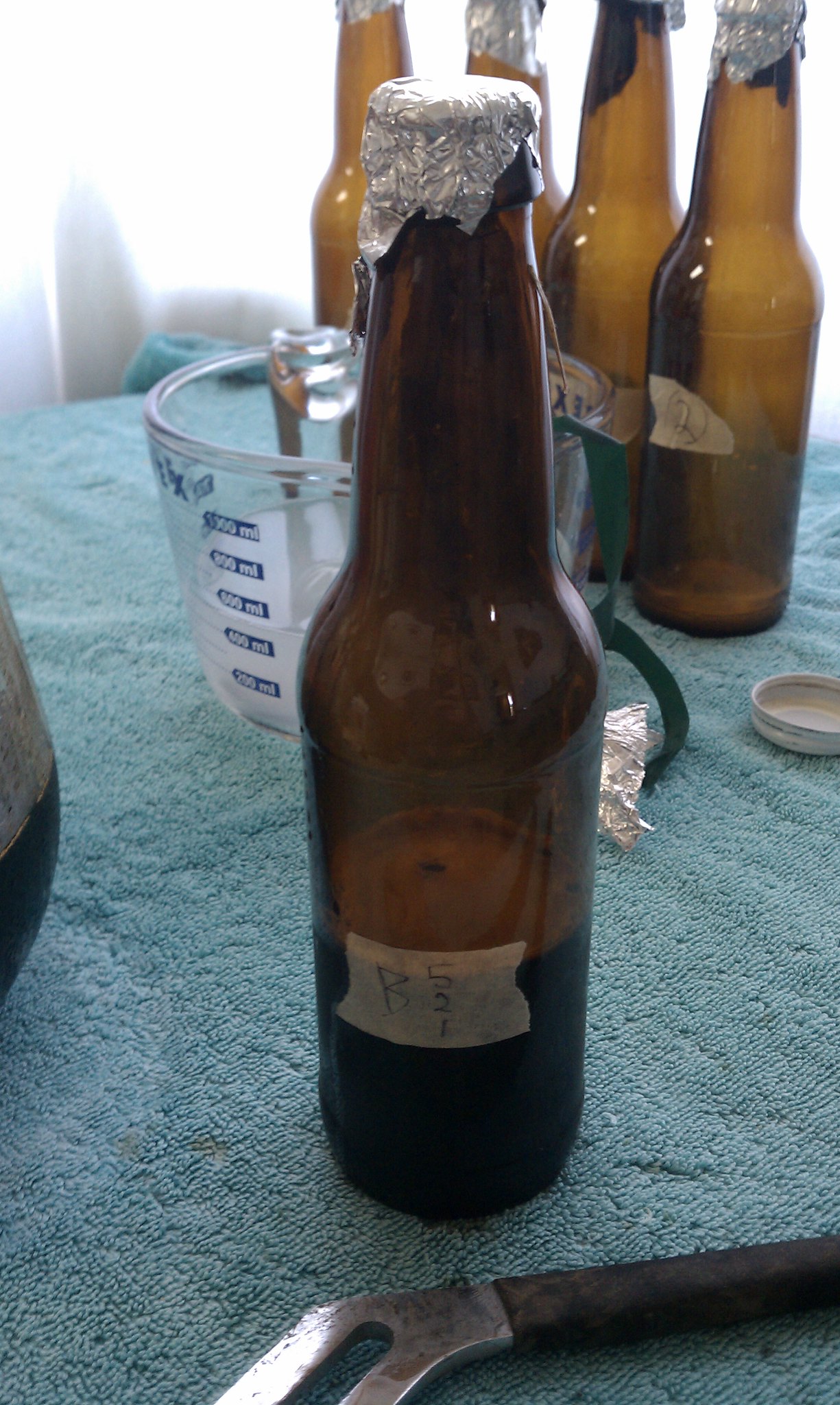
In addition to the main blend I decided to do up five 12oz bottles, one from each of the "barrel", and a special 521 blend from "barrels" 5, 2 and 1 which happens to be the first three digits to my home phone number growing up in the SLC.  To prime the bottles I used some carb tabs and re-hydrated some dry yeast which I added to each bottle using a medicine dropper. I've made special caps for each of the blends to tell them apart; 33 - Korbel Port, 33 - Pusser's Rum, 33 - Hecker Pass Ruby Port, 33 - Maker's Mark Bourbon, 33 - Korbel Cabernet Sauvignon and 33 - 521 Blend. I'll probably do a variant tasting with all the bottles in December.

Overall I think the blend is just ok, it's definitely better than it had been but not as good as I was hoping it would be. Given how much I enjoyed Kate the Great and 33 before it caught a brett infection I plan on doing it again with 34 and leaving it on the wood for several additional months before I blend it.

Cheers

-SNB

Tuesday, August 14, 2012

Kate The Great

Every year I make a list of beers that I want to try and set out to land a bottle or two.  In 2010 the list included Black Tuesday, Darkness, Dark Lord and Surly Four.  In 2011 it was about developing a taste for sours  was hitting off various Cantillons and Drie Fonteinen but also included beers like Westvleteren 12, Pliny the Younger, Marshal Zhukov and Surly Five (plus Mo's Bender).  Of all the beers I tired there was one above all that I needed to try.  So I decided that in 2012 I would set out to land legendary Kate the Great from Portsmouth Brewery.

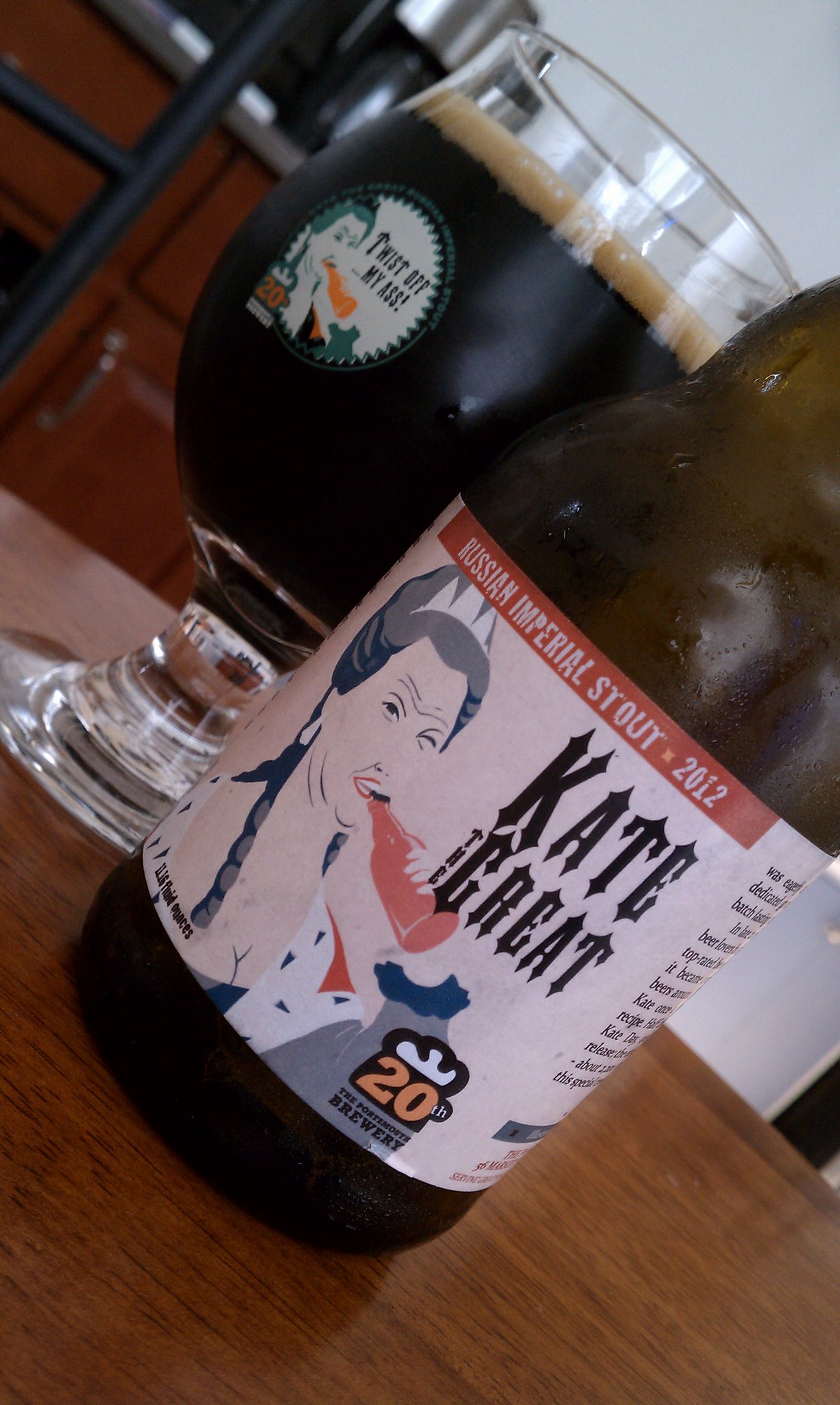
A quick history on Kate the Great - First released in 2005 it lwas a quite sleeper of a beer until 2007 when it was named the Number One Beer in the USA (Number Two on Planet Earth) by Beer Advocate Magazine.  Almost overnight Kate became on the the rarest and most talked about beers. Not helping the fact annually only 1,000 22oz bottles were released until 2012 when the volume to 12oz allowing the quantity of bottles released to raise to 2,000.  2012 also marked the first time the beer was released in a unique bottle as all previous years had used a default Portsmouth Brewery label stamped with Imperial Stout.

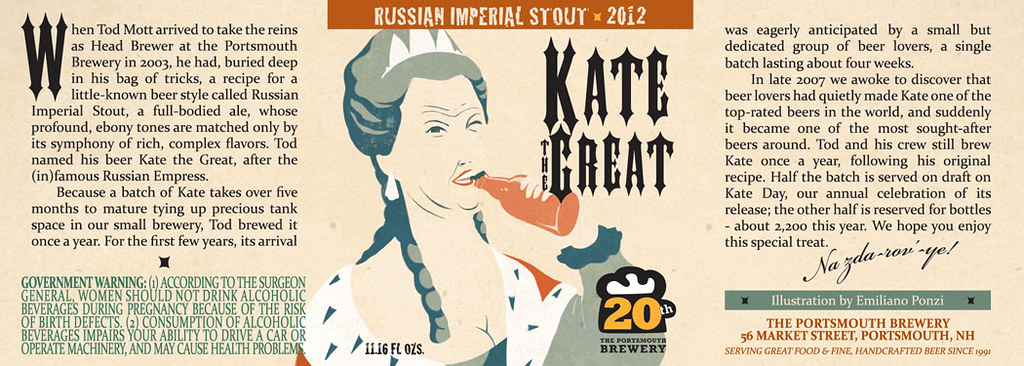
The first and only? Kate the Great Label

Sadly 2012 might well mark the last year of true Kate the Great as after eight and a half years Tod Mott the creator of Kate the Great has left his post as Head Brewer at the Portsmouth to pursue other ventures, taking the recipe with him.  While Tod has plans to rebrew the recipe he will do so under another name and future plans for "Kate the Great" have yet to be decided by Portsmouth Brewery.

To obtain the beer I responded to a ISO:FT [ISO- Rare, Churchills 12 FT- Kate, Cantillon, Allagash Sours, 07/08 Abyss, list...] started by jsilva. I still had a Churchill's Finest Hour 2012 that I'd almost just put in a box anyway for a BIF that I got zero wants out of (bullet dodged).  So I considered it out and available to trade. I didn't want to however do a 22oz for just a 12oz so I started the conversation simply with -

Do you have or have access to a Kate the Great glass?

[IMG]
I figured that if I was going to enjoy Kate the Great there would be no better way to do it than in the official glass.  This was a special glass produced for the 2012 Kate Day in conjugation with Portsmouth's 20th Anniversary and featured a close up of Kate bitting off the cap to the bottle - "Twist off... my ass!" The Kate arrived first with the glass getting to me several weeks later.

I decided that my upcoming Tenth Wedding Anniversary (#Scott&Bonnie10Years!) would be the perfect opportunity to open it.  Once the day came I arrived home around 5:20 and pulled the Kate out of the fridge to warm a little. We were going out to dinner later so while Bonnie was getting resdy I gathered my glass and opened the bottle.  Here is my review.

Great looking combo
Appearance: Pours deep and black, with a fourth inch of tan head.  Not a ton of lacing but still an enjoyable experience throughout.

Aroma: I personally don't get as much port as I expected, in fact I don't get any. What I do get is a nice roast aroma with some chocolate and wood traces. 

Mouthfeel: It sits remarkably heavy in my month.  Thick, rich and cream with a very full mouthfeel. Wonderful! I've only had a few stouts as rich and creamy as this one.  Literally everything I look for in an Imperial Russian Stout.

Taste: It was a little cold of the starting block but nothing that a little hand warming couldn't fix.  I get a lot of dark stone fruit similar to what I've tried on quads, almost a plum. A lot of roasty goodness with some fug and chocolate undertones. A very slight warming not unexpected from a beer with a 12% abv.

Overall: I honestly thought this beer was spectacular and lived up to the hype.  Currently Kate the Great occupies the number 3 slot on BeerAdvocate's list of Top Beers for Russian Imperial Stout.  When you consider the fact that most of the top beers on that list are barrel aged while Kate is not it's a pretty impressive feat. 

While I had most of it I probably lost maybe a sixth when my daughter decided to jump on me. I had moved to the couch to finish it up while Bonnie finished getting ready for dinner. Apparently after a little bit Syd decided that it would be a good time surprise me by jumping on me. Result - me covered with most of my remaining glass of Kate. Awesome. Bonnie's Notes: You ended up with Kate the Great all over you because of Syd the Wild

It definitely makes me want to revisit the recipe for Kate the Great that tried back on my birthday as 33 developed some odd infection that I'm hoping will be covered via some faux barrel aging.

Cheers

-SNB

Monday, August 6, 2012

Scott's Scottish on Scotch (AKA Project S.C.O.T.T.)

Could use an acronym
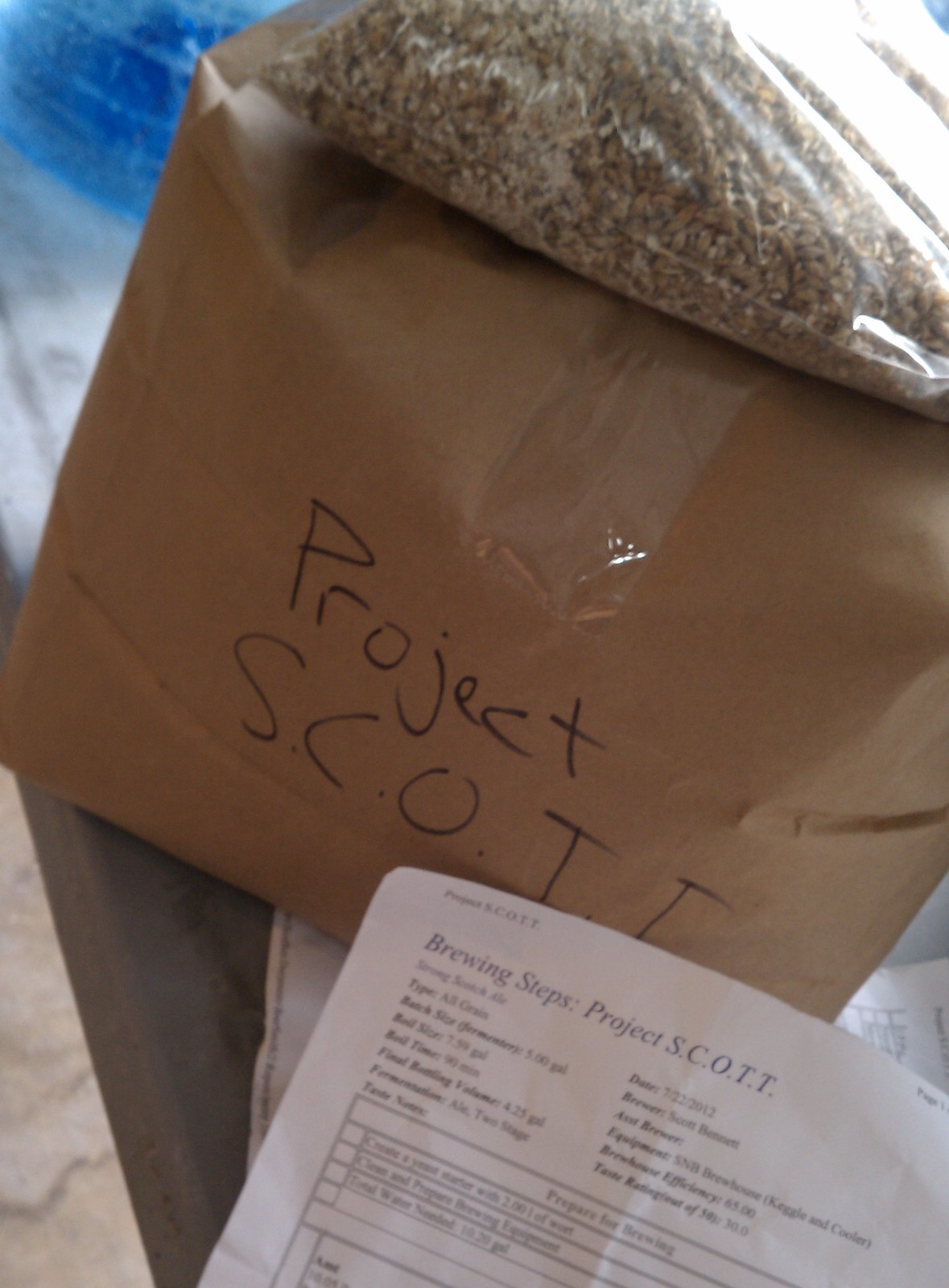
A while back I got this crazy idea about getting together with a bunch of other guys named Scott and brewing up 10+ gallons of a massive Scottish Wee Heavy which we would then age on Scotch soaked oak cubes.  I named this idea Project S.C.O.T.T. - ending up calling it Scott's Scottish on Scotch

It floated around in my head for a while but never really congealed into a solid plan. It appeared to see some progress in June when I was finally able to get my hands on some East Coast Yeast.  In addition to ECY01 BugFarm, ECY02 Flemish Ale and ECY04 Brett Blend #1 (yes you'll be seeing a lot of East Coast Yeast posts in the near future) I decided to pick up a vial of ECY07 Scottish Heavy.
ECY07 Scottish Heavy - Leaves a fruity profile with woody, oak esters reminiscent of malt whiskey. Well suited for 90/shilling or heavier ales including old ales and barleywines due to level of attenuation (77-80%) - recommend a dextrinous wort. Suggested fermentation temp: 60-68°F.
I figured picking up the vial would be the push I needed to get a Scott team together.  It wasn't and after over a month of sitting on it I decided to a least run a test batch through.  I therefore set out to run Project S.C.O.T.T. solo, Han style that is.

That's a lot of yeast
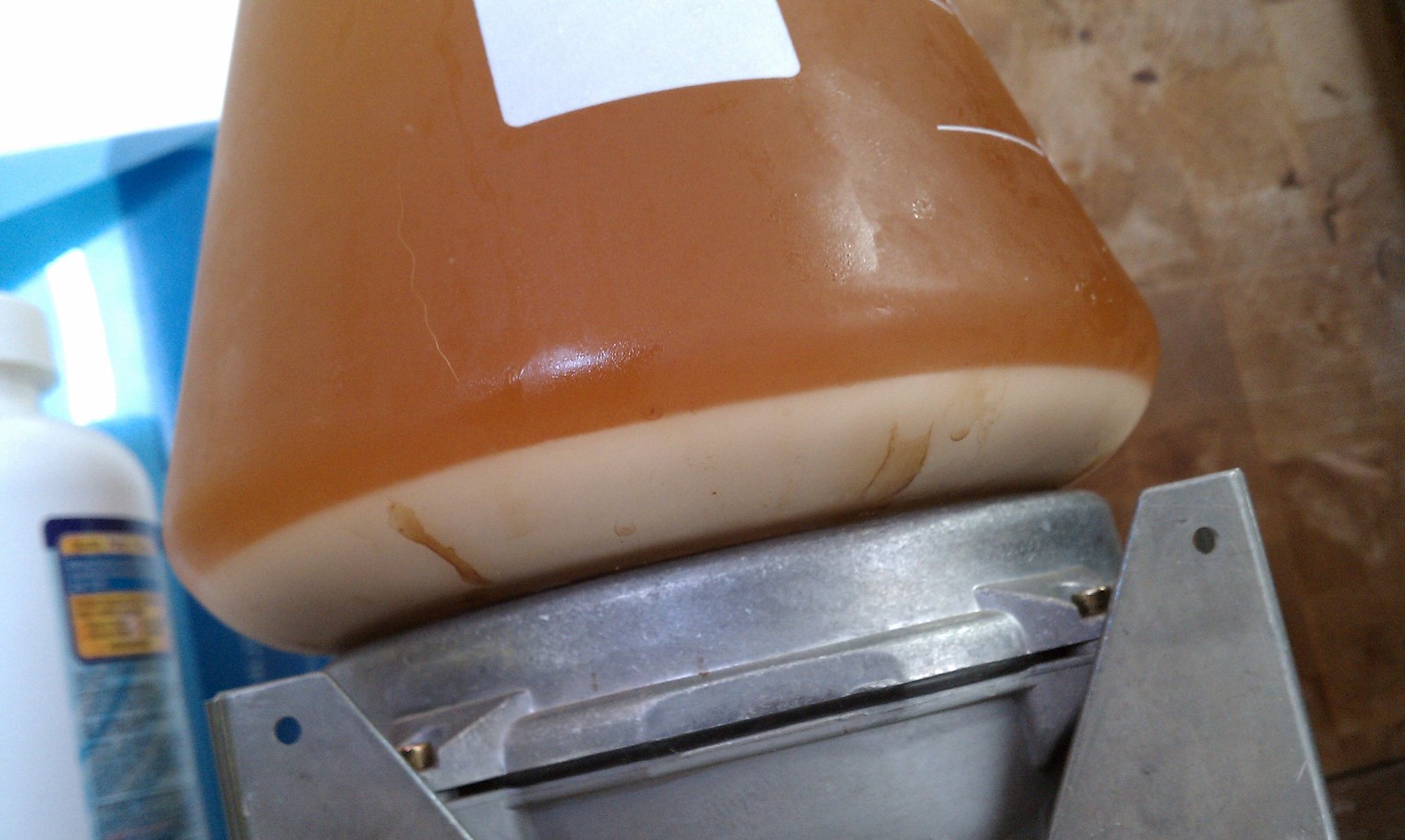
This also afforded me a great opportunity to test out my recently completed stir plate.  It took me a little bit to figure out how to seat the stir bar so that it would correctly spin. Pro Tip: It's best to align it prior to powering up.  Other than that it worked like a champ.  I fired it up on Friday night for a Sunday brewday and with an overnight cold crash I had an impressive layer of yeast in the morning.

For the recipe I did my usually online research.  I was looking for something in the high range 9-10%.  I looked for tasting notes and any comments that I would find favorable.  I also compared recipes to see if there was a common theme in the grain bill, this was how I decided on a generous base of British Golden Promise and Maris Otter.  For the hops I decided to see what I had left over in the fridge the morning of brewday.  I decided to keep the hops balance for more of an ageable beer then a hoppy beer but still include a slight amount of flavor and aroma hops.

Man, this thing has been
killing me lately
As will a lot of massive gravity beers my efficiency suffered slightly resulting in a slight dip from my target gravity of 1.095 ending up being 1.092 including a slight loss of volume. I roused the yeast everyday for the first week till the activity started to die down and every so often since.  My hope is to drive it into the low 20s to reduce the level of sweetness and round my abv in the 9-10% targeted range.

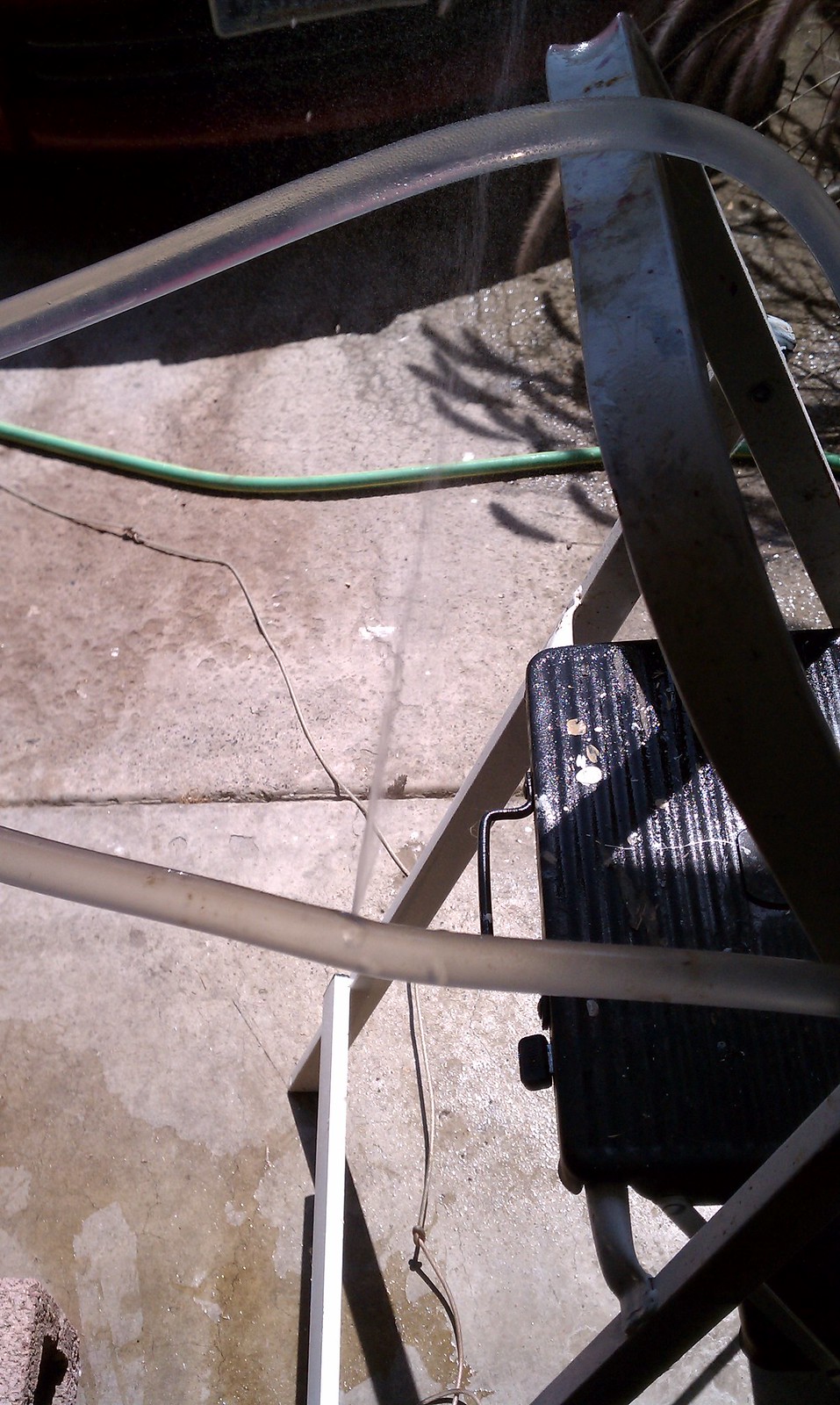
The only minor issue I ran into was a leak in tubing of my wort chiller.  It had had a slight burn in the outer layer and with the pressure a small hole burst.  It wasn't a major problem like the one I experienced with the GRANDE IPL (currently is progressing nicely) but enough to warrant a full tare-down of the existing tubes and a full redesign of my cooling procedure.  I've got a couple of pumps that I'll be rigging up to put into service for my next brew, one of which will be decided to moving ice water through the chiller similar to how Shawn does it. 

Cheers

-SNB
Related Posts Plugin for WordPress, Blogger...