 |
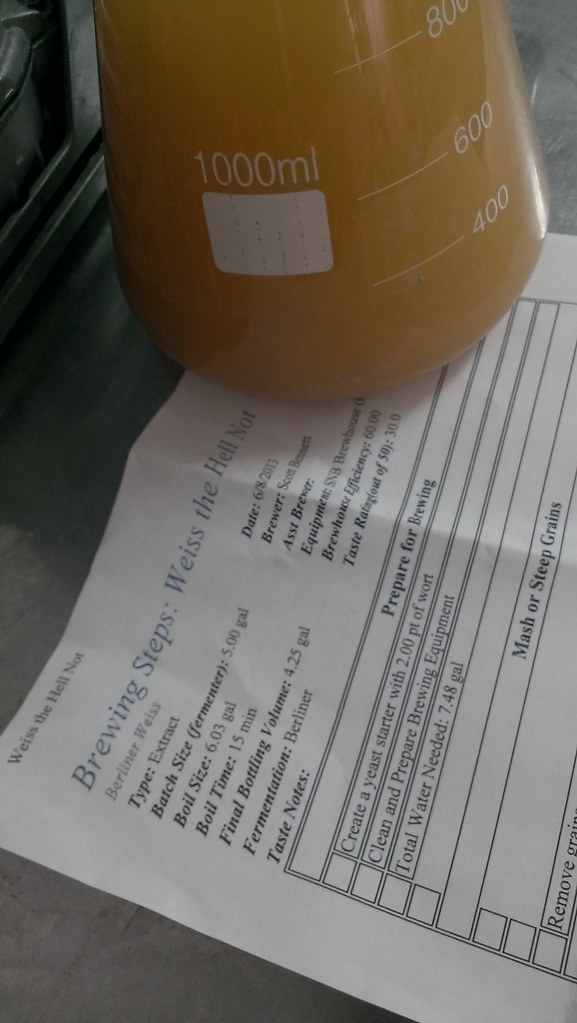
| Brew sheet and starter |
It had been a couple of months since my last brewday. For the most part I've been working on figuring out what I wanted to do for a brewstand and taking the opportunity to save some money in the process. I've made somewhat decent use of my slightly extra time by keeping the "brewery" tidy and finally bottling both of my meads (Boysenberry Riff Mead and Amy's Backyard Honey Mead aka Trilobite). Still, I was feeling the itch to brew and seeing my beer reserves tumble, especially the not 10% plus beers.
While I love all grain brewing, helping and watching Bonnie brew up a couple of her own batches (Wee Bonnie Lass and Costa del Sol b3) reminded my of a lot of the benefits for extract brewing. To be ultra clear here, there is not a noticeable difference in flavor between a well brewed extract and well brewed all grain beer. The benefits of all grain relay more on cost and recipe freedom than quality of the finished product. Extract brewing (when using a quality product) benefits from a shorter and less complicated brewday, perfect for someone short on time and looking to fill a keg with a quality beer. I guess what I'm trying to say is watching Bonnie brew opened me up to the possibility of brewing an extract beer here and there while remaining primarily an all grain brewer.
It was with this more open mindset that I came across a post in the homebrewing section of BeerTrading.org - Extract - Berliner Weisse, anyone got one? I've come to really enjoy Berliner Weisse over the last couple of years. They are a wonderful summer beer with their tart crispness and low abv (generally 2.8% to 3.8%). I'd had desire to brew a Berliner Weisse since coming a across a video presentation by Jess Caudill of Wyeast Laboratories during National Homebrewers Conference 2012 that Northern Brewer had documented and put on YouTube. The presentation focuses a lot on the yeast driven components of the style more than the grist (grain). I therefore felt that this would be the prefect time to brew up an extract version and started that taking notes on the presentation.
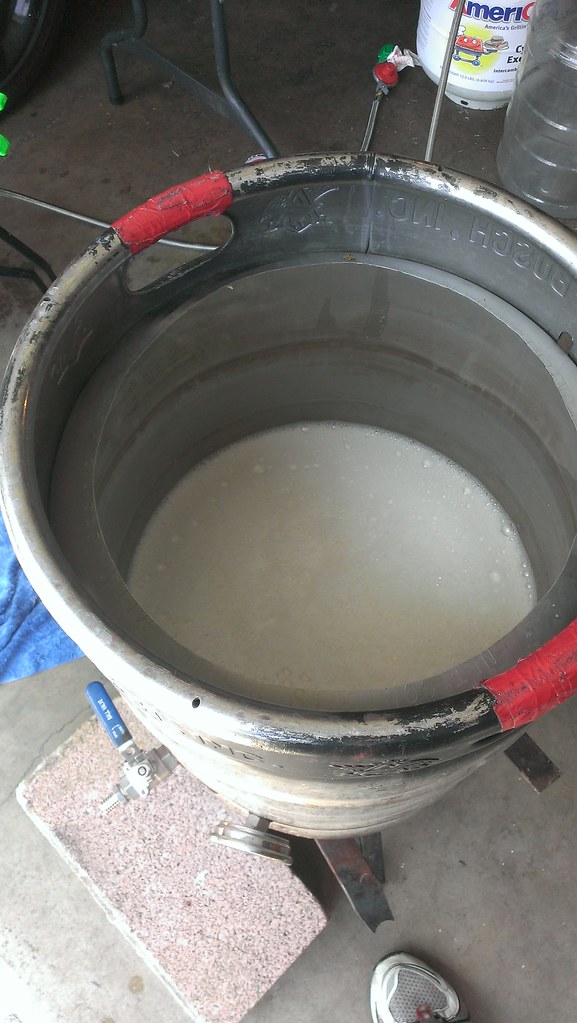 |
| Getting ready to boil... for all of 15 minutes |
Boy did I end up taking a lot of notes, so many that I ended up putting up them into a PowerPoint presentation containing not only my notes from the presentation but my recipe and the history of the style. I've put the presentation online and a PDF here. I won't summarize here but will say that putting it together definitely helped, especially in the area of recipe development. Originally I was going with a primarily wheat driven recipe till I learned that Berliner Weisse is usually made from roughly 25 – 30% pale malted wheat. I therefore bumped down my ratio to align with what I'd learned... until I shared the presentation with the Tao of Fermentation group where Daniel pointed out that Briess' Wheat DME is 65% wheat 35% barley. He suggested that I therefore adjust my recipe to 1.75lbs Extra Light DME and 2.00lbs Wheat DME which would give me a 47% Pils, 35% Wheat and 19% Pale recipe.
Talk about the easiest brewday I've had since I moved from Mr Beer to extract. With no steeping grains and a 15 minute boil the longest part of the day was bringing it to boil. From there is a almost a mad dash to find, put together and sanitize all the pieces of my chilling equipment. It's almost funny as the chilling worked so well, cooling it down too low for my intended fermentation cycle, that I had to speed up the run off to warm it back up. I still think I'm fermenting it a couple of degrees to cold. At some point this week I'll put together an additional starter for clean yeast and pitch it this weekend. If you have no idea what I'm talking about I suggest reading my notes or watching the video.
Cheers
-SNB